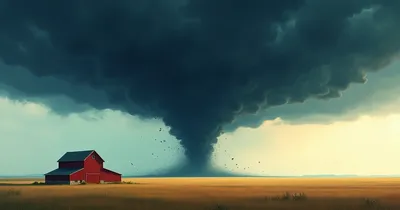
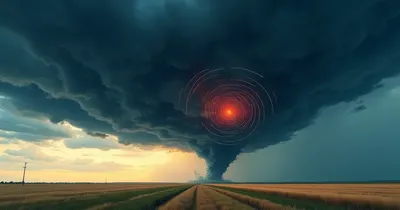
The United States is in the middle of a punishing stretch of severe weather that has no clean beginning or end — just a relentless cycle of tornado outbreaks, record heat, and now a deep freeze, all happening simultaneously. For millions of Americans from the Plains to the Deep South, the question isn't whether dangerous weather is coming. It's whether there's enough time to recover between rounds.
Last week produced one of the most active severe weather stretches in recent memory. This week, forecasters are warning that another major outbreak is bearing down on storm-fatigued Plains and Southern states beginning Thursday, April 23. Meanwhile, a brutal cold snap has pushed sub-freezing temperatures into the teens across Michigan, Iowa, and surrounding states — while Atlanta, Georgia set a record-early 90°F reading just days earlier.
This isn't just a bad week for weather. It's a case study in what happens when multiple extreme weather patterns collide across the same geography in rapid succession.
Last Week's Historic Outbreak: By the Numbers
The severity of what unfolded between April 14 and April 18, 2026 is difficult to overstate. Over the course of five days, the U.S. recorded more than 1,300 severe weather reports — a figure that captures just a fraction of the actual disruption experienced by communities across the Plains and South.
The breakdown tells the full story:
- 143 tornado reports — an extraordinary figure for a single week's outbreak
- 531 hail reports, with large hail documented across multiple states
- 628 thunderstorm wind or high wind reports, representing widespread structural damage
Friday, April 17 was the most violent single day of the outbreak. That day alone produced 86 tornado reports as part of 500 total severe weather events — meaning one in six reports from that single day was a tornado. To put that in context: the United States averages roughly 1,200 tornadoes per year. In one week, communities absorbed roughly 12% of a typical year's tornado count.
The cumulative effect on affected communities is significant. Infrastructure absorbs damage, emergency crews exhaust their capacity, and residents face the psychological toll of sheltering repeatedly — often with incomplete damage assessments from the previous event still underway.
The New Threat: What's Coming Thursday Through Monday
There is no extended recovery window. Forecasters have issued an outbreak forecast for Plains states from Minnesota to Oklahoma — possibly extending into Texas — beginning Thursday afternoon and evening, April 23.
The threat evolves over the following days in a pattern that forecasters describe as potentially multi-day:
- Thursday, April 23: Initial severe weather outbreak targeting the Plains corridor from Minnesota south to Oklahoma.
- Friday, April 24: The focal point shifts toward northeast Texas and the Ozarks, with potential extension into the mid-Mississippi and Ohio Valleys.
- Saturday–Sunday, April 25–26: Severe weather risk remains concentrated across Texas, Oklahoma, Kansas, and the Ozarks.
- Monday, April 27: The threat extends further east, with severe storms possible in the lower Mississippi and Tennessee Valleys.
For communities that endured last week's outbreak, this timeline offers a narrow window of preparation before the next cycle begins. Emergency managers in Oklahoma, Texas, and Kansas are operating under what amounts to a continuous severe weather posture — not an occasional event response.
The Deep Freeze: Sub-Zero Lows in the Midwest
Counterintuitively, the same atmospheric pattern generating severe thunderstorm and tornado threats in the South is pushing an unusually cold air mass across the Midwest. Freeze warnings are currently in effect across parts of Michigan, Ohio, Indiana, Illinois, Iowa, Kansas, Colorado, Texas, and Oklahoma.
The temperature extremes are severe for late April:
- Southeast Michigan is forecast to drop to 18°F
- Iowa could see lows around 22°F
- Multiple states face temperatures well below the freezing threshold for extended periods
The National Weather Service has issued explicit warnings that freeze conditions could kill crops and damage unprotected outdoor plumbing. For agricultural regions across the Midwest and Plains, a late-April freeze at these temperatures represents a serious threat to crops that have already begun their growing season. Fruit orchards, early corn, and winter wheat heading toward harvest are all vulnerable.
For homeowners, the risk is equally practical. Pipes that survived a winter can still burst in an unexpected spring freeze — particularly in homes where heating systems have already been switched to cooling mode or powered down for the season. Wrapping exposed pipes with pipe insulation foam and keeping interior temperatures above 55°F are the minimum protective steps for anyone in the affected region.
Having a NOAA weather radio on hand is essential for staying ahead of both freeze warnings and rapidly-developing severe weather — a single device that covers both threats currently active across overlapping geographies.
Atlanta's Record Heat: 90°F in April for the First Time Since 1878
While the Midwest endured sub-freezing temperatures, Atlanta, Georgia was setting records in the opposite direction. On April 18, 2026 — the final day of last week's outbreak — Atlanta reached 90°F, the earliest such reading in the city's recorded history, which dates back to 1878.
That's 148 years of temperature records broken by a single warm April afternoon.
The juxtaposition with the Midwest cold snap is not incidental — it's the same atmospheric configuration producing both extremes. When a powerful storm system drives a cold air mass into the central U.S., it simultaneously pulls warm, moist air northward from the Gulf of Mexico on its eastern flank. The collision zone between these air masses is precisely where the tornado and severe weather threat concentrates.
Atlanta's record heat reflects the warm-sector air feeding that severe weather machine. It's not a separate phenomenon — it's mechanically connected to the tornadoes that tore through the Plains the same week.
Alaska, meanwhile, remains under winter storm warnings with additional snowfall and blowing snow in the forecast — a reminder that the domestic weather map in late April 2026 stretches from record spring heat to active winter conditions within the same country.
What This Means: Analysis of a Pattern, Not a Coincidence
The scale and frequency of this outbreak sequence deserves direct analysis, not hedged diplomatic language. What's happening right now is not simply "a bad week."
The April 2026 severe weather pattern fits within a broader trend that climatologists and meteorologists have been documenting for over a decade: the traditional "Tornado Alley" of the Great Plains is shifting and expanding eastward, with increasing severe weather activity in the mid-Mississippi Valley, the Tennessee Valley, and the Carolinas. Communities in these regions frequently have older housing stock, less tornado-resistant construction, and lower rates of weather radio or underground shelter access than their Plains counterparts.
The simultaneous record heat in Atlanta and the historic freeze warnings in the Midwest are textbook signatures of an amplified jet stream — a wavier, more extreme upper-level wind pattern that locks weather systems in place longer and produces more intense contrasts between air masses. Whether this reflects long-term atmospheric changes or natural variability, the practical result for people living through it is the same: more extreme weather events, in closer succession, with less time to recover.
The 1,300+ severe weather reports in five days also stress the capacity of the National Weather Service, local emergency management agencies, and the insurance industry's damage assessment infrastructure simultaneously. When systems operate at this scale continuously, bottlenecks develop — and communities waiting for damage assessments from last week may not receive them before the next outbreak arrives.
For anyone in the affected corridor, an emergency preparedness kit is not a precaution at this point — it's a baseline necessity. A portable battery power station for keeping phones charged during power outages has become practical equipment across a wide swath of the central U.S.
How to Prepare for the Continued Severe Weather Threat
With another multi-day outbreak beginning Thursday and severe weather risk extending through at least Monday, April 27, preparation is time-sensitive. Here's what matters most:
Know Your Shelter Options Now
Identifying your shelter location before a tornado warning is issued — not during — is the most important step. Interior rooms on the lowest floor, away from windows, are the minimum standard. A reinforced storm shelter or basement is significantly better. If you're in a mobile home, identify a nearby permanent structure before Thursday.
Monitor Forecasts Actively
The Storm Prediction Center issues outlooks for Day 1, Day 2, and Day 3 severe weather threats. Checking these daily through the end of April will give you the clearest picture of when your specific location faces the highest risk. A battery-powered weather alert radio will wake you up with warnings even if your phone notification fails.
Address the Freeze Threat Immediately
For Midwest and Plains residents facing lows in the teens and 20s: disconnect and drain outdoor hoses, open cabinet doors under sinks on exterior walls, and keep a slow trickle of water running from faucets overnight. Outdoor faucet covers provide basic insulation for spigots. Cover or bring in any plants that have broken dormancy.
Document Any Existing Damage
If your property sustained damage last week, photograph and document it thoroughly before Thursday. Filing an insurance claim after a second event within days of the first requires clear evidence of what damage came from which storm.
Frequently Asked Questions
Why is the severe weather so intense and frequent in April 2026?
April sits at the peak of the U.S. severe weather season because it's when cold, dry air from Canada collides most directly with warm, humid air from the Gulf of Mexico. The atmospheric dynamics this April have been particularly volatile, producing the steep temperature gradients and wind shear that generate supercell thunderstorms and tornadoes. The 143 tornadoes recorded in just five days last week reflects an unusually active synoptic setup, not simply bad luck.
How does the Midwest freeze connect to the tornado outbreak?
They're produced by the same large-scale weather pattern. A deep trough in the jet stream pushes cold Arctic air southward into the Midwest while simultaneously pulling warm Gulf air northward into the South. The boundary where these air masses meet — called the dryline and warm front — is where severe thunderstorms and tornadoes develop. The more extreme the temperature contrast between the air masses, the more intense the storms tend to be.
Is Atlanta's record April heat related to the severe weather pattern?
Yes, directly. Atlanta's record 90°F on April 18 occurred because the city was sitting in the warm sector of the same storm system driving tornado activity further west. The warm, humid Gulf air that fueled the severe weather outbreak was also responsible for the record heat in Atlanta. It's a single atmospheric story playing out across a large geography.
Which states face the highest risk through the end of April?
Based on current forecasts, the highest risk corridor runs from northeast Texas and Oklahoma through Kansas, Missouri, and the Ozarks, with secondary risk extending into the mid-Mississippi Valley and Tennessee Valley later in the week. Minnesota and Iowa face both freeze risk and potential severe weather Thursday. Anyone in these regions should be actively monitoring National Weather Service forecasts through at least April 28.
What should I do if I missed last week's outbreak preparations?
Start immediately. The basics — knowing your shelter location, having a weather radio, keeping your phone charged, having a go-bag ready — can be accomplished in hours. An emergency go-bag kit with water, medications, documents, and a flashlight covers the fundamentals. Don't wait for Thursday's forecast to materialize before acting.
The Bigger Picture
What's unfolding across the central United States this week is a stark reminder that severe weather in America operates on its own timeline, indifferent to human fatigue or recovery schedules. The same region that endured 143 tornadoes and over 1,300 severe weather reports last week now faces another multi-day outbreak beginning Thursday, while simultaneously navigating a historic freeze and preparing for what could be a long, active severe weather season.
The records being set — Atlanta's earliest 90°F in 148 years, the sheer volume of last week's reports — are data points in a pattern that forecasters and climatologists continue to study. But for the people in the path of Thursday's storms, the abstractions don't matter as much as one concrete question: do you know where you're going when the sirens sound?
The answer to that question, made now rather than in the moment, is the most important weather preparation any household in the Plains or South can make this week. With freeze warnings already active and another severe weather outbreak days away, the window for preparation is measured in hours, not weeks.