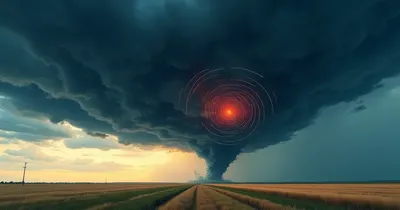
Austin, Texas, is living through one of the most dramatic spring weather reversals in recent memory. On Friday, April 17, the city baked under near-90°F heat with oppressive humidity. Less than 24 hours later, a powerful cold front is reshaping the weekend entirely — sending temperatures tumbling 30 to 40 degrees, spawning thunderstorms, and sending wind gusts tearing through Central Texas at up to 40 mph. If you're in Austin or heading there this weekend, this isn't a minor weather blip. It's the kind of atmospheric whiplash that demands attention.
Friday to Saturday: A 40-Degree Temperature Collapse
The numbers tell the story better than any description. According to reporting from Yahoo News, Austin recorded highs near 90°F on Friday, April 17, 2026 — well above April's seasonal average high of 80°F. South winds were already gusting to 30 mph, pulling warm, moist Gulf air into Central Texas and driving dew points into the uncomfortable range that makes you feel like you're walking through a warm, wet towel.
Then Saturday arrived. The cold front pushed through between sunrise and mid-morning on April 18, and the atmosphere has been rebalancing ever since. By around 4 p.m. Saturday, Austin's high is expected to bottom out in the mid-50s — representing a same-day collapse of roughly 35 degrees. That kind of intraday swing is rare in any season, but it's particularly jarring in mid-April, when Austinites are mentally already in summer mode.
For context, mid-50s in late afternoon is more typical of an Austin January day than an April one. The Hoodline coverage of the weekend forecast put it succinctly: Austin sizzles, then shivers.
Storm Threat: Timing, Intensity, and What to Watch For
The temperature drop is only part of the story. Saturday carries a 60% chance of showers and thunderstorms, and the storm setup has enough energy behind it to produce more than just garden-variety spring rain. MSN's weather reporting highlights brief heavy downpours and possible hail as the most significant threats with the frontal passage.
The more organized storm activity is expected to develop west of Austin around 3 p.m. Saturday, then drift toward the I-35 corridor by early evening. That timing matters practically: if you're planning to be on the road, at a restaurant patio, or at any outdoor event in the late afternoon or evening, you should have a backup plan. The I-35 corridor encompasses the heart of Austin's commercial and entertainment districts, and wind gusts up to 40 mph combined with heavy rain and possible hail create genuinely hazardous conditions for driving and outdoor activity alike.
This isn't part of the larger tornado outbreak affecting other parts of the country this week — a separate system put 142,000 people under tornado warnings across five states — but Central Texas residents should treat Saturday's storms seriously and monitor local alerts. Hail alone can cause significant property damage, and 40 mph gusts are strong enough to bring down tree limbs.
Why This Front Hits Harder Than Most
Spring cold fronts in Texas are common. Dramatic temperature swings of 20 to 25 degrees over a day or two happen every April. But the 30-to-40-degree collapse happening in a matter of hours this weekend is a different category of event. It's the result of an unusually strong cold air mass dropping southward from the Plains, colliding directly with the warm, humid Gulf airmass that had been firmly in place over Central Texas.
The Gulf moisture was the setup. High dew points on Friday meant the atmosphere had tremendous instability loaded into it — like a compressed spring waiting to release. When the cold front's dry, dense air mass undercut that warm, humid layer on Saturday morning, the result was explosive lift: the mechanism that drives severe thunderstorms. That's why forecasters are watching not just for rain, but for organized storm clusters capable of producing hail and gusty winds.
The topography of Central Texas amplifies this dynamic. The Balcones Escarpment — the geological boundary between the Hill Country and the coastal plain — acts as a focusing mechanism for storm development. Storms that form west of Austin and track eastward toward the I-35 corridor frequently intensify as they descend from higher elevations, which is consistent with Saturday's 3 p.m. storm development timing west of the city.
What to Wear and How to Prepare This Weekend
If you were planning to pack light for Saturday, reconsider. The practical reality of a mid-50s afternoon in Austin means layers are essential. A Men's Lightweight Packable Jacket is exactly the kind of piece that earns its place in a weekend bag for April in Texas — light enough to be forgotten in a backpack during the warm morning, indispensable by mid-afternoon. For women, a women's lightweight packable jacket serves the same purpose without the bulk of a full winter coat.
Beyond outerwear, a few other preparations are worth making before Saturday afternoon's storm window:
- Charge your devices and have a portable power bank handy. Power outages are possible with 40 mph gusts and wet conditions.
- If you have patio furniture or outdoor items, secure or bring them inside before Saturday afternoon. 40 mph gusts will move lightweight furniture and can turn unsecured objects into projectiles.
- Keep a compact umbrella accessible — though in 40 mph gusts, a rain jacket will serve you better than any umbrella that isn't designed for wind resistance. A windproof umbrella is worth the investment if you spend time outdoors in variable weather.
- If you're driving Saturday evening, allow extra time and increased following distance. Rain-slicked roads plus gusting winds create braking and handling challenges, especially on elevated sections of highway.
The Extended Outlook: More Rain Before Warmth Returns
Sunday, April 19, brings some relief from Saturday's drama. Highs are expected to climb back to around 74°F with partly sunny skies, though lingering morning showers are possible. The Hill Country will see its coldest air of the stretch, with overnight lows potentially dipping into the 40s — a stark contrast to the humidity of just 48 hours earlier. If you're camping in the Hill Country this weekend, those 40-degree overnight lows with residual wind deserve respect. A 40-degree sleeping bag rated for those temperatures will be far more comfortable than an underrated summer bag.
Monday brings another complication. A separate weather disturbance is expected to push into Central Texas from Mexico, reintroducing rain and storms to the region. This secondary system is less dramatically intense than Saturday's cold front passage, but it extends the wet pattern into the work week. Rainfall totals from Saturday through Wednesday could approach one inch across Central Texas — meaningful accumulation that will be welcomed by a region that can always use the recharge to aquifer levels and reservoirs.
The good news arrives by midweek. A warming trend is expected to return with highs climbing back to the lower-to-mid 80s by Wednesday or Thursday. For Austinites ready to return to outdoor dining, hiking, and weekend plans, the second half of next week should deliver the reliable spring warmth that makes Central Texas living attractive in April.
Analysis: What This Weekend Reveals About Spring in Texas
Austin's weekend weather whiplash isn't a climate anomaly — it's a feature of the Central Texas climate that residents either learn to anticipate or get blindsided by repeatedly. The city sits at the collision zone between the warm Gulf of Mexico air that dominates the region's summers and the cold continental air masses that still flex significant influence through late spring. April is arguably the peak month for this contest, which is why Texas tornado season peaks in spring and why dramatic front passages like this weekend's are not as unusual as they feel in the moment.
What makes this event notable is the speed and magnitude of the shift. A 35 to 40-degree intraday temperature drop is toward the extreme end of what Central Texas typically experiences. The near-90°F Friday temperatures were themselves above average for mid-April, which means the warm airmass in place was particularly strong and the contrast with the incoming cold front correspondingly dramatic.
There's a broader pattern worth noting. Meteorologists have observed that the spring shoulder seasons — the transition periods between winter and summer in climate zones like Central Texas — are becoming more volatile. The jet stream, which guides these cold fronts southward, is exhibiting increasing variability, producing more frequent scenarios where an unusually strong warm period is quickly followed by an unusually aggressive cold intrusion. This weekend's event fits that pattern precisely.
For outdoor event planners, venue managers, and anyone who runs a weather-sensitive business in Austin, the takeaway from this weekend is familiar but important: April planning in Central Texas requires contingency thinking for rapid weather changes that can invalidate a morning forecast by afternoon. The 60% storm probability on a Saturday in the heart of spring festival season is a reminder that Austin's outdoor culture carries inherent meteorological risk.
Frequently Asked Questions About Austin's Weekend Weather
How unusual is a 35–40 degree temperature drop in a single day in Austin?
It's uncommon but not unprecedented. Austin's position in Central Texas means it regularly experiences strong cold frontal passages in spring, but a same-day collapse of this magnitude — from near-90°F to mid-50s — represents the more extreme end of the range. Most fronts produce 15 to 25-degree drops over 24 to 48 hours. A 35 to 40-degree drop within a single afternoon is the kind of event that stands out in seasonal records.
Is hail a serious risk Saturday, and how large could it be?
Hail is a genuine threat with Saturday's storm system. The combination of strong instability from the warm, moist air mass, the forcing mechanism from the cold front, and afternoon heating creates conditions favorable for severe thunderstorms. Most hail associated with these storms is expected to be sub-severe (less than one inch in diameter), but given the overall energy in the atmosphere, larger stones cannot be ruled out. If you have a vehicle parked outside Saturday afternoon, consider moving it to covered parking before the 3 p.m. storm development window.
Should I cancel outdoor plans for Saturday?
Morning plans — roughly before noon — carry relatively lower risk, though temperatures will already be falling and conditions will be unsettled. Afternoon and evening plans, particularly anything outdoors from 3 p.m. onward, carry meaningful storm and wind risk. The I-35 corridor is specifically in the path of the organized storm cluster expected to develop west of Austin and track eastward by early evening. If your plans are flexible, consider moving outdoor activities to Sunday, which looks significantly calmer with highs near 74°F.
Will flooding be a concern Saturday?
Flooding risk exists whenever heavy downpours hit Austin, which has notoriously flash-flood-prone terrain. The saturated soil conditions and brief, intense rainfall that often accompanies frontal thunderstorms can overwhelm drainage quickly. Avoid low-water crossings if they are flowing, and monitor local flood warnings. Austin's flood risk is not primarily about total rainfall accumulation but about rainfall rate — a half-inch in 20 minutes can produce dangerous flash flooding in creek corridors and low-lying roadways.
When will Austin get back to normal spring weather?
The return to typical April conditions appears to begin Sunday, with a full recovery expected by midweek. After Monday's secondary disturbance moves through, a warming trend will push highs back to the lower-to-mid 80s by Wednesday or Thursday. That aligns closely with Austin's average April highs around 80°F, so the second half of next week should feel reliably seasonal rather than extreme in either direction.
Conclusion: Dress for Two Seasons This Saturday
Austin's April 18, 2026 cold front passage is a genuine meteorological event, not a minor weather fluctuation. The rapid transition from near-summer heat to near-winter cold in a matter of hours, combined with a 60% storm probability, 40 mph gusts, and hail risk, makes Saturday one of the more notable weather days in Central Texas this spring. The storm cluster targeting the I-35 corridor by evening deserves serious attention from anyone with outdoor plans in the city.
The silver lining is predictable: this is Texas spring weather doing what Texas spring weather does, and it doesn't last. Sunday calms down, Monday brings more rain, and by next Wednesday the lower-to-mid 80s return. In the meantime, layer up, secure your outdoor furniture, keep your phone charged, and give yourself extra time if you're driving Saturday evening. Central Texas weather rewards preparation and punishes assumptions — and this weekend is a perfect reminder of why.