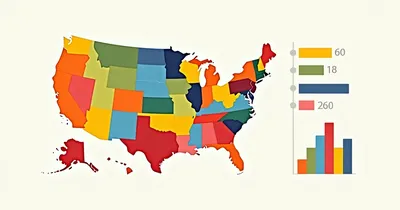
Virginia just moved the United States measurably closer to a fundamental change in how presidents are elected. On April 13, 2026, Governor Abigail Spanberger signed HB 965/SB 322, making Virginia the 18th state (plus Washington D.C.) to join the National Popular Vote Interstate Compact — an agreement that would require member states to award all their electoral votes to whichever presidential candidate wins the national popular vote, regardless of who won their state.
The compact now commands 222 electoral votes, leaving it 48 short of the 270-vote threshold required for activation. That gap sounds significant, but advocates argue the momentum is unmistakable. As one National Popular Vote Project strategist put it, after two decades of organizing, the effort is now on the "5-yard line."
What Virginia Just Signed — And What It Actually Does
The legislation Spanberger signed doesn't immediately change anything about how Virginia awards its 13 electoral votes. The compact operates on a trigger mechanism: it only takes effect once member states collectively represent 270 or more electoral votes — the minimum needed to win a presidential election. Until that threshold is crossed, Virginia's electors will continue to be awarded under the traditional winner-take-all system used by 48 states.
Once activated, however, the mechanics shift dramatically. Every member state would be legally obligated to cast all of its electoral votes for the national popular vote winner — even if that candidate lost the state. For Virginia, that could mean its 13 electoral votes going to a candidate who finished second in Virginia, simply because that candidate won more votes nationally.
The compact also includes a withdrawal mechanism with a crucial restriction: states can exit the agreement, but not within six months of the end of a presidential term when a new president is being determined. This provision was deliberately designed to prevent a bad-faith exit — a state joining the compact and then bailing out once it becomes clear the national winner isn't their preferred candidate.
According to reporting on Spanberger's signing, the governor held a virtual press conference the following day, April 14, framing the compact as a matter of democratic fairness and equal representation for all American voters.
How Virginia Got Here: A Democratic Trifecta Opens the Door
Virginia's path to the compact ran directly through the 2025 state elections. Democrats won the governor's office — with Spanberger's victory — and secured full control of the Virginia General Assembly. That trifecta made passage possible in a way it hadn't been under divided government. The legislation cleared both chambers mostly along party lines, a reflection of the deeply partisan nature of electoral reform debates.
This partisan split isn't incidental — it reflects a rational calculation by both parties based on recent electoral history. Democrats have won the national popular vote in every presidential election since 1992 except 2004, but have lost two Electoral College outcomes in that stretch (2000 and 2016). Republicans, by contrast, have benefited from the current system's ability to translate narrower geographic coalitions into Electoral College majorities.
The Virginia bill's passage also reflects a broader Democratic strategy: use state-level trifectas to advance structural reforms that federal gridlock makes impossible. With congressional proposals like Jamie Raskin's 25th Amendment bill facing long odds in a divided Congress, state-level action has become the primary vehicle for Democrats pushing electoral and constitutional reform.
The Long Road: 20 Years of the National Popular Vote Effort
The National Popular Vote Interstate Compact didn't spring up in response to any single election, though the 2000 and 2016 outcomes gave it significant tailwinds. The effort launched around 2006, built on a straightforward constitutional insight: Article II of the Constitution grants state legislatures near-plenary authority over how their states award electoral votes. The compact's architects argued that states could collectively use that authority to effectively nationalize the popular vote without requiring a constitutional amendment — historically an almost impossible bar to clear.
The first states to join were predictably blue. Maryland signed on in 2007, followed by New Jersey, Illinois, Hawaii, and Washington in subsequent years. California's 2011 entry added significant electoral vote weight. The progress was steady but slow, and the compact spent years stuck well below the 270-vote threshold.
The 2016 election — when Donald Trump won the presidency despite Hillary Clinton receiving roughly 2.9 million more popular votes — supercharged the effort. It was the fifth time in U.S. history that the Electoral College produced a winner who lost the popular vote, and the second time in 16 years following George W. Bush's 2000 victory over Al Gore. That back-to-back pattern within a generation transformed what had been an abstract democratic debate into an urgent political priority for Democratic-leaning voters and lawmakers.
Virginia's signing marks the latest milestone in that trajectory. Virginia becomes the 18th state in the compact, and its 13 electoral votes push the total to 222 — the highest the compact has reached.
The 48-Vote Gap: Which States Could Get the Compact to 270?
The math from 222 to 270 is straightforward; the politics are not. The compact needs 48 more electoral votes from states that haven't yet joined. The remaining states that lean Democratic or have competitive politics — and thus represent the most plausible near-term additions — include states like Arizona (11), Michigan (15), Pennsylvania (19), Wisconsin (10), and Nevada (6). If Democrats were to win trifectas in Pennsylvania and Michigan alone, the compact would be within striking distance.
But state legislative control is volatile. Several states that might otherwise be candidates have Republican-controlled legislatures that have shown no interest in joining. Others have split governments where the bill would die before reaching a governor's desk.
The geographic distribution of current compact members also reveals a clustering problem: the states that have joined are overwhelmingly coastal and heavily Democratic. The compact hasn't yet cracked the Midwest or Sun Belt in a meaningful way, and those are precisely the states whose electoral votes are needed most.
The "5-yard line" framing from the National Popular Vote Project is optimistic but not groundless. After 20 years, the structural work — model legislation, coalition-building, legal frameworks — is done. What remains is winning the right state elections at the right time.
The Constitutional Battleground Ahead
The compact's architects have always known that crossing 270 electoral votes would trigger immediate and serious legal challenges. The core constitutional questions are unresolved and genuinely difficult.
Critics argue the compact violates the Constitution's Compact Clause, which requires congressional consent for interstate agreements that affect federal power. They also contend it undermines the original architecture of the Electoral College, which was designed — whatever one thinks of that design — to give states discrete roles in selecting the president based on their own internal outcomes.
Critics have argued that the compact would effectively nullify the votes of citizens in compact states when their state's outcome differs from the national result — a voter in Virginia who cast a ballot for Candidate A would see their state's electoral votes go to Candidate B if B won nationally. Opponents have called this making voters "null and void."
Supporters counter that the Constitution explicitly gives state legislatures the authority to determine how their electors are appointed, that the Compact Clause applies to agreements that encroach on federal supremacy (not coordination between states), and that the winner-take-all system itself already ignores the votes of the losing side within each state.
The Supreme Court has never ruled directly on the constitutionality of an interstate compact of this type applied to presidential elections. If the compact reaches 270 votes before or during a presidential election cycle, the legal challenges would almost certainly reach the Court quickly. Given the current Court's composition and its track record on election law, the outcome would be genuinely uncertain.
What Americans Actually Think About This
Public opinion on replacing the Electoral College with a popular vote is more nuanced than partisan positioning suggests. A Pew Research Center survey found that a majority of Americans support a popular vote system — including 8 in 10 Democrats and, notably, 46% of Republicans. That Republican figure is often overlooked in coverage that frames this entirely as a partisan issue.
The near-majority Republican support likely reflects a genuine democratic impulse: the intuition that the person who gets the most votes should win feels fair to a lot of people regardless of party. What changes the calculus for many Republicans is the awareness that the compact, in its current form, would systematically disadvantage them given current geographic voting patterns.
Polling on structural electoral reform tends to show higher support for the concept than for specific mechanisms. When pollsters explain the compact's mechanics in detail — including the possibility of a state's electors going to a candidate who lost that state — support typically drops. The gap between "I support popular vote" and "I support this specific compact" is real and matters for any assessment of the political durability of the effort.
What This Means: Analysis of Virginia's Signing
Virginia's entry into the compact is genuinely significant — not because it resolves anything, but because it demonstrates the effort's continued vitality after two decades. The compact hasn't stalled. It keeps accumulating members when political conditions allow, and the fact that it now covers 222 electoral votes means it's within a plausible reach of activation for the first time in its history.
The more important story, though, is structural. The compact represents one of the most sophisticated attempts in modern American politics to achieve constitutional change through statutory means — to route around a constitutional amendment process that requires supermajority consensus that doesn't exist. Whether one supports or opposes the compact's goals, the legal architecture is genuinely innovative and deserves serious engagement rather than dismissal.
The criticism that the compact makes state voters' ballots "null and void" misunderstands how the Electoral College already works — winner-take-all systems already nullify minority-party votes within states. But the critics aren't entirely wrong that the compact introduces a new kind of disconnect between state outcomes and state electoral votes. That's not a bug in the compact's design; it's the feature. Whether that feature is democratically desirable or constitutionally permissible are separate questions that the Supreme Court will eventually have to answer.
For Spanberger, signing this bill is also a political statement about her governing priorities. In a political environment where global economic uncertainty dominates headlines, leading with electoral reform signals a long-term orientation toward democratic infrastructure over immediate policy wins. That's a bet on the compact's eventual success — and on Virginia's role as a state willing to use its legislative power to shape national outcomes.
Frequently Asked Questions
Does Virginia's signing change the 2028 presidential election?
No. The compact only takes effect when member states collectively represent 270 or more electoral votes. At 222 electoral votes, the compact is still 48 short of activation. Virginia's electors will continue to be awarded under current rules — winner-take-all based on the state's outcome — until and unless the 270-vote threshold is reached. Even if additional states join before 2028, the compact would only apply to that election if enough states had joined in time and the legal challenges didn't result in an injunction.
Can Virginia leave the compact after joining?
Yes, but with an important restriction. States can withdraw from the compact at any time — except within six months of the end of a presidential term during which a new president is being qualified. This means a state can't join the compact and then exit strategically once it becomes clear who the national popular vote winner will be. The restriction is designed to prevent bad-faith participation and ensure the compact functions as intended if and when it takes effect.
Is the National Popular Vote Interstate Compact constitutional?
That question remains unresolved. The compact's architects argue it falls squarely within states' constitutional authority to determine how their electoral votes are awarded, and that it doesn't require congressional consent because it doesn't infringe on federal supremacy. Critics argue it violates the Compact Clause and undermines the original design of the Electoral College. The Supreme Court has never ruled on this specific question. If the compact reaches 270 electoral votes and is activated, legal challenges would be immediate and would almost certainly reach the Court within a single election cycle.
Which states still need to join for the compact to take effect?
The compact needs an additional 48 electoral votes. The most plausible candidates are states with Democratic-leaning politics or competitive governance where Democrats could win trifectas: Pennsylvania (19 electoral votes), Michigan (15), Arizona (11), Wisconsin (10), and Nevada (6) represent the most frequently discussed targets. However, all of these states currently have either Republican-controlled legislatures or divided government that would block passage. Progress depends on state-level election outcomes.
How does the compact differ from simply abolishing the Electoral College?
Abolishing the Electoral College would require a constitutional amendment — ratification by two-thirds of Congress and three-quarters of states (38 of 50). That bar is effectively insurmountable in the current political environment given how strongly Republicans and small states oppose it. The compact achieves a functionally similar outcome — the national popular vote winner becomes president — without touching the Constitution. The Electoral College would still formally exist; member states would just all agree to cast their votes for the national popular vote winner. It's a statutory workaround to a constitutional barrier.
The Bottom Line
Virginia's entry into the National Popular Vote Interstate Compact is a milestone in a decades-long effort to change how Americans elect their president — without changing the Constitution. At 222 electoral votes, the compact is closer to activation than it has ever been, but it still faces a significant structural gap and the near-certainty of major legal challenges if it ever reaches the 270-vote threshold.
What Spanberger's signing makes clear is that the effort isn't fading. Twenty years in, with the memory of 2000 and 2016 still shaping Democratic politics, the compact continues to gain members when political conditions allow. The question isn't whether the effort will continue — it will. The question is whether the remaining 48 electoral votes are achievable in a political environment where every state that would benefit is a genuinely competitive battleground.
The answer to that question will determine not just the future of the compact, but whether the United States takes the most significant step toward direct democracy in its modern history — through legislation, not constitutional amendment, and through the slow accumulation of state-by-state decisions rather than a single national consensus.