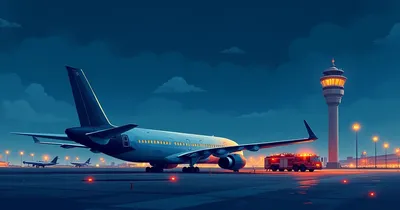
San Francisco International Airport is having a rough spring. In the span of just a few weeks, SFO has been hit with a major FAA-imposed capacity reduction that will delay one in four flights, a cargo area fire that temporarily shut down its AirTrain, and a viral video of an ICE arrest that ignited a national debate. If you're flying through SFO anytime soon — or trying to understand what's happening there — here's everything you need to know.
The FAA's New Landing Restrictions: What Changed and Why It Matters
On March 31, 2026, the FAA announced it was banning simultaneous side-by-side parallel runway approaches at SFO — a practice the airport had long relied on to maximize throughput. The practical impact is severe: SFO's maximum arrival rate drops from 54 flights per hour to just 36. That's a 33% reduction in landing capacity at one of the country's busiest international gateways, and it's expected to ripple through the schedules of millions of travelers.
According to USA Today, about 25% of arriving flights at SFO are now expected to face delays of at least 30 minutes — up from a previous forecast of 15%. That's not a minor inconvenience. For a hub airport that handles tens of thousands of passengers daily, a quarter of arriving flights running half an hour or more behind schedule means cascading delays across dozens of connecting itineraries, missed international flights, and significantly degraded traveler experience.
The timing makes it worse. A runway repaving project will take SFO's two north-south runways out of service for approximately six months. The airport was already planning to operate with reduced flexibility during that period — the FAA's new restrictions layer an additional capacity constraint on top of an already constrained system.
Critically, the FAA has stated it does not plan to lift the side-by-side landing ban once the runway repaving is completed. This is not a temporary accommodation — it's a permanent policy shift. SFO's operational model has fundamentally changed.
Why the FAA Is Cracking Down Now
The FAA's new restrictions didn't emerge in a vacuum. They were accelerated by the January 2025 mid-air collision between an American Airlines regional jet and an Army Black Hawk helicopter near Reagan National Airport in Washington, D.C., which killed all 67 people aboard both aircraft. That disaster triggered a broad federal review of aviation safety practices, with particular scrutiny on approach procedures at complex airports.
Side-by-side parallel approaches — where two aircraft land simultaneously on adjacent runways — require precise coordination between pilots and air traffic controllers. SFO's geography, with its bay-side location and frequent low-visibility fog conditions, creates conditions where these approaches carry elevated risk. The FAA apparently concluded the calculus no longer favored efficiency over safety. Reports indicate that the agency made clear it will not revisit this decision regardless of the runway repaving project's outcome.
This is worth sitting with. The FAA is essentially saying that SFO's previous operating model — which allowed it to process 54 arrivals per hour — was a known risk that was tolerated in the name of throughput. That risk is no longer being tolerated. Whether you view that as overdue caution or regulatory overreach likely depends on whether you're a safety engineer or an airline scheduling manager.
Which Airlines Are Most Affected
United Airlines carries approximately half of all SFO passenger traffic, making it by far the most exposed carrier to these disruptions. Alaska Airlines accounts for around 10%. For United in particular, SFO is a critical transpacific gateway — delays here don't just inconvenience domestic travelers, they create problems for long-haul routes to Asia and beyond where tight connection windows are the norm.
United has been navigating a particularly turbulent period in the airline industry more broadly. Industry consolidation speculation has swirled around major carriers, adding to the uncertainty facing passengers who depend on these airlines for loyalty programs, route networks, and pricing stability.
For travelers with flexibility, the restrictions create a clear incentive to reconsider SFO as a routing option. Oakland International Airport (OAK) and San Jose International Airport (SJC) are both Bay Area alternatives, though they lack SFO's international connectivity. If your journey requires an international connection, your options at SFO are narrower than they were two months ago.
The Cargo Fire: Disruptive but Contained
On April 3, 2026, a fire broke out in five storage boxes in SFO's cargo area near 575–600 North McDonnell Road. Firefighters contained the blaze by 3:42 p.m., and there were no injuries reported. East Bay Times reported that flight operations were not impacted.
However, the fire did cause a temporary suspension of the AirTrain Blue Line — the automated people mover that connects the main terminals to the rental car center and long-term parking lots. For travelers arriving on what was already a delayed flight and hoping to reach a rental car quickly, a suspended AirTrain adds another layer of friction to an already difficult transit experience.
The cargo fire, while fortunately limited in its direct impact, is a reminder of how many interdependent systems keep a major airport functioning. A disruption to one — cargo storage, AirTrain, ground transportation — can cascade into passenger experience problems even when aircraft themselves aren't affected. SFO managed this incident well in terms of containing it quickly, but it added to an already difficult news cycle for the airport.
If you're renting a car at SFO, it's worth knowing the AirTrain Blue Line is the only automated connection to the rental car center. If it goes down, you'll be waiting for shuttle buses — which run on far less predictable schedules. Keeping that as a contingency in your mental model is sensible given the airport's current operational stress.
Savvy travelers heading through SFO might want to pack a portable phone charger power bank for extended waits, and a travel neck pillow in case those delay-related terminal waits stretch longer than expected.
The ICE Arrest Video: A Separate but Significant Story
On March 22, 2026, ICE agents arrested a woman at SFO at around 10:30 p.m. The incident was captured on video and spread widely across social media, sparking debate about immigration enforcement practices in civilian travel spaces.
Airport spokesperson Doug Yakel told reporters the arrest was an isolated incident and that the airport had not been notified in advance. According to the Mercury News, officials stressed the event was not linked to any broader coordinated nationwide ICE deployment.
One detail that surfaced in the reporting is worth understanding: SFO contracts its security services to a private company, unlike Oakland and San Jose airports, which use the TSA directly. This distinction matters when questions arise about coordination between federal agencies and airport security — the chain of authority and communication is different at privately contracted airports than at those relying on federal screeners.
The viral video intensified a national conversation about where immigration enforcement is appropriate, and specifically whether airports — already high-stress environments where travelers may be arriving from or departing to other countries — should be treated as enforcement zones. Bay Area elected officials have generally pushed back on expanded ICE presence in public transit and airport settings. The political dimension of this story is unlikely to fade quickly.
What This All Means: An Analysis
Taken together, the events of the past several weeks paint a picture of an airport under real operational and reputational stress. But it's worth separating the temporary from the permanent.
The FAA restrictions are the real story. The cargo fire was a one-day incident with no lasting operational impact. The ICE arrest is a political flashpoint with implications that extend far beyond SFO. But the FAA's permanent ban on side-by-side landings, combined with the six-month runway repaving project, represents a structural change to how SFO operates. The 25% delay rate isn't a forecast for a bad week — it's a new baseline expectation for the foreseeable future.
For United Airlines, which depends on SFO as a hub, this is a significant operational challenge. Half of SFO's passenger volume flows through United gates. When a quarter of arriving flights are running 30+ minutes late, crew scheduling gets disrupted, connections get missed, and customer satisfaction erodes. United will need to proactively adjust its SFO schedule — either by reducing the number of arrivals it plans during peak hours or by building larger buffers into connecting itineraries. Neither option is free.
For travelers, the message is clear: SFO is a riskier routing choice than it was in early 2026. If you have a tight international connection, or if you need to be somewhere at a specific time, routing through SFO carries more uncertainty than it did before March 31. Check your airline's delay statistics for SFO routes, consider alternative Bay Area airports for domestic legs, and if you must fly through SFO, give yourself more buffer time than you think you need.
There's also a broader aviation policy implication here. The FAA's willingness to permanently restrict a major hub airport's landing procedures — accepting a significant reduction in capacity in exchange for reduced risk — signals a post-January 2025 regulatory posture that prioritizes safety margins over throughput optimization. Other airports that rely on complex simultaneous approach procedures should be watching SFO closely. If the FAA is willing to make this call at one of the nation's most important international airports, the logic could be applied elsewhere.
Practical Travel Tips for Flying Through SFO Right Now
- Build in extra connection time. If your itinerary has a connection at SFO, consider rebooking to a longer layover. A 45-minute domestic connection was always risky at SFO; right now it's closer to a gamble.
- Monitor your flight status obsessively. Sign up for text alerts from your airline and check the FAA's traffic flow programs for SFO before you leave for the airport. Ground delay programs at SFO can cascade quickly.
- Have a rental car backup plan. If you need a rental car and the AirTrain Blue Line is disrupted again, know where to find shuttle bus pickups before you need them.
- Consider OAK or SJC for domestic legs. Oakland and San Jose are real alternatives for intra-California and some domestic routes. They won't serve all needs, but if you have flexibility, they're not subject to the same FAA approach restrictions.
- Pack for a delay. A travel packing cubes set helps keep your carry-on organized when you're hauling it through terminal delays, and a noise canceling travel headphones will make an extended SFO wait significantly more bearable.
- Check your travel insurance. If you purchased travel insurance for upcoming SFO-routed travel, review what your policy covers for delays. Many policies cover expenses incurred from delays of a certain minimum duration.
Frequently Asked Questions
Will the FAA restrictions at SFO be temporary?
No. The FAA has explicitly stated it does not plan to lift the side-by-side landing ban once the runway repaving project is completed. This is a permanent change to SFO's operating procedures. The six-month runway project will add additional strain during its duration, but the core capacity reduction — from 54 to 36 arrivals per hour — is now the new normal.
How likely is my flight to be delayed at SFO?
About one in four arriving flights at SFO is now expected to be delayed by at least 30 minutes. That figure can worsen significantly during low-visibility weather conditions, which are common at SFO due to its bay-side location. Peak travel periods — holiday weekends, summer travel season — will likely see higher delay rates as demand pushes against the reduced capacity ceiling. Industry analysts note the situation will be closely monitored through the summer.
Did the cargo fire affect flights?
No. The April 3 cargo fire was contained by 3:42 p.m. with no injuries and no disruption to flight operations. The AirTrain Blue Line was temporarily suspended, affecting access to the rental car center and long-term parking, but planes were not delayed as a result of the fire.
Is it safe to fly through SFO?
Yes. The FAA's new restrictions are specifically designed to increase safety margins — they reduce the risk profile of approach procedures at SFO. The airport is not unsafe; it's operating under more conservative approach rules than before. The 25% delay forecast is an inconvenience issue, not a safety issue.
What's the best alternative to flying through SFO right now?
For domestic travel within California and some West Coast routes, Oakland International (OAK) and San Jose International (SJC) are practical alternatives. For international travel, the options are more limited — SFO is the primary Bay Area gateway for transpacific routes. If your final destination is in the Bay Area and you're flying internationally, SFO may simply be unavoidable. Budget extra time and monitor your itinerary closely.
Conclusion
San Francisco International Airport has entered a new operational era — one defined by permanently reduced landing capacity, an ongoing runway construction project, and a heightened political environment around airport security. The FAA's March 31 restrictions are not a temporary adjustment; they reflect a lasting shift in how federal regulators are thinking about complex approach procedures at major airports in the wake of a deadly 2025 mid-air collision.
For travelers, the practical takeaway is simple: SFO requires more planning than it did six months ago. Build in connection buffer, monitor flight status, and consider alternative routing where possible. For the airlines — and especially for United, which has half its SFO operation to worry about — the challenge is scheduling around a structurally diminished capacity ceiling while maintaining competitive service.
The cargo fire and ICE arrest are footnotes to a bigger story about airport capacity and federal aviation policy. But together, they've kept SFO in the news and underlined how many independent systems — runway operations, cargo logistics, ground transport, and now federal law enforcement — converge at a major international hub. When any one of those systems strains, travelers feel it.
If you're heading to the Bay Area this spring or summer, plan accordingly — and pack your patience along with your carry on luggage spinner.