LaGuardia Plane Crash: 2 Pilots Killed in Runway Collision
Air Canada Plane Crashes Into Fire Truck at LaGuardia Airport: What We Know
A deadly collision at one of New York City's busiest airports has shocked travelers and aviation experts alike. Late Sunday night, March 22, 2026, an Air Canada regional jet struck a fire truck while landing at LaGuardia Airport, killing both pilots and injuring dozens of passengers. The crash — and the haunting air traffic control audio that followed — has rapidly become one of the most-discussed aviation incidents in recent memory.
Here is everything we know so far about the LaGuardia plane crash, how it happened, and what it means for air travelers.
What Happened: A Runway Collision at LaGuardia Airport
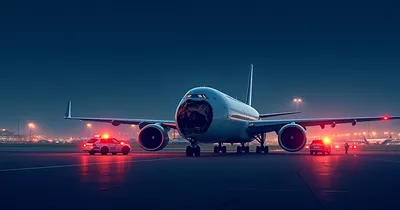
At approximately 11:40 p.m. local time on Sunday, March 22, 2026, an Air Canada Express CRJ-900 regional jet was on final approach to LaGuardia Airport when it collided with a fire truck crossing the active runway. The impact was catastrophic. The pilot and co-pilot were both killed, and the nose of the aircraft was severely crushed in the collision.
The flight was operated by Jazz Aviation on behalf of Air Canada, departing from Montréal-Pierre Elliott Trudeau International Airport. There were 72 passengers and 4 crew members aboard. Of those, 41 people were transported to hospital, including 9 with serious injuries. Two officers aboard the fire truck were also hospitalized, though with non-life-threatening injuries.
In one of the more remarkable survival stories from the crash, a flight attendant was discovered outside the aircraft still strapped to her seat — and survived with only minor injuries. According to video footage capturing the aftermath, the scale of the wreckage made the survival of most passengers on board extraordinary.
Why Was a Fire Truck on the Runway?
The fire truck had been dispatched to respond to a separate, unrelated emergency unfolding elsewhere on the airport grounds. Earlier that Sunday evening, a United Airlines pilot had reported an onboard odor and declared an emergency. Airport fire services responded by sending a truck across the runway — a standard protocol when an aircraft declares an emergency.
The problem: the fire truck was given clearance to cross the runway at the same time the Air Canada jet was on approach. According to a detailed account of the sequence of events, the air traffic controller attempted to stop the truck moments before impact, transmitting "Stop, Truck 1. Stop" in a frantic last-second warning. The jet was traveling at approximately 130 mph at that point, according to data from Flightradar24 — far too fast to abort the landing in time.
The collision was unavoidable.
The Air Traffic Control Audio That Is Circulating Widely
Perhaps no detail of this tragedy has resonated more widely than the words of the air traffic controller captured in recordings shortly after the crash. About 20 minutes after the collision, an ATC voice can be heard saying simply: "I messed up."
The audio, which has spread rapidly across social media and news outlets, provides a rare and raw glimpse into the human cost borne by the individuals managing some of the world's busiest airspace. Video and ATC audio of the crash and its immediate aftermath have been widely circulated, making this incident deeply visceral for the public in a way that aviation incident reports rarely are.
Aviation investigators will closely examine the sequencing of clearances — specifically, how the fire truck was authorized to cross the runway while an aircraft was on final approach. Whether this was a communication breakdown, a coordination failure, or a procedural error remains under active investigation.
Airport Closure and Investigation
LaGuardia Airport was closed in the immediate aftermath of the crash and remained shut until Monday afternoon while investigators assessed the scene and cleared the runway. The closure caused cascading flight cancellations and delays across the northeastern United States, affecting thousands of travelers.
The National Transportation Safety Board (NTSB) has launched a full investigation into the incident. Authorities are reviewing:
- Air traffic control communications and clearance logs
- Cockpit voice recorder and flight data recorder information from the CRJ-900
- Fire department dispatch records and the sequence of events related to the United Airlines odor emergency
- Flightradar24 and radar tracking data showing the aircraft's speed and trajectory on approach
- Video surveillance footage from the airport
Reporting on the fatalities and investigation confirms that both Jazz Aviation and Air Canada are cooperating fully with authorities.
What This Means for Travelers Flying Through NYC
For the millions of travelers who pass through New York City's airports each year, incidents like this raise understandable concerns. LaGuardia is one of the busiest and most constrained airports in the United States, with runways that extend into Flushing Bay and tight approach corridors that leave little room for error.
Aviation safety experts point out that runway incursions — incidents in which unauthorized vehicles or aircraft enter an active runway — are among the most serious hazards in commercial aviation. The FAA tracks runway incursion data closely, and major incidents like this one typically result in systemic reviews of ground coordination protocols.
Travelers with upcoming flights at LaGuardia or through Air Canada and Jazz Aviation should:
- Check directly with their airline for any schedule disruptions related to the airport closure
- Monitor NTSB updates if flying on CRJ-900 series aircraft operated by regional carriers
- Be aware that investigation-related operational adjustments at LaGuardia may cause brief delays in the days ahead
Commercial air travel remains statistically very safe, and incidents of this nature — while devastating — are extraordinarily rare. However, they underscore the critical importance of ground coordination protocols at busy airports.
Frequently Asked Questions
Who were the victims of the LaGuardia plane crash?
The two confirmed fatalities were the pilot and co-pilot of the Air Canada Express CRJ-900, operated by Jazz Aviation. Their identities had not been officially released as of Monday morning. Of the 72 passengers and 4 crew aboard, 41 were taken to hospital, with 9 suffering serious injuries. Two fire department officers were also hospitalized with non-life-threatening injuries. One flight attendant was found outside the aircraft still in her seat and survived with minor injuries.
Why did the fire truck cross the runway?
The fire truck was responding to a declared emergency aboard a United Airlines aircraft that had reported an onboard odor. Airport fire crews were authorized to cross the runway — but the clearance overlapped fatally with the Air Canada jet's landing approach. Investigators are examining why the simultaneous clearances were issued.
What caused the air traffic controller to say "I messed up"?
Approximately 20 minutes after the crash, an ATC recording captured a controller saying "I messed up." This is widely interpreted as the controller acknowledging responsibility for clearing the fire truck to cross the runway while the Air Canada jet was on final approach. The NTSB investigation will formally determine the sequence of errors that led to the collision.
Is LaGuardia Airport open again?
LaGuardia Airport remained closed through Monday morning and reopened Monday afternoon following an initial investigation and runway clearance. Travelers should confirm flight status directly with their airlines, as delays and cancellations from the closure may persist.
What type of aircraft was involved?
The aircraft was a Bombardier CRJ-900, a twin-engine regional jet widely used by North American carriers for short- and medium-haul routes. The flight was operated by Jazz Aviation on behalf of Air Canada and had originated from Montréal-Pierre Elliott Trudeau International Airport.
Conclusion
The LaGuardia Airport plane crash of March 22, 2026 is a tragic reminder of the complexity and precision required to safely manage busy airport operations. Two pilots lost their lives, dozens of passengers were injured, and an air traffic controller's anguished words — "I messed up" — have put a deeply human face on a catastrophic systems failure.
As the NTSB investigation unfolds in the coming days and weeks, findings from this crash will likely reshape ground coordination protocols at airports across the United States. For now, the focus remains on the victims, their families, and the ongoing effort to understand exactly how a response to one emergency set off a far deadlier one.
We will continue to update this article as new details emerge from the official investigation.
Stay Updated
Get the latest trending insights delivered to your inbox.