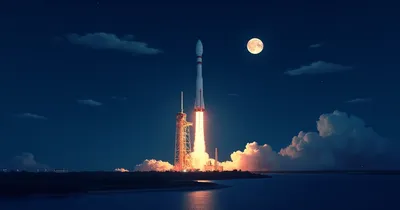
Moon Today: Artemis II Launches First Crewed Lunar Mission
Artemis II Launches: Humanity Returns to the Moon for the First Time in 53 Years
On Wednesday, April 2, 2026, the world watched in awe as NASA's Artemis II rocket lifted off, carrying four astronauts on a 10-day, 230,000-mile journey around the moon and back to Earth. It is the first crewed lunar mission since Apollo 17 in December 1972 — a gap of more than half a century. For anyone searching "moon today," this is the story dominating headlines, live streams, and social media feeds around the globe. The age of human lunar exploration is back, and it's just getting started.
According to MSN's coverage of the mission, NASA's moon mission has officially begun, and all eyes are on what comes next for the Artemis II crew as they push deeper into cislunar space.
What Is Artemis II? The Mission Explained
Artemis II is NASA's first crewed mission under the Artemis program, the agency's initiative to return humans to the lunar surface and eventually send astronauts to Mars. The mission carries a four-person crew aboard the Orion spacecraft, which sits atop the massive Space Launch System (SLS) rocket — one of the most powerful rockets ever built.
The flight plan calls for a free-return trajectory around the moon, looping behind it before slingshotting the crew back toward Earth for splashdown. It is not a landing mission — that milestone is reserved for Artemis III, currently targeted for no earlier than 2028. Instead, Artemis II serves as a critical test of the Orion capsule's systems, life support, and performance with a live crew aboard.
As this detailed mission primer from MSN explains, Artemis II is designed to validate every system needed to safely carry humans to lunar orbit and back before NASA commits to an actual landing.
Space enthusiasts following along at home can track the mission and explore it further with tools like the NASA space exploration book series, or set up a telescope for moon viewing to watch the lunar surface yourself.
A Historic Gap: What the World Looked Like When We Last Went to the Moon
To appreciate just how long humanity has been absent from the moon, consider this: the last human to set foot on the lunar surface was astronaut Eugene Cernan, who departed on December 14, 1972, during the Apollo 17 mission. He famously said, "We leave as we came, and, God willing, as we shall return." It took 53 years for that promise to be kept.
As NPR's vivid cultural retrospective points out, the world in 1972 was defined by Ziggy Stardust, hacky sack, and the tail end of the Vietnam War. Nixon was president. The internet didn't exist. Today's astronauts carry smartphones with more computing power than the entire Apollo-era NASA mission control.
Apollo 17 itself was a record-breaking mission in every sense:
- Longest stay on the lunar surface: 75 hours
- Most lunar samples collected during a single mission
- Longest overall mission duration: 12 days and 14 hours
The remaining Apollo missions — 18, 19, and 20 — were cancelled primarily due to budget cuts as public interest waned and government priorities shifted. The dormancy lasted decades, punctuated only by uncrewed robotic missions and eventual plans that never quite came to fruition, until now.
Milestone Burn Completed: "On Our Way"
Following launch, one of the most critical early milestones for Artemis II was the translunar injection (TLI) burn — a precisely timed engine firing that commits the spacecraft to its path toward the moon. According to MSN's reporting on the milestone moon burn, Artemis II completed this critical maneuver successfully, prompting jubilation at mission control and the crew's transmission: "On our way."
After the burn, the crew departed Earth orbit and began their journey into deep space — a threshold rarely crossed by humans. Shortly after, Artemis II was officially cleared to head for the moon, marking the first time in over half a century that human beings have been on a trajectory to another world.
The 10-day mission covers approximately 230,000 miles each way, traveling through the radiation-heavy Van Allen belts and into the cislunar environment that future Artemis missions will need to navigate repeatedly.
What Comes Next: The Road to Landing and Mars
Artemis II is a stepping stone, not a destination. Here's what NASA has planned for the years ahead:
- Artemis III (target: 2028): The first crewed lunar landing under the Artemis program. NASA aims to land astronauts — including the first woman and first person of color to walk on the moon — at the lunar south pole, where water ice has been detected in permanently shadowed craters.
- Lunar Gateway: A planned space station in lunar orbit that will serve as a staging point for surface missions, supporting longer stays and more complex exploration.
- Mars: NASA's long-term goal after establishing a sustainable lunar presence is a crewed mission to Mars. The moon serves as a proving ground for the deep-space systems, habitation technologies, and crew protocols that will be required for the much longer Mars transit.
The commercial space sector is deeply involved as well. SpaceX's Starship has been contracted as the Human Landing System (HLS) for Artemis III, and private companies like Blue Origin are developing their own lunar landers. This public-private partnership marks a fundamentally different approach from the all-government Apollo era.
For those inspired to follow humanity's journey to the stars more deeply, consider picking up space exploration documentary DVDs or an astronaut biography book to understand the human stories behind these missions.
Technology Then vs. Now: How Far We've Come
One of the most striking aspects of Artemis II's launch is the contrast between the technology of 1972 and today. The Apollo-era guidance computer ran at roughly 0.043 MHz and had 4KB of memory. The Orion spacecraft, by contrast, is equipped with modern fly-by-wire avionics, advanced life support systems, and digital communications infrastructure that transmits high-definition video from deep space.
Key technological advances enabling Artemis include:
- Space Launch System (SLS): A super heavy-lift rocket producing over 8.8 million pounds of thrust at liftoff, surpassing even the legendary Saturn V in some configurations.
- Orion Spacecraft: Designed with a larger crew cabin than Apollo, advanced abort systems, and a heat shield rated for lunar return speeds exceeding 24,000 mph.
- Commercial partnerships: Private companies now supply cargo, propulsion, and eventually landing systems, dramatically reducing costs compared to the 1960s government-only model.
- AI and data analytics: Mission planning and telemetry analysis leverage machine learning tools that simply didn't exist during Apollo.
Kids and adults alike curious about the science behind these achievements can explore STEM rocket science kits or a model rocket kit for beginners to get hands-on with aerospace engineering concepts.
Frequently Asked Questions About Artemis II and the Moon Today
When did Artemis II launch?
Artemis II launched on Wednesday, April 2, 2026, from Kennedy Space Center in Florida, carrying four astronauts on a 10-day lunar flyby mission.
Who was the last person to walk on the moon?
Eugene Cernan, commander of Apollo 17, was the last person to walk on the moon. He departed the lunar surface on December 14, 1972 — over 53 years before Artemis II launched.
Will the Artemis II crew land on the moon?
No. Artemis II is a crewed flyby mission designed to test the Orion spacecraft. The crew will loop around the moon and return to Earth without landing. A lunar landing is planned for Artemis III, currently targeted for 2028.
Why did humans stop going to the moon after Apollo 17?
Budget cuts were the primary reason. The Apollo program was extraordinarily expensive, and public enthusiasm had diminished by the early 1970s. Apollo missions 18, 19, and 20 were cancelled, and no crewed lunar missions followed until Artemis II in 2026.
What is NASA's plan after returning to the moon?
NASA's long-term roadmap leads to Mars. The Artemis program is designed to establish sustainable lunar operations, develop the Gateway space station in lunar orbit, and use the moon as a testbed for the deep-space technologies and human factors knowledge needed for an eventual crewed Mars mission.
Conclusion: A New Era of Lunar Exploration Has Begun
The launch of Artemis II on April 2, 2026, is not just a news event — it is a generational milestone. For the first time in over half a century, human beings are journeying toward the moon, carrying with them the accumulated technological progress of five decades and the hopes of billions of people watching from Earth.
Apollo 17's records and Eugene Cernan's farewell words were always meant to be temporary. With Artemis II now underway and a crewed landing targeting 2028, humanity is finally making good on that promise. Whether you're a lifelong space enthusiast or someone who just typed "moon today" into a search bar out of curiosity, you're watching history unfold in real time — and the best is almost certainly yet to come.
Related Products
We may earn a commission from purchases made through these links.
Top Rated: Moon Today
Best SellerHighest rated options for moon today. See current prices, reviews, and availability.
Check Price on AmazonBest Value: Moon Today
Best ValueTop-rated budget-friendly options for moon today. Compare prices and features.
Check Price on AmazonMoon Today Gadgets
RelatedPopular gadgets related to moon today. Find the perfect match.
Check Price on AmazonTech Insider Updates
Get breaking tech news and product launches first.