LGA Fire Truck Cleared Before Fatal Runway Collision
LaGuardia Airport Fire Truck Collision: What We Know About the Deadly Air Canada Crash
A devastating collision at LaGuardia Airport has sent shockwaves through the aviation world — and new audio recordings released on March 23, 2026 are now raising urgent questions about who bears responsibility. According to recordings reviewed by NBC News, air traffic control explicitly cleared a fire truck to cross an active runway moments before an Air Canada jet collided with it, killing both pilots and injuring dozens of passengers. The revelation has intensified scrutiny of airport safety protocols, ATC communications, and the broader culture of risk at one of the nation's busiest airports.
Here is a comprehensive breakdown of what happened, what investigators have found, and what travelers need to know right now.
What Happened at LaGuardia Airport: The Collision Explained
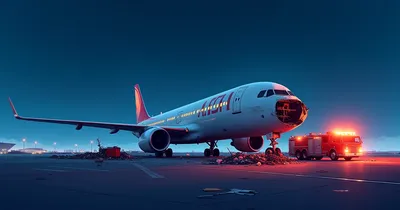
An Air Canada aircraft was on approach or taxiing at LaGuardia Airport (LGA) when it struck a vehicle — later identified as a fire truck — on the runway. The impact was catastrophic. Both pilots aboard the Air Canada plane were killed. At least four people were injured in the immediate collision, with dozens more reported hurt in the chaotic aftermath.
The incident forced the immediate closure of LaGuardia Airport, stranding thousands of travelers and triggering a full emergency response. LaGuardia was shut down entirely in the hours following the collision as investigators flooded the scene and emergency crews worked to secure the area.
The National Transportation Safety Board (NTSB) quickly mobilized, and investigators recovered the flight data recorder from the downed aircraft — a critical piece of evidence that will help reconstruct the precise sequence of events leading up to the crash.
ATC Recordings Reveal a Cleared Crossing — Then a Fatal Error
The most explosive development in this investigation came on March 23, 2026, when air traffic control recordings were released to the public. The audio confirms that the fire truck was not operating rogue or in violation of instructions — it had been explicitly cleared by air traffic control to cross the runway before the collision occurred.
Even more striking, the recordings capture the raw human moment after the crash. One ATC operator can be heard saying, "I made a mistake" in the immediate aftermath of the collision — a stunning admission that has become central to the investigation's focus on human error.
Separately, additional audio captures the phrase "I messed up" in conversations between controllers before and after the crash, painting a picture of a system where a single miscommunication had irreversible, deadly consequences.
These recordings shift the narrative significantly. Prior to their release, questions remained open about whether the fire truck crew had acted without authorization. The audio now makes clear that ATC coordination — not a rogue vehicle — was at the center of this tragedy.
Prior Safety Warnings Were Ignored, Pilots Say
Perhaps the most troubling context emerging from this investigation is that this collision did not occur in a vacuum. According to reports citing pilot complaints made before the crash, aviation professionals had already flagged serious safety concerns at LaGuardia Airport — and those warnings went unheeded.
Pilots reportedly pleaded with airport and FAA officials to address hazardous conditions at LGA, with some going as far as saying, "Please do something." The nature of those specific complaints has not been fully detailed publicly, but their existence raises profound questions about institutional accountability — whether the FAA, airport management, or other bodies failed to act on credible, firsthand warnings from the people most qualified to identify danger.
This pattern, in which safety alerts are raised by frontline workers and then dismissed or deprioritized, is a recurring theme in major aviation accident investigations. The question now is whether this crash could have been prevented if those concerns had been taken seriously.
Airport Status: LaGuardia at Reduced Capacity
As of March 23, 2026, LaGuardia Airport remains operating at reduced capacity, according to Transportation Secretary Duffy. One runway has been reopened following the fatal collision, allowing some flights to resume — but the airport is far from normal operations.
For travelers with upcoming flights through LGA, the situation remains fluid. Airlines are issuing waivers and rebooking options for affected passengers. Travelers are strongly advised to:
- Check their airline's website or app for real-time flight status updates
- Contact their airline directly about rebooking or waiver eligibility
- Arrive with extra time if flying through LGA in the coming days
- Consider alternate New York-area airports (JFK, EWR) if flexibility allows
- Monitor FAA and LGA official channels for runway and capacity updates
The NTSB investigation is ongoing, and additional runway or operational restrictions could be imposed as investigators continue their on-site work. The recovery of the flight data recorder is a significant step — that data, combined with the ATC audio recordings, will form the backbone of the official accident report.
What This Means for Aviation Safety
The LaGuardia collision is the kind of accident that forces the aviation industry to confront systemic vulnerabilities. Runway incursions — incidents in which aircraft, vehicles, or people enter a runway without proper clearance — are among the most serious threats in aviation safety. The fact that this incursion occurred with ATC clearance, rather than in spite of it, points to a breakdown not in procedure-following, but in the procedures themselves.
The NTSB will examine multiple layers of the system: the specific communication between ATC and the fire truck crew, whether proper runway safety protocols were in place, the visibility conditions at the time, and whether adequate safeguards existed to prevent a jet from being on the same runway at the same time as an authorized ground vehicle.
Aviation safety experts have long argued that LaGuardia, with its constrained geography, aging infrastructure, and high traffic volume, presents unique operational challenges. The airport sits on a peninsula in Flushing Bay, limiting expansion options and requiring precise management of ground traffic and aircraft movements. Whether those constraints contributed to this accident will likely be a focus of the investigation.
Frequently Asked Questions About the LaGuardia Airport Crash
Was the fire truck authorized to be on the runway?
Yes. Air traffic control recordings confirm that the fire truck was explicitly cleared to cross the runway before the collision. This is a central finding in the investigation, as it shifts responsibility toward ATC communication protocols rather than unauthorized vehicle movement.
Who was killed in the LaGuardia crash?
Both pilots aboard the Air Canada aircraft were killed in the collision. At least four other people were injured in the incident, with dozens more reported hurt in the broader aftermath. The identities of the victims have not been fully released publicly at this stage of the investigation.
Is LaGuardia Airport open right now?
LaGuardia Airport is operating at reduced capacity as of March 23, 2026. One runway has reopened following the collision. Travelers should check with their airline and monitor official LGA and FAA channels for the latest operational status before heading to the airport.
What is the NTSB doing to investigate the crash?
The National Transportation Safety Board has deployed investigators to the scene and has already recovered the flight data recorder from the Air Canada aircraft. They are analyzing ATC audio recordings, runway traffic logs, and witness accounts to reconstruct the exact sequence of events. A preliminary report is typically released within 30 days of a major aviation accident, with a full report taking 12–24 months.
Were safety concerns about LaGuardia raised before the crash?
Yes. Reports indicate that pilots had previously flagged safety concerns at LaGuardia Airport before the deadly collision, reportedly urging officials to "please do something." The extent to which those warnings were documented, escalated, or acted upon will likely be examined as part of the NTSB's investigation into the contributing factors of this accident.
Conclusion: A Preventable Tragedy Under the Microscope
The collision at LaGuardia Airport is a tragedy that has already claimed two lives and disrupted thousands of travelers — but the release of ATC recordings on March 23, 2026 has transformed it into something more: a critical accountability moment for American aviation. The revelation that a fire truck was cleared to cross the very runway where a jet was operating, combined with an ATC operator's admission of error and prior pilot warnings that went unaddressed, paints a sobering picture of a system that failed at multiple levels.
As the NTSB presses forward with its investigation and LaGuardia works to restore full operations, the aviation industry and the traveling public are watching closely. The data recorder has been recovered. The audio has been heard. The question now is whether the findings will produce the kind of lasting, structural change that prevents the next preventable tragedy — or whether this, like those earlier warnings, will fade without meaningful action.
Travelers flying through LGA in the coming days should stay updated through official airline and airport channels. For those affected by the disruption, most major carriers are offering flexible rebooking. And for the families of the two pilots killed: the investigation, however painful, is the beginning of the answer they deserve.
Stay Updated
Get the latest trending insights delivered to your inbox.