LaGuardia Plane Crash: Air Canada Jet Hits Fire Truck
LaGuardia Airport Plane Crash: Air Canada Jet Collides with Fire Truck, Killing Both Pilots
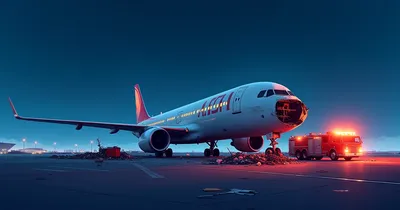
A deadly collision at one of America's busiest airports has sent shockwaves through the aviation world and left thousands of travelers scrambling. Late Sunday night, March 22, 2026, an Air Canada Express CRJ-900 regional jet struck a fire truck on the runway at LaGuardia Airport in New York, killing both pilots and injuring dozens of passengers. The crash closed LaGuardia Airport entirely through at least Monday afternoon, compounding an already strained travel system reeling from a partial government shutdown and TSA staffing shortages.
Here is everything you need to know about the LaGuardia plane crash, its impact on travelers, and what it means for air safety going forward.
What Happened: The LaGuardia Runway Collision
The Air Canada Express flight had departed from Montreal, Canada, carrying 72 passengers and four crew members when it began its approach to LaGuardia Airport late Sunday evening. As the CRJ-900 touched down, it collided with an airport fire truck that was crossing the runway — a collision that proved fatal for both the pilot and co-pilot aboard.
The circumstances behind the fire truck's presence on the runway add a tragic layer of complexity. The truck had been dispatched to respond to a separate emergency: a United Airlines aircraft that had declared an emergency due to an onboard odor. Air traffic control had initially given the fire truck clearance to cross the runway — but moments before the collision, a controller was heard issuing a frantic warning.
Air traffic control audio captured a controller urgently saying "Stop, stop, stop, truck 1 stop" in the seconds before impact — but it was too late to prevent the collision.
Video footage of the crash shows the moment of impact, capturing the chaos that unfolded on the tarmac in real time.
Casualties and Injuries: A Closer Look at the Human Toll
Both the pilot and co-pilot of the Air Canada Express flight were killed in the collision, making this one of the deadliest aviation accidents at a major U.S. airport in recent memory. The crash resulted in significant injuries among those on board and on the ground:
- 41 people were transported to nearby hospitals following the collision
- Nine passengers sustained serious injuries
- Two fire truck officers were also hospitalized, though their injuries were reported as non-life-threatening
In a remarkable survival story, a flight attendant was found still buckled into their seat outside the plane following the impact — alive but having been ejected from the aircraft during the collision, underscoring the violent force of the crash.
Airport Closure and Flight Cancellations: How Travelers Were Affected
The Federal Aviation Administration (FAA) ordered LaGuardia Airport closed following the crash, with the closure expected to remain in effect until at least 2:00 p.m. ET on Monday, March 23. For a major hub that handles hundreds of flights daily, the ripple effects were immediate and widespread.
Travelers heading to or from Florida were particularly hard hit. Multiple Florida-bound flights to and from LaGuardia were canceled, affecting routes to Miami International (MIA), Fort Lauderdale-Hollywood (FLL), Orlando International (MCO), Palm Beach International (PBI), and Southwest Florida International (RSW).
If you have travel through LaGuardia scheduled in the coming days, here are steps to take immediately:
- Check your airline's app or website for rebooking options — most carriers offer fee-free changes during declared travel disruptions
- Consider alternative New York-area airports: John F. Kennedy International (JFK) and Newark Liberty International (EWR) may have available capacity
- Contact your airline's customer service line, but expect long hold times given the volume of affected passengers
- If you have travel insurance, document all cancellations and additional expenses for potential reimbursement
Political Fallout: TSA Staffing Crisis Adds Fuel to the Fire
The LaGuardia crash did not occur in a vacuum. It struck at a moment when America's aviation infrastructure was already under strain from a partial government shutdown that has left TSA employees working without pay — for the third time in six months.
The staffing crisis has prompted an unusual and politically charged response. President Trump reacted to the crash and the broader aviation disruption, while also announcing that ICE agents would be deployed to airports to assist understaffed TSA employees — a proposal that drew swift condemnation from House Minority Leader Hakeem Jeffries, who criticized the plan on CNN.
Meanwhile, TSA's acting deputy administrator had already sounded alarm bells on March 17, warning that airports — particularly smaller regional ones — could face shutdowns entirely if the government funding impasse continued. Adding to the political noise, Elon Musk posted on social media that he wants to personally pay TSA employee salaries, a statement that generated significant online attention but no immediate policy change.
The compounding crises — a fatal runway crash, a staffing shortage, and political gridlock — paint a troubling picture for American air travel in the near term.
Aviation Safety: What Investigators Will Be Looking For
Federal investigators from the National Transportation Safety Board (NTSB) are expected to lead the investigation into the LaGuardia collision. Based on what is already publicly known, there are several key areas investigators will examine:
- Runway incursion protocols: Why was the fire truck cleared to cross an active runway during an incoming landing, and what communication breakdown led to the last-second warning?
- Air traffic control procedures: The recorded audio of the controller's urgent "stop" command suggests the situation escalated faster than normal protocols could handle
- Emergency response coordination: Managing two simultaneous emergencies — the United Airlines odor incident and the incoming Air Canada flight — likely stretched ATC resources
- Staffing and fatigue factors: Investigators may also examine whether the broader context of understaffed airport operations played any indirect role in the chain of events
Video footage captured in the aftermath of the crash is expected to be a key piece of evidence for investigators reconstructing the sequence of events.
Frequently Asked Questions About the LaGuardia Plane Crash
What caused the LaGuardia plane crash on March 22, 2026?
An Air Canada Express CRJ-900 jet collided with an airport fire truck while landing at LaGuardia Airport. The fire truck had been dispatched to respond to a separate emergency involving a United Airlines aircraft and had received clearance to cross the runway before the collision occurred. Air traffic control issued a last-second warning to stop the truck, but the collision could not be prevented.
How many people were killed in the LaGuardia crash?
Both the pilot and co-pilot of the Air Canada Express flight were killed. There were no passenger fatalities reported, though 41 people were hospitalized — nine with serious injuries — and two fire truck officers were treated for non-life-threatening injuries.
Is LaGuardia Airport open right now?
LaGuardia Airport was closed following the crash and remained shut until at least 2:00 p.m. ET on Monday, March 23, 2026, per FAA guidance. Travelers should check directly with the FAA or their airline for the latest operational status before heading to the airport.
What flights were canceled due to the LaGuardia crash?
Multiple Florida-bound routes were among the most heavily affected, including flights to Miami, Orlando, Fort Lauderdale, Palm Beach, and Southwest Florida. Passengers on canceled flights should contact their airline directly to rebook or request refunds.
How is the TSA shutdown affecting airport security?
TSA employees have been working without pay for the third time in six months due to a partial government shutdown. While TSA has maintained operations, the acting deputy administrator has warned that continued underfunding could force shutdowns at smaller regional airports. Travelers should expect potential delays and longer security wait times at major hubs.
What Travelers Need to Know Right Now
The collision at LaGuardia Airport on March 22, 2026 is a sobering reminder of the complex, high-stakes environment of modern aviation — where multiple simultaneous emergencies, communication gaps, and systemic pressures can converge with devastating consequences. For the families of the two pilots who lost their lives, it is a tragedy without measure.
For the traveling public, the immediate priority is practical: verify your flight status, explore rebooking options, and monitor official FAA and airline communications closely as LaGuardia works to resume full operations. In the bigger picture, this crash — occurring against the backdrop of a TSA staffing crisis and political dysfunction in Washington — raises urgent questions about the long-term health of America's aviation infrastructure that go well beyond any single runway in New York.
Stay tuned to official sources and trusted news outlets for updates as the NTSB investigation unfolds and LaGuardia Airport returns to normal operations.
Stay Updated
Get the latest trending insights delivered to your inbox.
Sources
- Video footage of the crash msn.com
- a flight attendant was found still buckled into their seat outside the plane 9news.com
- Multiple Florida-bound flights to and from LaGuardia were canceled cowboyswire.usatoday.com
- ICE agents would be deployed to airports msn.com
- Video footage captured in the aftermath of the crash indystar.com