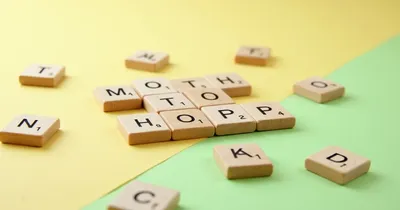
If you've landed here mid-panic, six green squares feeling impossibly far away, you're in good company. Wordle #1759 for April 13, 2026 is one of those puzzles that separates the casual player from the committed — CNET has flagged it as "very tricky" due to an unusual word with at least one rare letter. Today's answer is ELFIN, and whether you solved it, need a lifeline, or just want to understand why this word tripped everyone up, this guide has you covered.
Today's Wordle Answer for April 13, 2026 (#1759): ELFIN
The answer to Wordle #1759 is ELFIN — an adjective meaning small, delicate, and otherworldly, like a fairy or sprite. If you needed one more hint before committing, the clue circulating today is "like Zelda or Dobby" — two fictional characters who perfectly embody that small, magical quality the word describes.
ELFIN has two vowels (E and I), no repeated letters, and begins with E. That's actually a useful profile: the E opener means standard starting words with heavy vowel loads could have gotten players partway there quickly. The trap, however, is the F — a relatively uncommon letter that many opening strategies deliberately avoid. Pair that with the LF consonant cluster in the middle, and you have a word that feels just out of reach even when you have three letters locked in.
The word comes from "elf," tracing roots through Old English and Norse mythology. It entered common usage as an adjective to describe anything with fey, delicate, magical qualities. Literary use is widespread — you'll find "elfin" in Keats, in C.S. Lewis, in countless fantasy novels. In everyday speech? Less so. That gap between literary familiarity and everyday vocabulary is precisely what makes it a sharp Wordle pick.
Hints for Wordle #1759 (Without the Full Spoiler)
If you arrived here still wanting to solve it yourself, here's a structured hint ladder — take only what you need:
- Hint 1 (gentle): The word is an adjective, not a noun or verb.
- Hint 2 (directional): It relates to fantasy creatures — think small, magical beings.
- Hint 3 (structural): Two vowels, no repeated letters. Begins with E, ends with N.
- Hint 4 (thematic): The clue is "like Zelda or Dobby" — characters famous for being small and magical.
- Hint 5 (near-answer): The word contains the letters E, L, F, I, N.
That fifth hint is essentially the answer rearranged. If you got there on your own from hint four, well done — that's the vocabulary depth the puzzle rewards.
Recent Wordle Answers: April 11–13, 2026
Keeping track of recent answers helps you eliminate them from future guesses and spot patterns in how the New York Times puzzle editors select words. Here's the recent run:
- April 13, 2026 — #1759: ELFIN (adjective; small and delicate, with magical connotations)
- April 12, 2026 — #1758: ALLEY (a narrow passage between buildings — more common, but the double-L is a frequent trip-up)
- April 11, 2026 — #1757: PRUDE (clued as "someone overly modest or proper in terms of dress" — another word that lives more on paper than in conversation)
There's a visible editorial tendency here: the Times is leaning into words that are recognizable but not conversational. PRUDE, ELFIN — both feel like vocabulary test words rather than things you'd say at dinner. That's a deliberate calibration. Too common and the puzzle feels trivial; too obscure and it feels unfair. The sweet spot is exactly where players feel smart for knowing it.
Expert walkthroughs for recent puzzles consistently show that words with double letters (like ALLEY's LL) produce more failed attempts than unusual letters alone — which is counterintuitive but explains a lot about why players get stuck.
The Best Wordle Starting Words and Why They Work
Strategy matters more than luck in Wordle, and starting word selection is where that strategy begins. The current consensus among high-percentage solvers is clear: prioritize E, A, and R, and avoid Z, J, and Q in your opening move.
Why? Letter frequency in five-letter English words is the foundation. E appears in roughly 11% of all English words, A in about 8.5%, R in 7.5%. Opening with a word that hits all three gives you the maximum probabilistic coverage. For today's ELFIN, a starting word containing E and A would have confirmed E in the first guess — giving you a yellow or green on the first letter immediately.
Popular high-efficiency starters include:
- CRANE — C, R, A, N, E. Covers four of the five most common letters.
- SLATE — S, L, A, T, E. Strong vowel/consonant balance.
- AUDIO — Loads four vowels into one guess, useful for vowel-heavy answers.
- RAISE — R, A, I, S, E. Hits multiple high-frequency letters cleanly.
- TRACE — Beloved by data-driven players for its frequency-weighted letter selection.
For ELFIN specifically: CRANE would have given you E (green, first position) and N (yellow, somewhere in the word) in one shot. From there, the path narrows fast. That's the difference between solving in three guesses and sweating through six.
Why Wordle Daily Searches Keep Trending
Wordle hit the internet in late 2021, went viral in early 2022, and was acquired by the New York Times for a reported seven-figure sum in February of that year. What's remarkable is that daily search traffic for Wordle hints hasn't collapsed since — if anything, the habit has calcified into routine for millions of players worldwide.
The mechanics explain the stickiness. One puzzle per day creates artificial scarcity. The shareable result grid creates social pressure and bragging rights simultaneously. The difficulty is calibrated to feel achievable but not trivial — most days, most players solve it; some days, like today with ELFIN, the failure rate spikes visibly.
A recent study revealed Wordle's top 10 toughest words of 2025, and the pattern is consistent: words with uncommon consonants (F, V, X, Z), double letters, or misleadingly common prefixes (like words starting with "SH" that branch many ways) reliably produce the highest fail rates. ELFIN's F falls into the first category — it's not that F is impossible, it's that players burn guesses on more common consonants first.
The NYT has also kept the game culturally relevant by threading it into the broader Connections and Spelling Bee ecosystem, giving daily players a full puzzle routine. That ecosystem lock-in is why daily hint searches continue trending every single day, not just on difficult puzzles.
What the ELFIN Puzzle Reveals About Wordle's Word Selection
The choice of ELFIN as a Wordle answer is worth examining beyond just "it's tricky." The word is genuinely interesting from a lexical standpoint.
ELFIN derives from "elf" plus the suffix "-in," which historically denoted belonging to or characteristic of something. It appears in serious literary contexts — Keats used it, Tolkien's legacy gave it a massive cultural footprint — but it's not a word most English speakers use in daily conversation. The Times puzzle editors walk a careful line: the word must be in the standard dictionary, must be recognizable when revealed, but ideally surprises players during the solve.
That "aha" quality is the emotional core of Wordle. When the answer appears and players think "oh, of course" — that's the designed experience. ELFIN delivers it cleanly. Anyone who's read fantasy, done crosswords, or has a broad vocabulary will recognize it immediately upon seeing it. But constructing it blind from green and yellow squares? That's the puzzle.
The Zelda/Dobby hint also does interesting cultural work. Both characters are iconic enough to be instantly recognizable, both are depicted as small and magical, and neither is so obvious that the hint itself gives away the answer. It's a well-crafted clue — narrowing the semantic field without collapsing it entirely.
Analysis: What Today's Puzzle Means for How You Should Play
ELFIN as a Wordle answer is a small lesson in vocabulary breadth versus word frequency — and why serious players should develop both dimensions.
Most Wordle strategy advice focuses on letter frequency and information theory: maximize the number of letters you test per guess, weight your choices toward common letters, eliminate possibilities systematically. That advice is correct and valuable. But it won't save you when the answer is a word you simply don't know exists.
The players who solved ELFIN quickly likely did so because the word lives somewhere in their reading vocabulary — not necessarily from gaming or daily conversation, but from literature, crosswords, or broad reading. This is the ceiling that pure strategy can't breach: at some point, knowing words is the game.
The practical implication? If you're stuck on an unusual consonant like F after three guesses, don't just try common words in that position — think in categories. "What kind of word has -LF- or F_IN?" Fantasy-adjacent vocabulary, archaic adjectives, literary terms. That category-thinking opens up answer spaces that pure letter-frequency reasoning misses.
It's also worth noting that on harder days like this one, hard mode (where confirmed letters must be used in subsequent guesses) becomes genuinely punishing. If you locked in E_FIN on guess three and then couldn't think of a word, hard mode forced you into a corner. Normal mode lets you use a speculative guess to gather more information — often the smarter play when the answer space narrows to unfamiliar words.
Frequently Asked Questions About Wordle #1759
What is today's Wordle answer for April 13, 2026?
The answer to Wordle #1759 is ELFIN. It's an adjective meaning small, delicate, and magical in quality — like a fairy or elf. The hint provided by multiple outlets is "like Zelda or Dobby," referring to famous fictional characters with elfin characteristics.
Is ELFIN a valid Wordle word? It seems obscure.
Yes, ELFIN is a standard English adjective found in all major dictionaries. The New York Times uses the standard American English dictionary as its word source, and ELFIN qualifies. It's more common in literary and fantasy contexts than everyday speech, which is exactly why it's a challenging answer — recognized when seen, but not the first word most players think of.
What was yesterday's Wordle answer?
Yesterday's Wordle answer (April 12, 2026, #1758) was ALLEY. The double-L made it a source of difficulty for many players, as double-letter words require an extra guess to confirm the repeated letter. You can find a full expert walkthrough for the April 12 puzzle here.
What are the best starting words for Wordle in 2026?
The current best-practice starting words prioritize E, A, and R while avoiding rare letters like Z, J, and Q. Top picks include CRANE, SLATE, RAISE, and TRACE. For vowel-heavy answers, AUDIO is useful as a second guess to quickly map remaining vowels. No single starting word guarantees an easy solve — but high-frequency letter coverage gives you the best statistical foundation.
How do I avoid spoilers while still getting a hint?
Use a tiered hint system: start with category clues ("it's an adjective"), progress to structural hints ("two vowels, starts with E"), and only read the answer if you're truly stuck. Most hint guides, including this one, structure information this way. Setting a personal rule — like "I'll only read one hint level per guess" — keeps the game engaging while giving you a safety net on truly difficult days.
Conclusion: ELFIN and What Makes Wordle Worth Playing Daily
ELFIN is exactly the kind of answer that makes Wordle satisfying when you get it and humbling when you don't. It's not a trick or an obscurity for its own sake — it's a real word with history, meaning, and a place in the English lexicon. The puzzle just asks whether you've met it before.
For April 13, 2026, the answer is confirmed: #1759 is ELFIN. Two vowels, no repeats, starts with E, ends with N, means small and magical. If you got it, your vocabulary vocabulary is in good shape. If you needed this page, you've now added ELFIN to your active word set — and that's genuinely the point of a daily word puzzle.
Tomorrow brings a new puzzle, a clean slate, and another opportunity to either triumph or scramble for hints. The streak continues either way.