Trump Iran Threats Send Oil Prices Swinging in 2026
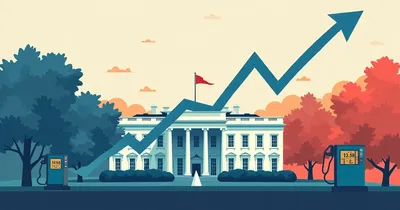
Oil markets are in turmoil. As of early April 2026, crude prices have surged past $110 per barrel — a level not seen in years — driven by a combustible mix of geopolitical escalation, presidential ultimatums, and a war in the Middle East now entering its sixth week. President Donald Trump's threat to strike Iran's power plants has sent shockwaves through energy markets, leaving investors, consumers, and policymakers scrambling to assess what comes next.
If you're searching for answers about what's happening with oil prices right now, you're not alone. This is one of the most significant energy market events of 2026 — and its consequences could ripple through gas prices, inflation, and the broader economy for months to come.
The Flashpoint: Trump's Threat to Strike Iran's Power Plants
On April 6, 2026, President Trump escalated his rhetoric against Iran dramatically, threatening to bomb Iran's power plants and bridges if a deal was not reached by a Tuesday deadline. The announcement was not a vague warning — Trump publicly reaffirmed a specific deadline, sending an unmistakable message to Tehran and to global energy markets simultaneously.
According to MSN Markets, oil prices extended their gains immediately after Trump reaffirmed the deadline, with traders pricing in the possibility of direct infrastructure strikes on one of OPEC's major producers.
Iran sits on approximately 9% of the world's proven oil reserves and remains a significant — if heavily sanctioned — supplier in global energy markets. Any disruption to its production or export infrastructure would tighten an already strained global supply picture.
Six Weeks of War: How the US-Israeli Conflict With Iran Is Driving Prices Higher
Trump's power plant threat did not emerge in a vacuum. The United States and Israel have been engaged in active military operations against Iran for roughly six weeks as of early April 2026. This sustained conflict — unprecedented in its direct military involvement of U.S. forces — has been a steady upward pressure on crude prices throughout its duration.
When armed conflict directly involves a major oil-producing region, markets typically react with a risk premium baked into prices. That premium has been building week by week. Business Insider reported that oil prices were already climbing steadily before Trump's April 6 announcement, with the ongoing war keeping supply uncertainty elevated.
Key factors driving the sustained price increase include:
- Disruption risk to Iranian exports: Even partial interference with Iranian crude flows tightens global supply.
- Strait of Hormuz concerns: Approximately 20% of the world's oil passes through this narrow waterway, which Iran has threatened to block in past conflicts.
- OPEC production uncertainty: Other Gulf producers face pressure to compensate for any Iranian shortfall, but spare capacity is limited.
- Investor risk aversion: Equity markets are stumbling as energy uncertainty mounts, with capital rotating toward commodities.
Oil Above $110: What the Markets Are Saying
The $110-per-barrel threshold is psychologically and practically significant. As MSN Money reported, stocks stumbled and oil climbed above $110 as Trump's Iran deadline approached — a classic "risk-off" market environment where uncertainty punishes equities and lifts hard commodities.
For context, here is what oil at $110+ means in practical terms:
- Gasoline prices: Retail fuel costs typically lag crude by a few weeks. Drivers should anticipate pump prices continuing to rise if crude stays elevated.
- Airline costs: Jet fuel accounts for 20-30% of airline operating expenses. Elevated crude means higher fares are likely.
- Inflation pressure: Energy is embedded in the cost of nearly everything — manufacturing, shipping, food production. Sustained high oil prices are inherently inflationary.
- Federal Reserve considerations: Energy-driven inflation complicates monetary policy, potentially delaying any interest rate relief.
The speed of the price move is also notable. Markets had already been pricing in elevated risk before Trump's Tuesday deadline announcement, meaning the actual strike — if it occurs — could produce another leg higher in crude prices.
Why Aren't Oil Prices Reacting Even More Strongly?
Given the severity of the threats, some analysts have asked why oil hasn't spiked even further. MSN News explored this counterintuitive dynamic, noting several factors that are acting as a partial ceiling on prices:
- Skepticism about follow-through: Trump has issued ultimatums before that were not acted upon. Some traders discount the probability of actual strikes.
- Demand destruction concerns: At $110+, demand begins to erode in price-sensitive emerging markets, which theoretically caps how high prices can go sustainably.
- Strategic Petroleum Reserve: The U.S. and allied nations could release reserves to dampen a spike, a tool used during previous oil crises.
- Non-Iranian supply increases: U.S. producers, already incentivized by high prices, are ramping output, and other OPEC members have signaled willingness to compensate for Iranian disruption.
This tension between escalation risk and these moderating factors explains the "swings" in prices — rapid moves in both directions as traders reassess probabilities in real time.
The Broader Geopolitical Picture: Iran Deal or Military Strike?
At the heart of the market volatility is a binary outcome investors are trying to price: a negotiated deal or military escalation. Reports ahead of Trump's Iran deal deadline noted that oil prices were rising even as diplomats worked behind the scenes on a possible agreement.
The Trump administration's stated objective is to prevent Iran from achieving nuclear weapons capability. Iran, facing severe economic pressure from sanctions and now active military engagement, is under unprecedented stress. The scenarios for resolution include:
- A negotiated agreement: Iran accepts limits on its nuclear program in exchange for sanctions relief. Oil would likely fall $10-20 per barrel rapidly on this news.
- Continued military pressure without escalation: The current status quo, which keeps prices elevated but range-bound.
- Direct strikes on power plants: The scenario Trump threatened. This could push crude sharply higher — some analysts cite $130-$140 as possible in this scenario.
- Iranian retaliation and Strait of Hormuz closure: The worst-case scenario for energy markets globally, potentially pushing prices to levels not seen since the 1970s oil crisis.
What This Means for American Consumers and the Economy
For ordinary Americans, the most immediate consequence of elevated oil prices is at the gas pump. With crude above $110, average retail gasoline prices are tracking significantly higher than in recent years. But the economic impact extends well beyond fuel costs.
Industries with heavy energy exposure — trucking, agriculture, manufacturing, and airlines — are all facing margin compression. These costs will inevitably be passed to consumers through higher prices for goods and services, adding to existing inflationary pressures in the economy.
From a political standpoint, high gas prices are historically toxic for incumbent presidents and parties. The Trump administration faces a delicate balancing act: maintaining a hardline posture toward Iran (which plays well with parts of its base) while managing the economic pain inflicted by the resulting energy prices on American households.
Whether the administration achieves a deal before its own Tuesday deadline — or follows through on its threats — will likely be the single most important near-term determinant of where oil prices go next.
Frequently Asked Questions
Why are oil prices rising because of Trump's Iran threats?
Iran is a significant oil producer, and any military strikes on its infrastructure — particularly power plants critical to its oil export operations — could reduce global supply. Markets are pricing in that risk ahead of any actual action, which pushes crude prices higher.
What is Trump's deadline regarding Iran?
President Trump set a Tuesday deadline (tied to the April 6, 2026 announcement) for Iran to reach a deal, threatening to strike Iran's power plants and bridges if no agreement was reached. He publicly reaffirmed this deadline, adding to market uncertainty.
How long has the US-Israeli war with Iran been going on?
As of early April 2026, the U.S.-Israeli military conflict with Iran has been ongoing for approximately six weeks, having begun in late February 2026. This sustained conflict has been a persistent upward driver of global oil prices throughout its duration.
Could oil prices fall if a deal is reached with Iran?
Yes. A negotiated resolution would almost certainly trigger a significant decline in crude prices — potentially $10-20 per barrel or more — as the geopolitical risk premium built into current prices would be removed. However, other supply factors (OPEC policy, U.S. production levels) would continue to influence the longer-term price trajectory.
What is the Strait of Hormuz and why does it matter for oil prices?
The Strait of Hormuz is a narrow waterway between Iran and Oman through which approximately 20% of the world's oil supply passes daily. Iran has historically threatened to close the strait during conflicts. Any credible threat to — or actual disruption of — Hormuz traffic would cause an immediate and severe spike in global oil prices.
Conclusion: A Critical Moment for Energy Markets
The convergence of Trump's Iran ultimatum, six weeks of active military conflict, and oil prices surging above $110 per barrel represents one of the most consequential energy market inflection points in recent memory. The coming days — particularly whether Trump's Tuesday deadline produces a deal or military action — will shape oil prices, inflation, and the broader economy well into the months ahead.
For consumers, investors, and businesses with energy exposure, the message from the markets is clear: volatility is the new normal until the geopolitical situation with Iran resolves. Whether that resolution comes through diplomacy or further escalation remains, as of April 7, 2026, an open and urgent question.
Stay informed by following verified reporting from Business Insider and market-focused outlets tracking this story in real time. The next 48-72 hours could prove decisive for where energy prices head next.
Political Pulse
Breaking political news and policy analysis.
Sources
- MSN Markets msn.com
- Business Insider businessinsider.com
- MSN Money msn.com
- MSN News msn.com
- Reports ahead of Trump's Iran deal deadline msn.com