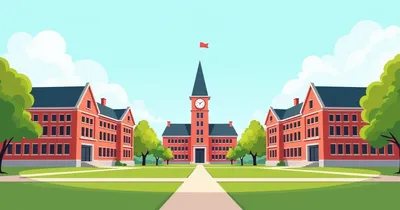
When a school closes, it rarely stays closed — not in the way anyone planned. The building comes back as a church, a tech office, or an apartment complex. The neighborhood that once organized fundraisers and drop-off carpools scatters. And the district that made the hard call discovers, often years later, that the projected savings never quite materialized, while new overcrowding problems at receiving schools required expensive bond measures to fix. It's a pattern playing out across the United States, and right now, it's playing out in Boulder, Colorado.
The Boulder Valley School District (BVSD) is actively deliberating over potential school closures driven by declining enrollment. On April 27, 2026, a former BVSD school board member published a pointed opinion piece in the Daily Camera urging the board to pump the brakes — arguing that closing schools is not the only answer to BVSD's declining enrollment. The piece draws on firsthand board experience, documented closure history within BVSD, and a menu of alternatives that other districts have used successfully. What it really offers, though, is a warning about institutional memory — and what happens when districts make irreversible decisions based on projections that never come true.
The National Enrollment Crisis: Why Every District Is Watching
BVSD is not alone. School districts across the country are grappling with declining enrollment, a trend driven by forces that are structural, not temporary. Birth rates in the United States have been falling for over a decade. The post-2008 baby bust is now showing up in K-12 classrooms, and demographers expect the trend to continue. Compounding the problem is the rapid expansion of school choice — charter schools, private schools, homeschooling co-ops, and micro-schools have fractured what were once captive enrollment pipelines.
The result is that many districts are carrying more building capacity than they have students to fill it. Empty classrooms cost money to heat, cool, staff, and maintain. The fiscal pressure is real.
But here's what's equally real: most districts that are facing this exact situation are trying hard to avoid closures. Why? Because school closures are politically explosive, deeply disruptive to communities, and extraordinarily difficult to reverse. The political capital burned in a closure fight often exceeds the fiscal savings — especially when those savings turn out to be smaller than projected.
BVSD's Closure History: What Actually Happened
BVSD has been here before. The former board member who authored the April 2026 opinion piece served on the board from 2003 to 2011, elected specifically during the last round of closure decisions. That gives the perspective genuine weight — this is someone who was in the room when BVSD closed Mapleton Elementary and Washington Elementary schools.
What happened after those closures is instructive. The students displaced from Mapleton and Washington had to be absorbed by neighboring schools, which eventually created overcrowding. To address that overcrowding, the district had to pass bond and mill levy measures — meaning taxpayers paid again for capacity problems that the closures had, in part, created.
The actual cost savings from the Mapleton and Washington closures were never documented or shared with the board or the community.
That's a striking claim. BVSD made irreversible decisions to shutter schools and displace families, and the district never produced a public accounting of whether those decisions delivered the promised financial benefits. That's not a criticism unique to BVSD — many districts make closure decisions based on projected savings that are never independently verified after the fact. But it means the evidentiary foundation for repeating the strategy is thinner than it appears.
There's another pattern worth noting from the prior BVSD closures: the enrollment projections that justified those decisions never materialized. This is a recurring problem in school closure debates nationwide. Demographers and district planners work with the best data available, but long-range enrollment forecasts are notoriously unreliable. A projection made today about 2031 enrollment will be shaped by assumptions about housing development, immigration patterns, school choice uptake, and local economic conditions — all of which can shift dramatically.
The Root Causes of Declining Enrollment
Understanding why enrollment is falling matters before deciding how to respond. According to the former BVSD board member's analysis, the decline is driven by long-term structural forces — lower birth rates and the expansion of school choice — rather than short-term fluctuations. That distinction is critical for policy.
If enrollment is down because of a temporary economic downturn or a single bad year of demographic data, closure might be a massive overreaction to a self-correcting problem. If enrollment is down because the community has fewer children and those children have more options, the response needs to address the underlying competitive and demographic reality.
In BVSD's case, the argument is that the decline reflects both: structural demographic pressure that will continue, and a competitive landscape in which families have real alternatives. Closing schools doesn't address either of those forces. It consolidates capacity, yes — but it does nothing to make BVSD more attractive to families who are choosing differently.
That's why the alternative strategies being discussed are worth taking seriously. They address the competitive dimension of the problem in ways that closures cannot.
The Alternatives: What Districts Are Actually Doing
The former board member's opinion piece isn't just a critique — it offers a concrete menu of alternatives that BVSD could pursue instead of closures. These aren't theoretical. They're strategies that districts across the country have deployed with measurable results.
Magnet School Conversion
Converting an under-enrolled school into a specialized magnet program can attract new students from across the district — students who might otherwise be enrolled in private schools, charter schools, or neighboring districts. It reframes the school's identity around a compelling educational offer rather than a geographic catchment zone.
BVSD already has a proof of concept here. Heatherwood Elementary, previously struggling with low enrollment, converted to a specialized magnet school in 2025. The result: new students enrolled specifically because of what Heatherwood now offers. That's a template, not an anomaly.
Filling Unused Space with Community Services
Empty classrooms in under-enrolled schools represent an asset that's being counted as a liability. Districts like BVSD can lease unused space to pre-K programs, child care providers, adult education programs, health clinics, or nonprofit organizations. This approach generates revenue, keeps the building active, and creates community anchors that make closure politically harder to justify in the future.
There is described as a consistent demand for more early childhood offerings in the BVSD community. That's a demand signal that maps directly onto available supply: under-enrolled elementary buildings with space to spare. The connection writes itself.
Program Consolidation Without School Closure
Another strategy involves combining or expanding popular programs from overcrowded schools into less-populated buildings. This moves students to the underused school rather than closing it, redistributes enrollment more evenly across the district, and potentially enhances the program by giving it more space to grow.
This approach requires thoughtful program design and community engagement, but it avoids the irreversibility problem that haunts outright closures.
The Heatherwood Model: A Case Study in Reinvention
Heatherwood Elementary deserves closer examination because it represents something genuinely rare in American public education: a district that tried something creative with an underperforming school and got a positive result before the closure question became unavoidable.
The conversion to a specialized magnet school in 2025 worked because it gave families a reason to actively choose Heatherwood, not just default to their neighborhood school. Magnet schools that succeed tend to have a clearly differentiated identity — STEM focus, arts integration, language immersion, Montessori method — that resonates with a specific segment of the district's population.
The lesson for BVSD isn't that every under-enrolled school should become a magnet. It's that the district has demonstrated, in its own backyard, that the choice is not binary between "full enrollment" and "closure." There's a third path: reinvention.
What This Means: Analysis
The BVSD situation is a microcosm of a debate happening in school districts from rural Ohio to suburban California. Enrollment decline is real, the fiscal pressure is real, and the political pressure to "do something" is real. But the way a district frames the problem determines the range of solutions it considers.
If the frame is "we have too many buildings," closure seems logical. If the frame is "we need to be more competitive and better serve our community," a completely different set of options comes into view.
The former BVSD board member's argument is essentially a reframing argument: stop treating this as a capacity problem and start treating it as a community value proposition problem. That's a harder problem to solve, but it's the right problem. Closing Mapleton and Washington didn't make BVSD more competitive. It just made it smaller.
The documented failure to track actual cost savings from prior closures is the most damning detail in the opinion piece, and it should concern any BVSD stakeholder. If the district is going to make irreversible decisions affecting families, neighborhoods, and community infrastructure, there needs to be a rigorous accounting framework — not just projected savings, but actual post-closure audits with public reporting. Without that, the same mistakes will repeat on the same optimistic assumptions.
What BVSD decides in the coming months will be watched carefully by other districts navigating the same pressures. A creative, community-anchored approach that keeps schools open while solving the fiscal problem would be a genuinely useful model. Another round of closures, followed years later by overcrowding bonds, would be a cautionary tale that's already been told.
Frequently Asked Questions About School Closures and Declining Enrollment
Why are school enrollment numbers declining across the U.S.?
The decline is driven primarily by lower birth rates over the past 15+ years and the expansion of school choice, including charter schools, private schools, and homeschooling. These are structural trends, not temporary dips, which means districts need long-term strategic responses rather than short-term capacity adjustments. Some regions also face population shifts as families move to lower-cost areas or different school environments.
What are the real costs of closing a school?
The direct costs include relocation expenses, potential building maintenance or sale logistics, and staff transitions. But the indirect costs are often larger: disruption to families and neighborhoods, overcrowding at receiving schools (which may require costly bond measures to fix), loss of community trust, and the political capital burned in the closure fight. BVSD's own history shows that the projected cost savings from closures may never be documented, let alone realized.
What is a magnet school, and can it solve enrollment problems?
A magnet school offers a specialized curriculum or teaching approach — STEM, arts, language immersion, Montessori — designed to attract students from across a district rather than just a neighborhood zone. When well-designed and properly resourced, magnet schools can boost enrollment at underperforming buildings by giving families a compelling reason to choose them. Heatherwood Elementary in BVSD attracted new students after converting to a magnet model in 2025, demonstrating the approach can work in practice.
How can under-enrolled schools generate revenue without closing?
Districts can lease unused classroom space to pre-K programs, child care providers, adult education programs, community health clinics, or nonprofit organizations. This generates rental income, keeps the building active, and creates community ties that benefit the district long-term. In communities with documented demand for early childhood services — like BVSD — this approach addresses a real community need while solving a fiscal problem.
Are school closure decisions reversible?
In practice, rarely. Once a school building is sold, repurposed, or demolished, the district cannot easily reacquire it. If enrollment rebounds — or if projections that justified the closure turn out to be wrong — the district is left without the capacity it needs. BVSD's own history illustrates this: after prior closures, overcrowding at remaining schools required new bond and mill levy measures, meaning the community ultimately paid more than if the schools had been kept open and reimagined.
The Bottom Line
BVSD faces a genuine challenge. Declining enrollment creates real fiscal pressure, and doing nothing is not a responsible answer. But the binary of "close schools or do nothing" is a false choice — one that BVSD's own prior experience should make the board skeptical of.
The alternatives being proposed — magnet conversions, community space leasing, early childhood expansion, program redistribution — are not wishful thinking. They are strategies that districts across the country are deploying, and that BVSD has already piloted successfully at Heatherwood. The question is whether the board will build on that proof of concept or repeat a closure cycle whose actual savings were never documented the first time.
According to the former board member's April 2026 opinion, the answer should be clear: closure is not the only option, and given the history, it may not even be the best one. The community and the board owe it to BVSD families to thoroughly exhaust the alternatives before taking an action that — as Boulder's own experience shows — is much easier to make than to undo.