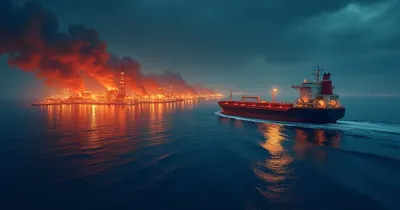
Russian Shadow Fleet Tanker Struck by Drone Near Bosphorus
Russian Shadow Fleet Tanker Altura Struck by Drone as Ukraine Cripples 40% of Russia's Oil Exports
A dramatic escalation in the energy war between Ukraine and Russia unfolded on March 26, 2026, when a drone struck the Russian shadow fleet tanker Altura in the Black Sea, just 15 miles from the Bosphorus Strait. The attack comes as Reuters calculations confirm that at least 40% of Russia's crude oil export capacity — roughly 2 million barrels per day — has been halted, marking the most severe oil supply disruption in modern Russian history. With oil prices already exceeding $100 a barrel amid a broader Iran war, the geopolitical and economic stakes could not be higher.
What Happened to the Tanker Altura?
The Altura, a vessel linked to Istanbul-based Pergamon Shipping and identified by Ukrainian intelligence as part of Russia's shadow fleet, was struck by what Turkish authorities believe was an unmanned maritime vessel. The tanker had departed a Russian port carrying 140,000 tonnes of oil and was approaching the strategically vital Bosphorus Strait when the attack occurred.
According to initial reports, the drone strike damaged the ship's bridge and caused water to enter the engine room. Fortunately, all 27 Turkish crew members on board were confirmed safe. Turkish authorities are investigating the incident, which occurred in waters they closely monitor given Turkey's role as the gatekeeper of the strategically critical Bosphorus Strait.
Ukrainian intelligence confirmed the Altura's role in circumventing Western sanctions — a classic shadow fleet operation in which vessels obscure their ownership and destinations to keep sanctioned Russian oil flowing to global markets.
Russia's Shadow Fleet: How It Works and Why It Matters
Since Western nations imposed sweeping oil sanctions following Russia's invasion of Ukraine, Moscow assembled what analysts call a "shadow fleet" — a network of aging, often poorly insured tankers that operate under obscure ownership structures to move Russian crude in defiance of sanctions.
These vessels frequently change flags, disable GPS tracking, and use opaque corporate chains to mask their connections to Russian oil. The Altura's link to an Istanbul-based shipping company is a textbook example of how this network functions — using jurisdictions with looser enforcement to maintain plausible deniability.
European nations have vowed to crack down harder on the shadow fleet, and the drone strike on the Altura signals that Ukraine is willing to go further — directly targeting the tankers themselves as an act of economic warfare. The shadow fleet has been a critical lifeline for Russia's war chest, and dismantling it has become a strategic priority for Kyiv and its allies.
The Scale of Ukraine's Oil Infrastructure Campaign
The Altura strike is one piece of a much larger, coordinated Ukrainian campaign to throttle Russia's oil export infrastructure. As of March 25, 2026, Ukraine has struck all three of Russia's major western oil export ports:
- Novorossiysk (Black Sea): Hit by a heavy drone attack in early March 2026, the terminal has been loading well below plan ever since.
- Primorsk (Baltic Sea): Struck and disrupted, cutting off a key Baltic export route.
- Ust-Luga (Baltic Sea): Targeted by Ukrainian drones as far back as January 2024, with further disruptions in 2026.
Beyond the ports, the Druzhba pipeline — which carries Russian crude westward through Ukraine to Hungary and Slovakia — was damaged at the end of January 2026. Both Hungary and Slovakia have demanded that Kyiv restart supplies, creating diplomatic friction within the European Union even as the bloc broadly supports Ukraine's war effort.
Additionally, frequent seizures of Russia-linked tankers by European authorities have disrupted approximately 300,000 barrels per day of Arctic oil exports from the port of Murmansk. Taken together, these actions represent an unprecedented, multi-front assault on Russia's ability to export oil to the West.
Economic Impact: Russia's War Chest Under Pressure
The financial consequences for Moscow are severe. Oil revenues account for approximately a quarter of Russia's state budget, meaning any sustained disruption to exports directly undermines the Kremlin's ability to fund its military operations in Ukraine.
With 40% of export capacity offline and global oil prices above $100 a barrel — driven in part by instability from the ongoing Iran conflict — Russia faces a painful paradox: high prices partially offset lower volumes, but the export infrastructure damage limits how much Russia can actually sell. The net effect is a significant squeeze on state revenues at a time when military spending is at historic highs.
Russia does continue to supply China via pipelines and sea routes totaling approximately 1.9 million barrels per day, providing a critical economic lifeline. However, China typically demands steep discounts on Russian crude, further eroding the per-barrel revenue Moscow receives.
Global Oil Markets and the Cuba Connection
The disruption to Russian exports is reverberating through global energy markets already under strain. Oil prices topping $100 a barrel are raising costs for consumers and businesses worldwide, complicating the economic calculus for governments trying to sustain support for Ukraine while managing domestic inflation pressures.
In a separate development adding another dimension to the Russian oil story, a Russian tanker is approaching Cuba, testing U.S. resolve on its naval blockade posture in the Western Hemisphere. Reports indicate the vessel is carrying hundreds of thousands of barrels and is less than a week from reaching Cuban waters — a move that analysts say is designed to probe Washington's willingness to enforce energy-related pressure in its own backyard, even as its attention is focused on the Black Sea and Baltic regions.
What This Means for the Russia-Ukraine War
Ukraine's campaign against Russian oil infrastructure represents a significant strategic evolution. Rather than fighting purely on land, Kyiv has opened an economic front designed to starve Russia's war machine of funding. The logic is straightforward: every dollar of oil revenue denied to Moscow is a dollar that cannot be spent on ammunition, missiles, or personnel.
For Western policymakers, the campaign presents both opportunities and complications. On one hand, degrading Russian oil exports accelerates pressure on the Kremlin. On the other hand, higher global energy prices create political headaches at home, and disruptions to pipelines feeding Hungary and Slovakia test EU solidarity. The Druzhba pipeline standoff in particular highlights the difficulty of pursuing maximum economic pressure on Russia without collateral damage to allied nations.
European governments' renewed vows to crack down on the shadow fleet suggest that the drone strike on the Altura, rather than prompting caution, may accelerate coordinated Western action against the tanker network that has kept Russian oil flowing despite sanctions.
Frequently Asked Questions
What is Russia's shadow fleet?
Russia's shadow fleet refers to a network of aging tankers — often flagged in third countries and owned through opaque corporate structures — used to transport Russian oil in circumvention of Western sanctions. These vessels obscure their origins and destinations to keep Russian crude flowing to buyers unwilling to openly violate sanctions.
Was anyone hurt in the attack on the Altura?
No. All 27 Turkish crew members aboard the Altura were confirmed safe following the drone strike. The ship sustained damage to its bridge and experienced water ingress in the engine room, but there were no reported casualties.
How much of Russia's oil export capacity has been knocked out?
As of March 25, 2026, Reuters calculations indicate that at least 40% of Russia's crude oil export capacity — approximately 2 million barrels per day — has been halted. This is described as the most severe oil supply disruption in modern Russian history.
Why are oil prices above $100 a barrel?
While disruptions to Russian oil exports are a contributing factor, analysts primarily attribute the $100-plus oil prices to the ongoing Iran war, which has created broader supply uncertainty in global energy markets. The Russian export disruptions compound an already tight supply situation.
Does Russia still export oil despite the disruptions?
Yes. Russia continues to supply China through pipelines and sea routes totaling approximately 1.9 million barrels per day. However, Russia sells this oil at a discount, limiting the revenue it generates. The disruptions primarily affect Russia's western export routes to Europe and global markets.
Conclusion
The drone strike on the Altura on March 26, 2026, is more than an isolated incident — it is the latest salvo in a systematic Ukrainian campaign that has achieved what many analysts once considered impossible: cutting off nearly half of Russia's oil export capacity in what Reuters describes as the most severe such disruption in modern Russian history. With Novorossiysk, Primorsk, and Ust-Luga all damaged, the Druzhba pipeline disrupted, and now shadow fleet tankers targeted at sea, Ukraine has transformed the energy sector into a front line of the war.
The consequences will unfold across multiple dimensions — Russia's state budget, global oil markets, EU unity, and U.S. posture in the Western Hemisphere — in the weeks ahead. What is already clear is that the economic war over Russian oil has entered a dangerous and consequential new phase.
Political Pulse
Breaking political news and policy analysis.
Sources
- Reuters calculations confirm nbcnews.com
- initial reports yahoo.com
- European nations have vowed to crack down harder msn.com
- a Russian tanker is approaching Cuba france24.com
- Reports indicate the vessel is carrying hundreds of thousands of barrels msn.com