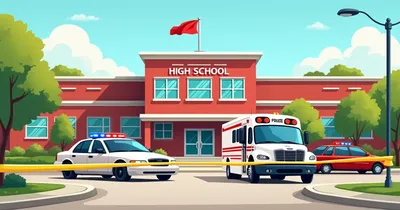
Two University of South Florida doctoral students vanished on the same morning, from two separate locations in Tampa, and weren't reported missing until days later. That detail alone sets this case apart. The disappearance of Zamil Limon and Nahida Bristy — both 27, both researchers, both gone since April 16, 2026 — has gripped the Tampa Bay community and raised urgent questions about campus safety, the vulnerability of international graduate students, and what it takes for authorities to escalate a missing persons case to "endangered" status.
On April 24, 2026, the Hillsborough County Sheriff's Office resolved a barricaded suspect situation directly connected to the investigation, taking one individual into custody. The development marks the most significant break in the case since it began — but as of this writing, Limon and Bristy have not been found.
What We Know: The Timeline of Disappearance
The morning of April 16, 2026 appears to be the last time anyone saw either student alive. Zamil Limon was last seen at his Tampa residence at approximately 9 a.m. Just one hour later, Nahida Bristy was seen at the USF Tampa campus inside the Natural & Environmental Sciences Building at approximately 10 a.m. — a building central to USF's research operations.
The two are friends, and it was a mutual acquaintance who eventually reported both of them missing. The fact that a third party — not family, not university officials — sounded the alarm underscores how these cases often unfold: quietly, with no immediate red flags, until absence becomes impossible to explain away.
Both students were entered into state and national missing persons databases, and investigators began piecing together what, if any, connection their disappearances shared. Given that two friends vanished from two separate locations within a single hour, the working assumption among investigators quickly shifted toward a shared incident rather than two unrelated disappearances.
The Escalation to 'Endangered' Status
On April 23 — a full week after Limon and Bristy were last seen — authorities upgraded their status from missing to "endangered," a designation that carries specific legal and investigative weight. In Florida, an "endangered missing adult" classification means officials have determined the individual is at risk of physical injury or death. It is not applied automatically or as a precaution — it reflects a substantive conclusion drawn from available evidence.
This upgrade matters for practical reasons: it triggers broader law enforcement resources, increased public notification, and typically signals that investigators have information suggesting foul play or extreme circumstances. The fact that it took a week to reach this threshold is not necessarily a failure — investigators need evidence before making formal designations — but it does illustrate how slowly the machinery of official response can move, even when the situation on the ground may be urgent.
The Barricaded Suspect: What Happened on April 24
The case broke open on the morning of April 24, when the Hillsborough County Sheriff's Office responded to a barricaded subject — a person who had barricaded themselves inside a location and refused to comply with law enforcement. Authorities confirmed this individual was connected to the investigation into Limon and Bristy's disappearance.
After the standoff was resolved, one person was taken into custody. The arrest was confirmed by the Hillsborough County Sheriff's Office, though authorities have been tight-lipped about the specifics of charges or how this individual connects to the students.
The investigation also produced significant disruptions to the Tampa area. Lane closures on the Howard Frankland Bridge and community closures in Tampa were tied to the investigation, suggesting law enforcement activity spread beyond a single location. The Howard Frankland Bridge, which spans Tampa Bay and connects Tampa to St. Petersburg, is a major arterial route — closing lanes there is not a routine police action.
Who Are Zamil Limon and Nahida Bristy?
Both students are 27 years old and enrolled in doctoral programs at USF — an institution that serves over 50,000 students and is home to a significant population of international graduate researchers. Limon is pursuing his doctorate in geography, environmental science and policy. Bristy is studying chemical engineering.
These are not peripheral students who might slip through institutional cracks. Doctoral students are embedded in departments, advised by faculty, engaged in research projects with schedules and obligations. Their absence would be noticed — and yet days passed before a mutual acquaintance filed a missing persons report. That gap is one of the most troubling elements of this case.
Graduate students, particularly those pursuing doctoral degrees, often exist in a kind of institutional limbo: independent enough that no single person is tracking their daily schedule, but embedded enough that a sustained absence should raise alarms. The case of Limon and Bristy puts a sharp point on how that limbo can be dangerous.
Campus Safety and the Broader Pattern
USF's Tampa campus is a sprawling research university in a major metropolitan area. It is not an isolated rural campus. The Natural & Environmental Sciences Building, where Bristy was last seen, sits at the heart of an active academic environment. The idea that a doctoral student could vanish from that building on a weekday morning — and not be reported missing for days — demands a serious conversation about how universities monitor student welfare.
American universities have expanded their safety infrastructure significantly over the past two decades, driven in part by high-profile campus crimes and the implementation of the Clery Act, which mandates crime reporting and emergency notification systems. But those systems are largely reactive — they respond to known incidents, not to quiet disappearances that don't immediately look like crimes.
Graduate students, who often work irregular hours, travel for research, and have less structured academic schedules than undergraduates, are particularly difficult to track through standard welfare check systems. Many universities have no formal mechanism to flag when a graduate researcher has been absent from their lab or advisor meetings for an extended period. The disappearance of Limon and Bristy illustrates exactly why that gap matters.
Tampa itself has its own character as a setting for this case. The city has seen significant growth in its academic and research community in recent years, and USF has become an anchor institution for the region. For those planning visits to the Tampa area, the city remains an active and vibrant community — from its cultural events to its waterfront, Tampa is far more than the sum of any single news story. But cases like this one are reminders that no city's growth erases vulnerability.
What the Arrest Means — and What It Doesn't
An arrest connected to a missing persons case is significant, but it is not resolution. The individual taken into custody on April 24 has been linked to the investigation — but the students have not been found, and the nature of that link has not been made public. Investigators may be questioning this person about the students' whereabouts, about events on April 16, or about something else entirely.
Barricaded suspect situations, by nature, suggest a person who believes they have something to lose by surrendering. That dynamic — combined with the timing, one day after the students were upgraded to "endangered" — implies investigators had developed enough information to identify a person of interest and move toward them. Whether that person can or will provide information that leads to Limon and Bristy is the central question now.
The closure of lanes on the Howard Frankland Bridge as part of the investigation is particularly notable. Searches of waterways and bridges are a grim but standard protocol when investigators fear a victim may have been disposed of in water. Tampa Bay and the surrounding waterways are extensive, and the bridge's proximity to the investigation's geography is not incidental.
Analysis: Why This Case Demands More Than Thoughts and Prayers
The disappearance of Zamil Limon and Nahida Bristy sits at the intersection of several uncomfortable realities about American higher education and public safety.
First, the response timeline is troubling. Two doctoral students vanished on the same morning and were not officially reported missing by the university or family — but by a mutual acquaintance. It took eight days for their status to be upgraded to "endangered." Universities have a duty of care to their students that extends beyond the classroom, and when the only early alert mechanism is a concerned friend, the institution has failed at a basic level of pastoral responsibility.
Second, doctoral students are uniquely vulnerable in ways institutions rarely acknowledge. They are often young adults far from home — sometimes international students without deep local support networks — embedded in demanding, high-pressure research environments with inconsistent supervision. The academic culture that prizes independence and self-sufficiency can make it hard to notice when someone is in distress, let alone when they have simply disappeared.
Third, the community response matters. The Tampa Bay area responded quickly once the case became public, but the public learned about these students' disappearance only after a week had already passed. Information is a tool in missing persons cases, and delayed public notification is delayed assistance. Every hour matters when someone is designated "endangered."
The arrest on April 24 represents law enforcement doing its job under enormous pressure. What comes next — whether the students are found, whether charges are filed, what actually happened on April 16 — will determine how this case is ultimately understood. But even in the best possible outcome, the structural questions this case raises don't disappear with a resolution.
Frequently Asked Questions
What does "endangered missing adult" mean in Florida?
In Florida, an "endangered missing adult" designation is applied when law enforcement has reason to believe the missing person is at risk of physical injury or death. It is distinct from a general missing persons report and triggers additional resources, broader database entries, and more aggressive public notification. It is not applied automatically — investigators must have evidence supporting the belief that the person faces genuine danger.
When were Zamil Limon and Nahida Bristy last seen?
Zamil Limon was last seen at his Tampa residence at approximately 9 a.m. on April 16, 2026. Nahida Bristy was last seen at the Natural & Environmental Sciences Building on the USF Tampa campus at approximately 10 a.m. on the same day. Both students have been missing since that morning.
Has anyone been arrested in connection with their disappearance?
On April 24, 2026, one person was taken into custody by the Hillsborough County Sheriff's Office following a barricaded suspect situation connected to the investigation. Authorities have confirmed the individual is linked to the case, but have not released specific charges or detailed how they connect to the students' disappearance. As of April 24, Limon and Bristy have not been found.
What programs were the students enrolled in at USF?
Zamil Limon is a doctoral candidate in geography, environmental science and policy. Nahida Bristy is pursuing her doctorate in chemical engineering. Both are 27 years old and were active members of the USF research community.
What should someone do if they have information about these students?
Anyone with information about Zamil Limon or Nahida Bristy should contact the Hillsborough County Sheriff's Office directly. Missing persons tips can also be submitted through Florida's statewide tip lines. Both students are entered into state and national missing persons databases, which means any law enforcement agency in the country can access their records.
Conclusion: An Unresolved Case With Urgent Stakes
The disappearance of Zamil Limon and Nahida Bristy is not just a local Tampa story — it is a case study in how quickly a missing persons situation can escalate, how long it can take for official systems to respond with urgency, and what happens when two young researchers with futures ahead of them simply vanish from the places they were supposed to be safe.
The arrest connected to the case on April 24 is a significant development. But significance is not the same as resolution. Until Limon and Bristy are found — and until the full picture of what happened on April 16 becomes clear — this case remains open, urgent, and deeply troubling. The Tampa Bay community, the University of South Florida, and everyone invested in the safety of graduate students across the country is watching.
For ongoing developments, follow reporting from the Tampa Bay Times and NewsNation, which have been tracking the investigation closely.