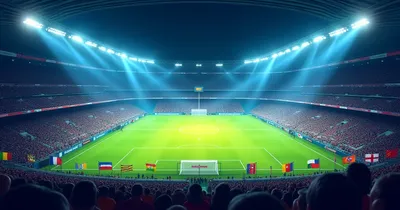
Two days in May changed MetLife Stadium from an NFL venue into something it has never been before: the future home of a World Cup final. Starting the evening of May 6, 2026, workers began laying natural grass across the stadium floor in East Rutherford, New Jersey — a process that had been quietly in motion for nearly a decade and visibly underway for the past 10 months. The installation marks a threshold moment: the 2026 FIFA World Cup is no longer an abstract future event. It is a physical, rooted reality.
The grass going down at MetLife isn't just symbolic. It represents one of the most ambitious sports infrastructure projects in American history, one that required years of agronomic research, thousands of miles of transportation logistics, and an engineering solution to a problem FIFA has never quite faced at this scale: how do you build a high-performance natural pitch in a closed, artificial-turf NFL stadium — and then replicate that answer across 16 venues spanning climates from Vancouver to Mexico City?
Why MetLife? Why Grass? Why Now?
MetLife Stadium, home to both the New York Giants and New York Jets, seats 82,500 people. For FIFA's purposes, it is the crown jewel of the tournament — the venue designated to host the July 19 final, which will be one of the most-watched sporting events in human history. Eight total matches will be played at the stadium, which FIFA has rebranded the "New York New Jersey Stadium" for the duration of the tournament.
The problem is that MetLife, like most modern NFL venues, runs on artificial turf. FIFA requires natural grass for World Cup matches. That meant the artificial surface had to come out entirely — and a functional, FIFA-certified grass pitch had to go in its place.
This isn't a new constraint for FIFA, but the scale and complexity of 2026 is unprecedented. The tournament spans three countries, 16 host cities, and a range of climates that would challenge any agronomist. According to CBS Sports, FIFA's pitch team began conducting research for this tournament nearly a decade ago, using a dedicated dome stadium in Tennessee to experiment with how grass performs under artificial lighting, controlled ventilation, and the particular stresses of high-level play.
Tahoma 31: The Grass That Traveled 600 Miles
The specific variety chosen for MetLife — and for many of the tournament's venues — is Tahoma 31 bermudagrass, a cultivar developed at Oklahoma State University and selected for its durability, density, and recovery rate. Bermudagrass thrives in warm climates, spreads aggressively (which aids repair), and has a fine texture that supports the kind of precise ball movement the world's best players demand.
The grass was grown at Carolina Green Turf Farm, located outside Charlotte, North Carolina. Growth began approximately 10 months before installation — meaning the process kicked off around July 2025. According to the Associated Press, roughly 20 truckloads of Tahoma 31 were transported from North Carolina to New Jersey for the initial installation phase.
The logistics alone are remarkable. Each truck carries rectangular sections of mature sod, carefully harvested and transported to preserve root integrity. Once at the stadium, a device described as working like a sewing machine stitches the individual sections together, creating a seamless surface rather than a patchwork of visible seams. The pitch itself sits on 18 inches of sand engineered to contain its own ventilation and irrigation system — infrastructure built specifically to sustain grass in an environment that receives almost no natural sunlight.
Yahoo Sports reports that installation began around 5 PM on May 6 and continued through 2 AM, with workers resuming at 11 AM on May 7 to complete the initial phase. The speed is deliberate — natural grass needs as much time as possible to root and establish before competitive play begins.
The Science Behind a World Cup Pitch
David Graham, FIFA's senior pitch manager, oversees grass quality at all 16 tournament venues. His challenge is arguably unique in sports: maintaining consistent, high-performance playing surfaces across locations as climatically different as Miami and Vancouver, with each stadium presenting its own structural quirks.
The bermudagrass solution reflects hard lessons learned. Previous World Cups in Brazil (2014) and Qatar (2022) each produced pitch controversies — surfaces that deteriorated under tournament pressure, excessive heat, or inadequate infrastructure. FIFA's decade-long research program, which included the Tennessee dome experiments referenced by CBS Sports, was specifically designed to avoid repeating those failures in a tournament with far more matches spread across a continental landmass.
The sand base at MetLife isn't just structural support — it's an active system. Embedded ventilation pushes air through the root zone, preventing the anaerobic conditions that kill grass in enclosed environments. The irrigation layer allows precise moisture control. Combined, these systems essentially trick the grass into believing it exists outdoors, sustaining growth and resilience in a stadium that will otherwise never see direct sunlight during a match.
For fans who want to experience the tournament at home with the same level of quality equipment used by players, professional soccer balls FIFA approved are the closest connection to the real thing.
MetLife's Transformation: From NFL to World Stage
The removal of artificial turf and installation of natural grass is a more significant logistical undertaking than it might appear. NFL artificial surfaces are engineered systems — not simply rolls of carpet. They integrate with drainage, heating, and structural systems throughout the stadium floor. Removing them requires careful deconstruction, and the natural grass installation that replaces them introduces entirely new technical demands.
MetLife's capacity of 82,500 makes it the largest venue in the tournament's US contingent. For context, the previous record for a World Cup final attendance was set at the 1950 final in Brazil, when an estimated 173,000 fans packed the Maracanã in Rio de Janeiro (though modern capacity limits would never permit that). The July 19 final at MetLife will draw a worldwide television audience in the hundreds of millions, with the in-stadium crowd representing the largest live audience for a single sporting event that most attendees will ever experience.
The stadium's dual NFL identity — serving both the Giants and Jets — means the grass installation is also on a strict timeline. The World Cup schedule compresses everything: Brazil and Morocco open Group C play at the venue on June 13, giving the Tahoma 31 bermudagrass just over five weeks from initial installation to host its first competitive match.
The Transit Controversy: $105 Isn't Good Enough
Not everything about MetLife's World Cup preparation has been smooth. A parallel controversy involving NJ Transit has drawn criticism from US lawmakers and fan groups: the cost of a round-trip train ticket from New York Penn Station to MetLife Stadium for World Cup matches.
Under an initially announced pricing scheme, a round-trip fare would have cost $150 — nearly 12 times the typical $12.90 fare. Following significant backlash, NJ Transit revised that figure downward. According to MSN, the revised price settles at $105 round trip — still roughly eight times the standard fare.
The optics are difficult. The United States is hosting a tournament that FIFA and US Soccer officials have repeatedly framed as an opportunity to grow the game domestically and welcome fans from around the world. Charging international visitors — many traveling on tight budgets — more than $100 just to reach the stadium by train undermines that messaging. Congressional pressure and advocacy from fan groups produced a modest concession, but the revised fare remains a point of contention that won't disappear before the tournament begins.
What This Means for US Soccer — and US Sports Infrastructure
The MetLife grass installation is a visible signal of something larger: American sports venues are being forced to adapt for a global game, and the adaptations are revealing both the strengths and limits of US stadium design.
NFL stadiums are engineering marvels, but they were built for a sport played on artificial surfaces under controlled conditions, with teams that play eight home games per year. FIFA's demands — natural grass, month-long tournament schedules, daily training loads — expose the gaps. The solutions being deployed at MetLife and across the 2026 host venues are novel enough that FIFA spent a decade developing them specifically for this tournament.
More broadly, the 2026 World Cup represents the US's most significant soccer infrastructure investment since the 1994 tournament. That event is widely credited with catalyzing MLS's founding and the sustained growth of the sport domestically. A successful 2026 tournament — particularly one with a memorable final at MetLife — could accelerate that trajectory meaningfully. The grass going down now is, in a very literal sense, the foundation for what comes next.
For fans getting into soccer for the first time or deepening their connection to the game, a quality soccer jersey World Cup 2026 is one of the simplest ways to mark the moment — and MetLife's June and July matches will make them ubiquitous across the Tri-State area.
FIFA's pitch research began nearly a decade before installation day. The bermudagrass now rooting into MetLife's sand base is the physical result of that long investment — and the clearest sign yet that the world's biggest tournament is almost here.
FAQ: MetLife Stadium and the 2026 World Cup
Why is natural grass being installed at MetLife Stadium?
FIFA requires natural grass playing surfaces for all World Cup matches. MetLife normally uses artificial turf for its NFL tenants (the Giants and Jets), so the artificial surface was removed and replaced with a specially engineered natural grass pitch for the duration of the tournament.
What type of grass is being used, and where did it come from?
The pitch uses Tahoma 31 bermudagrass, grown over approximately 10 months at Carolina Green Turf Farm outside Charlotte, North Carolina. About 20 truckloads were transported to MetLife Stadium in East Rutherford, NJ for the initial installation, which began on May 6, 2026.
How does the pitch survive indoors without sunlight?
The grass sits on 18 inches of engineered sand containing an embedded ventilation and irrigation system. The ventilation pushes air through the root zone to prevent anaerobic conditions, while the irrigation system maintains precise moisture levels — effectively replicating outdoor growing conditions in an enclosed stadium environment.
Which World Cup matches will be played at MetLife Stadium?
MetLife will host eight matches total. The first is Brazil vs. Morocco in Group C on June 13, 2026. The venue will host the World Cup final on July 19, 2026. For the tournament, the stadium is officially renamed "New York New Jersey Stadium."
How much does it cost to get to MetLife Stadium by train for World Cup matches?
NJ Transit has set a round-trip fare of $105 for World Cup match days — down from an initially announced $150 following pushback from lawmakers and fan groups, but still roughly eight times the standard $12.90 round-trip fare. The pricing has drawn criticism for being prohibitive to lower-income fans and international visitors.
Conclusion
The trucks rolled in from North Carolina, the sewing-machine device stitched the seams, and MetLife Stadium took its first steps toward becoming something it has never been: the site of a World Cup final. The Tahoma 31 bermudagrass now rooting into 18 inches of engineered sand represents the convergence of a decade of FIFA research, months of agronomic preparation, and the collective anticipation of billions of fans worldwide.
Everything from here accelerates. Brazil and Morocco arrive on June 13. The final follows on July 19. Whatever happens between those dates — the goals, the upsets, the moments that define this tournament — will happen on grass that started growing in North Carolina, traveled north on 20 trucks, and was stitched together in the span of a night and a morning.
The World Cup, for Americans, has always been something that happens elsewhere. This summer, for the first time in 32 years, it happens here — and the most important match of the tournament happens on a pitch that was still being laid this week.
Sources: CBS Sports · Associated Press · Yahoo Sports · MSN / NJ Transit · MSN