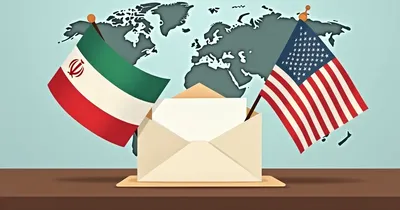
Iran Ceasefire Talks: Mediators Push 45-Day Deal
Diplomatic back-channels are buzzing with renewed urgency as the United States, Iran, and a coalition of regional mediators mount what sources are describing as a last-ditch push for a 45-day ceasefire — a deal that negotiators hope could serve as the foundation for a permanent end to the ongoing war. According to a report published by Axios on April 5, 2026, four U.S., Israeli, and regional sources with direct knowledge of the talks confirmed that active discussions around a ceasefire framework are underway. The report sent shockwaves through diplomatic and political circles, sparking immediate global attention and intense debate over whether a durable peace agreement is finally within reach.
What We Know: The 45-Day Ceasefire Framework
At the center of these high-stakes negotiations is a proposed 45-day ceasefire — a temporary halt to hostilities designed to create the breathing room necessary for more substantive and permanent peace talks. According to the Axios report, the discussions are not merely preliminary; they involve concrete terms being actively negotiated between the parties.
The key elements of the emerging framework include:
- A mutual, verifiable halt to military operations for a 45-day period
- Engagement of regional mediators to serve as neutral guarantors of the truce
- A structured pathway toward permanent cessation of hostilities
- Involvement of multiple stakeholders, including U.S. and Israeli officials with direct knowledge of the talks
Notably, Reuters could not immediately verify the Axios report independently, underscoring the sensitive and fluid nature of the negotiations. The involvement of four separate sources — spanning U.S., Israeli, and regional officials — nevertheless lends significant credibility to the reporting.
Who Are the Mediators and Why Does It Matter?
The role of regional mediators in this ceasefire push is critical. In previous rounds of conflict and diplomacy in the Middle East, third-party mediators have often served as the linchpin that keeps talks alive when direct negotiations break down. In this case, mediators are reportedly working to bridge the significant trust gap that exists between Washington and Tehran.
According to the detailed account from regional sources, the mediators are not simply acting as messengers. They are actively shaping the terms of potential agreement, using their relationships with both sides to find areas of compromise. This kind of shuttle diplomacy — where intermediaries move between parties who refuse or are unable to meet face-to-face — has historically been one of the few mechanisms capable of achieving breakthroughs in deeply entrenched conflicts.
The identity and affiliations of the specific mediating parties have not been fully disclosed, consistent with the diplomatic norm of preserving back-channel confidentiality to avoid political pressure that could collapse talks before they bear fruit.
The Broader Context: Why a Ceasefire Push Now?
Understanding why mediators are pressing so hard right now requires looking at the broader geopolitical landscape. The conflict involving Iran and the regional actors drawn into its orbit has created a humanitarian and strategic crisis with global implications. Prolonged military engagement has strained regional economies, displaced civilian populations, and drawn in outside powers whose competing interests have repeatedly complicated resolution efforts.
Several factors appear to be converging to make this moment ripe for a ceasefire push:
- War fatigue: Extended conflict has eroded domestic support for continued military engagement among several involved parties.
- Economic pressure: Sanctions, disrupted trade routes, and the costs of sustained warfare have placed growing strain on Iran's economy and on regional partners.
- Diplomatic opening: Shifts in U.S. foreign policy posture have created new potential for engagement with Tehran, with back-channel communications reportedly increasing in frequency over recent months.
- Humanitarian urgency: International pressure from global institutions and allied nations has intensified calls for an immediate halt to hostilities.
The "last-ditch" characterization used by sources is telling — it signals that mediators believe this may be a narrow window of opportunity that could close quickly if the parties cannot reach even a temporary accord.
U.S. and Israeli Involvement: Reading Between the Lines
The fact that U.S. and Israeli sources are cited alongside regional actors in the Axios report is itself diplomatically significant. It suggests that Washington and Tel Aviv — whose interests in the conflict do not always perfectly align — are at minimum aware of and potentially supportive of the ceasefire framework being discussed.
For the United States, a negotiated pause in hostilities would serve several strategic interests: reducing the risk of broader regional escalation, easing pressure on allied partners, and creating political space for a diplomatic resolution that could stabilize the region without requiring deeper direct military involvement.
For Israel, the calculus is more complex. A ceasefire involving Iran carries implications for the broader security architecture of the region, particularly regarding Iranian-backed proxies and the long-term question of Iranian nuclear ambitions. Israeli officials' participation — even indirectly — in these discussions suggests a degree of pragmatic acceptance that a temporary halt to fighting may serve immediate security interests, even if deeper strategic questions remain unresolved.
Challenges and Obstacles to a Deal
Despite the momentum suggested by the Axios report, significant obstacles remain. Ceasefire negotiations in the Middle East have a long and difficult history, with many promising frameworks collapsing at the final stage due to a failure to agree on verification mechanisms, the status of armed groups, or the sequencing of confidence-building measures.
Key challenges that could derail the current push include:
- Verification and enforcement: Any ceasefire requires reliable mechanisms to confirm compliance. In an environment of deep mutual distrust, agreeing on who monitors and enforces the truce is often as difficult as the ceasefire itself.
- Spoiler actors: Non-state armed groups affiliated with Iran or operating independently in the conflict zone could undermine a ceasefire even if state-level parties agree to one.
- Political will: Domestic political pressures in both Iran and the United States could constrain negotiators' flexibility, particularly as hardliners on both sides push back against any agreement perceived as a concession to the adversary.
- Scope of the deal: The 45-day window is only a starting point. The harder question is what happens after — and whether parties can use that period to build toward a permanent agreement or whether the ceasefire simply delays the resumption of hostilities.
What a Permanent Peace Could Look Like
The most consequential aspect of the current discussions may be the explicit framing that the 45-day ceasefire is intended as a stepping stone toward a permanent end to the war. This is a notably ambitious stated goal — and one that would require resolving some of the most intractable disputes in the region.
A durable peace framework would likely need to address:
- Iran's regional influence and the role of proxy forces
- Security guarantees for all parties involved
- Sanctions relief and economic normalization for Iran in exchange for verifiable behavioral changes
- The underlying political disputes that fueled the conflict
- International monitoring and a roadmap for post-conflict reconstruction
None of these are small asks, and achieving them within or after a 45-day window would represent one of the most significant diplomatic achievements in the region in decades. But the very fact that sources are characterizing the ceasefire as a potential gateway to permanent peace suggests that at least some negotiators believe the conditions for a broader deal may be attainable.
Frequently Asked Questions
What is the 45-day ceasefire deal between the U.S. and Iran?
According to a report by Axios published on April 5, 2026, the United States, Iran, and regional mediators are actively discussing terms for a temporary 45-day ceasefire. The deal is intended to pause hostilities and create space for negotiations aimed at achieving a permanent end to the conflict.
Who reported on the Iran ceasefire discussions?
The report was published by Axios on April 5, 2026, citing four sources with knowledge of the talks, including U.S., Israeli, and regional officials. Reuters noted it could not immediately independently verify the report.
Who are the mediators involved in the Iran ceasefire push?
The specific identities of the mediating parties have not been fully disclosed publicly. Regional actors with diplomatic ties to both the United States and Iran are reported to be playing a central role in facilitating the negotiations.
Is the ceasefire deal confirmed?
As of the reporting date, no deal has been formally announced or confirmed. The discussions are described as active, but Reuters noted it could not immediately verify the Axios report. The situation remains fluid and sensitive.
What would a permanent peace deal require?
A permanent resolution would require addressing Iran's regional influence, verifiable compliance mechanisms, security guarantees for all parties, potential sanctions relief, and resolution of the underlying political disputes driving the conflict. These are complex, long-standing issues that would take sustained diplomatic effort to resolve.
Conclusion: A Fragile but Significant Moment in Diplomacy
The reports of a last-ditch push for a 45-day Iran ceasefire represent one of the most significant diplomatic developments in the region in recent memory. Whether this moment translates into an actual agreement — and whether that agreement can hold and evolve into something permanent — remains deeply uncertain. But the convergence of U.S., Iranian, and regional stakeholders around even a preliminary framework is a development that demands serious attention.
As reported by HuffPost citing the Axios investigation, the talks are real, the sources are credible, and the stakes are enormous. The next several days and weeks will be critical in determining whether this diplomatic opening can be converted into a tangible pause — and ultimately, a path toward lasting peace.
For a conflict that has resisted resolution for so long, the mere fact that serious ceasefire discussions are underway is itself news worth following closely. The world will be watching.
Political Pulse
Breaking political news and policy analysis.
Sources
- report published by Axios on April 5, 2026 huffpost.com
- detailed account from regional sources msn.com