GOOGL Stock Down 18%: Analyst Upgrades to Buy
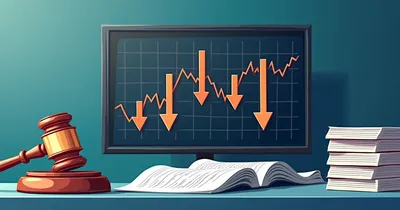
Alphabet Inc. (NASDAQ: GOOGL) is commanding investor attention in late March 2026 for a reason that might surprise those who followed the stock's remarkable run through 2025: it's falling — and falling hard. With shares now sitting 18% below their February all-time high and down 10% year-to-date, the company that owns Google, YouTube, and Waymo has gone from market hero to a stock that analysts are openly calling "not a market darling these days." Yet amid the selloff, at least one analyst has issued a fresh Buy rating upgrade — with a significant caveat attached.
So what's driving the decline, is the pain over, and should investors be buying GOOGL right now? Here's a comprehensive breakdown of where the stock stands and what the analysts are saying.
GOOGL Stock's Sharp Pullback: What the Numbers Say
After posting significant gains throughout 2025, Alphabet's stock reached an all-time high in February 2026 — a peak that now looks increasingly distant. Since then, shares have retreated sharply, entering territory that has historically signaled either a buying opportunity or the beginning of a deeper correction, depending on who you ask.
- 18% decline from the February 2026 all-time high
- 10% loss year-to-date as of late March 2026
- The stock is approaching — or has touched — bear market territory relative to its recent peak
As MSN Money reports, Google stock is sliding toward bear market territory, raising the question many investors are now asking: is this a temporary dip in a long-term uptrend, or the start of something more serious?
For context, a decline of 20% or more from a recent high is the traditional definition of a bear market. At 18% off its highs, Alphabet is flirting with that threshold — which is precisely why analyst commentary is growing louder.
The Analyst Upgrade: A Buy Call With a Warning Label
On March 27, 2026, an analyst issued a rating upgrade on GOOGL, moving the stock to a Buy designation. The upgrade itself isn't unusual — stocks get upgraded all the time. What's notable is the language attached to it.
According to the Seeking Alpha analysis, the call was described explicitly as "not an easy one." That's a candid admission from a Wall Street analyst — an acknowledgment that the bull thesis requires investors to stomach near-term uncertainty, competitive pressure, and a market that has broadly lost enthusiasm for the name.
The characterization of Alphabet as "not a market darling these days" is telling. For much of the past decade, GOOGL was considered a core holding — a near-automatic inclusion in growth and tech portfolios. The current environment is clearly different, and the upgrade reflects a contrarian stance rather than a consensus endorsement.
A separate Seeking Alpha piece frames it similarly, describing the current moment as a potential buying opportunity in the AI and advertising leader's selloff — though with the caveat that a "bull trap" may be playing out for those who jump in too early.
Alphabet's AI Position: Quietly Winning While Others Stumble?
One of the more provocative arguments circulating among Alphabet bulls is that the market is mispricing the company's artificial intelligence position. While headlines have frequently centered on Microsoft's OpenAI partnership and various AI challengers, some analysts believe Alphabet is making the most meaningful long-term AI progress of the major tech players.
As one analysis notes, Alphabet and Amazon may be "quietly winning the AI race" while Microsoft stumbles — a framing that, if accurate, suggests the current stock weakness represents a disconnect between price and underlying competitive positioning.
Alphabet's AI advantages are broad and deeply embedded:
- Google DeepMind — one of the world's most advanced AI research labs
- Gemini — Alphabet's large language model integrated across Google Search, Workspace, and Cloud
- Google Cloud — a fast-growing infrastructure business with AI as a core growth driver
- YouTube — an AI-enhanced advertising and content discovery engine with billions of users
- TPUs (Tensor Processing Units) — proprietary AI chips that reduce dependence on Nvidia and lower inference costs
For long-term investors, the question is whether the market's current skepticism toward GOOGL reflects genuine fundamental weakness or a temporary sentiment shift in a sector undergoing rotation.
Waymo: The Wildcard That Could Reshape the Valuation
Perhaps the most underappreciated asset in Alphabet's portfolio is Waymo, its autonomous vehicle subsidiary. Morgan Stanley recently reset its Alphabet stock forecast specifically due to Waymo's growth trajectory — a signal that institutional analysts are beginning to assign more meaningful value to the robotaxi business.
Waymo has expanded its commercial robotaxi operations in multiple U.S. cities and continues to accumulate real-world autonomous driving miles at a pace that competitors have struggled to match. While the business is not yet profitable on a standalone basis, the potential market for autonomous transportation is enormous — and Alphabet holds what many consider the most mature, commercially deployed autonomous driving technology in the world.
If Waymo's growth accelerates and the company moves toward an IPO or more transparent valuation, it could serve as a significant re-rating catalyst for GOOGL shares.
Risks and Reasons for Caution
A balanced assessment of GOOGL must acknowledge the headwinds that are weighing on the stock — and they are real.
Search Disruption Risk
The rise of AI-native search interfaces — including those powered by competitors — poses a legitimate long-term threat to Google Search's dominance. Search advertising remains Alphabet's largest revenue source, and any erosion in query volume or ad monetization rates would have an outsized impact on earnings.
Regulatory Pressure
Alphabet faces ongoing antitrust scrutiny in the United States and Europe. Adverse rulings — particularly around Google Search's default placement agreements — could force structural changes to the business model.
Macro and Ad Spending Sensitivity
Digital advertising budgets are sensitive to macroeconomic conditions. Any slowdown in consumer spending or corporate marketing budgets would flow directly through to Alphabet's top line.
Valuation Debate
Even after the pullback, some investors question whether GOOGL is genuinely cheap on a forward earnings basis, particularly given the near-term uncertainty around its core Search business.
These are the reasons the analyst upgrade came with a warning — the bull case is real, but so are the risks.
What History Says About GOOGL Pullbacks
Alphabet has a well-documented history of sharp pullbacks followed by recovery. Long-term shareholders who held through previous corrections — including the 2022 bear market, which saw GOOGL fall more than 40% — were ultimately rewarded as the stock recovered and pushed to new highs.
The 2025 gains that preceded the current correction were substantial, and some technical analysts argue that a consolidation period was not only expected but healthy. Whether the current 18% decline represents the full extent of the correction or a midpoint depends heavily on macroeconomic conditions, AI competitive dynamics, and the company's ability to demonstrate continued revenue growth.
What history consistently shows is that patient investors who bought GOOGL during periods of maximum pessimism — when it was "not a market darling" — generally fared well over a three-to-five-year horizon.
Frequently Asked Questions About GOOGL Stock
Why is GOOGL stock down right now?
Alphabet shares have declined approximately 18% from their February 2026 all-time high and are down 10% year-to-date as of late March 2026. The pullback reflects a combination of broader tech sector rotation, concerns about AI competition in Search, and a general shift in market sentiment away from large-cap growth names.
Is GOOGL stock a buy right now?
At least one analyst upgraded GOOGL to a Buy rating on March 27, 2026, citing the 18% discount to the all-time high as an opportunity. However, the analyst explicitly described it as "not an easy" buy, acknowledging near-term uncertainty. Whether GOOGL is a buy depends on your investment timeline, risk tolerance, and view on AI competition in search and cloud.
What is Waymo and why does it matter for GOOGL stock?
Waymo is Alphabet's autonomous vehicle subsidiary and is widely considered the most commercially advanced robotaxi company in the world. Morgan Stanley recently updated its Alphabet price target based in part on Waymo's growth, suggesting the market may be undervaluing this asset within the broader Alphabet holding company structure.
How does Alphabet's AI position compare to Microsoft and Amazon?
Some analysts argue that Alphabet is underrated in the AI race. Through Google DeepMind, Gemini, Google Cloud, and proprietary TPU chips, Alphabet has a deeply integrated AI infrastructure. Recent analysis suggests Alphabet and Amazon may be "quietly winning" the AI race while Microsoft faces more turbulence than headlines suggest.
What would cause GOOGL stock to recover?
Key catalysts for a GOOGL recovery could include stronger-than-expected earnings, demonstrable growth in Google Cloud, positive Waymo developments (such as expanded commercial operations or IPO news), regulatory clarity, or a broader market rotation back into large-cap tech growth stocks.
Conclusion: A Discounted Giant at a Crossroads
Alphabet is one of the most consequential companies in the world — and right now, it is trading at a meaningful discount to where it was just weeks ago. The 18% pullback from February's all-time high has prompted serious investor debate: is this a rare opportunity to buy a generational tech franchise at a discount, or a warning sign of deeper structural challenges ahead?
The analyst upgrade issued March 27, 2026 leans toward opportunity — but with eyes wide open. The caveat that this is "not an easy" buy is not a throwaway line. It reflects genuine uncertainty about how the AI transition plays out for Google Search, how regulators will act, and how long the current market sentiment persists.
What seems clear is that Alphabet's underlying assets — Google Search, YouTube, Google Cloud, DeepMind, and Waymo — remain formidable. For investors with a long time horizon and the patience to endure near-term volatility, the current pullback may indeed be the kind of entry point that looks obvious in retrospect. For those with a shorter horizon, caution is warranted.
As always, this article is for informational purposes only and does not constitute financial advice. Consult a qualified financial advisor before making any investment decisions.
Market Briefing
Daily market moves and investment insights.
Sources
- MSN Money reports msn.com
- Seeking Alpha analysis seekingalpha.com
- buying opportunity in the AI and advertising leader's selloff seekingalpha.com
- Waymo's growth trajectory msn.com