Coco Gauff posted a Miu Miu ad. She wore her natural hair in a bun. The internet lost its mind. And then Gauff — 22 years old, two-time Grand Slam champion, highest-earning female athlete on the planet — broke a month-long social media silence to spend eight minutes telling her critics exactly where they could put their opinions.
What happened in the days surrounding April 9–10, 2026, was more than a celebrity defending her appearance. It was a collision of luxury fashion, anti-Black bias, and the long-overdue reckoning over whose beauty standards get to define professionalism. The fact that it happened on a backyard tennis court — not in some high-gloss Miu Miu studio — makes it even more telling.
What the Miu Miu Ad Actually Showed
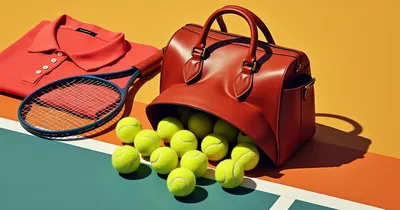
The campaign wasn't a traditional luxury shoot. Gauff posted it on Instagram approximately one week before the backlash peaked, and by most accounts, it initially received praise. The setting: her parents' backyard tennis court. The photographer: her social media manager. The product: the Miu Miu Vivant Leather Bag, a reimagined bowler-style carryall priced at $4,600.
Gauff wore a red polo shirt, a dark navy technical skirt, white socks with loafers, and her natural 4C hair pulled into a bun with a middle part and a scrunchie. Casual, personal, athletic-adjacent — the kind of aesthetic that has defined Gauff's public persona since she burst onto the scene as a teenager at Wimbledon.
The vibe was intentional. Miu Miu, the Prada Group's younger, more experimental label, has built its recent identity on exactly this kind of studied nonchalance. The brand's campaigns routinely feature unconventional settings and an anti-glamour aesthetic. Gauff's backyard shoot fit that ethos precisely. But some corners of the internet couldn't see past her hair.
The Criticism: What Was Actually Said — and What It Reveals
The negative comments that accumulated while Gauff was on her social media detox weren't subtle. Critics called her hair "unpolished." Some compared her outfit to Civil Rights era styles — deployed as an insult, which says volumes about the commenter, not Gauff. Others declared the overall look "unprofessional" for a luxury campaign costing thousands of dollars.
Let's be precise about what was being criticized: a Black woman's natural hair texture. Not a styling choice that went wrong. Not a wardrobe malfunction. Her hair, in its natural state, worn in a practical bun — the same way millions of women with 4C hair style it daily to protect its health.
As Essence's op-ed put it plainly: "Coco Gauff's Hair Isn't 'Unkept' — You're Just Anti-Black." The piece framed the backlash not as aesthetic disagreement but as a manifestation of deeply ingrained anti-Black beauty bias — the kind that deems textured, unstraightened hair as inherently less legitimate or camera-ready than Eurocentric styles.
This bias has a long legal and cultural history. The CROWN Act (Creating a Respectful and Open World for Natural Hair), passed in multiple U.S. states to protect against hair-based discrimination, exists precisely because this kind of prejudice isn't abstract — it affects hiring, housing, and daily treatment of Black people in America.
Gauff Breaks Her Silence: 'I'm Not Going to Apologize'
Gauff had spent a month off social media — deleted TikTok and Twitter entirely — as a deliberate mental health reset. When she returned, she found thousands of comments waiting for her. Her response, posted April 9–10, 2026, was an eight-minute video that quickly went viral.
Her core statement: "I'm not going to apologize for the way that my hair looked."
She explained the practical reality of 4C hair: sleek, tightly pulled styles cause damage. The bun she wore wasn't a lazy styling choice — it was a protective one. She also framed her decision to keep the look as an act of representation: she wanted girls with similar hair types to see themselves reflected in a luxury fashion campaign.
"The girls who get it, get it."
That line, widely reported following her video, became the distillation of her response — an acknowledgment that the criticism was coming from people who either didn't understand or didn't want to understand the experience of having textured hair. And a signal to the girls who do understand: you're seen.
For full context on her response and the viral moment, Yahoo Entertainment's coverage captures the breadth of the reaction across social media and mainstream press.
Why Coco Gauff's Platform Makes This Moment Significant
Gauff isn't a brand newcomer navigating her first major partnership. She's the highest-earning female athlete in the world. Her sponsor portfolio includes New Balance, Miu Miu, and Carol's Daughter Natural Hair Care — the last of which is particularly resonant here, given that Carol's Daughter has built its entire brand around celebrating natural Black hair.
In March 2026, just weeks before this controversy, Gauff reached the semi-finals of the Miami Open, becoming the youngest American woman to accomplish that feat since Serena Williams did it in 2004. She's 22 years old. She has two Grand Slam titles. She is, by any objective measure, one of the most accomplished and commercially successful athletes alive.
And yet: eight-minute apology tour required because her hair was in a bun.
The dissonance is the story. When a woman of Gauff's stature, achievement, and cultural capital still faces this kind of scrutiny over her natural hair texture in a professional context, it illustrates exactly how persistent this bias is. It doesn't retreat in the face of success. Tennis.com's coverage of her response noted the broader context of representation in sports media, where Black athletes continue to navigate appearance-based double standards their white counterparts rarely face.
For more context on Gauff's ongoing presence in sports, see our coverage of Coco Gauff Defends Natural Hair in Miu Miu Ad Campaign.
Miu Miu's Silence — and What It Says About Luxury Fashion's Moment
As of the peak of the controversy, Miu Miu had not publicly commented on the criticism directed at Gauff's appearance in the campaign. That silence is notable.
The luxury sector is in a complicated moment with diversity and representation. Brands have spent years posting statements about inclusion, signing diverse ambassadors, and commissioning campaigns that signal cultural awareness. But when that representation is actually tested — when a Black ambassador shows up in a major campaign wearing her natural hair and gets attacked for it — the question of whether the brand will stand publicly beside her matters.
Miu Miu's choice of Gauff as an ambassador was presumably deliberate. She is globally recognizable, athletically dominant, young, and culturally fluent. A backyard shoot with her social media manager producing the content fits the brand's aesthetic of studied informality. The Miu Miu Vivant Leather Bag got exactly the kind of authentic, non-corporate exposure that $4,600 luxury accessories rarely achieve organically.
Whether the brand publicly addresses the controversy or lets Gauff carry that weight alone will be remembered — especially by the consumers brands are most aggressively courting right now.
What This Means: The Real Stakes of the Miu Miu Hair Debate
Here's the informed take: this was never really about a bag ad.
The criticism of Gauff's hair in the Miu Miu campaign is a window into a specific and well-documented form of discrimination — one that operates through aesthetic language ("unprofessional," "unkempt," "unpolished") while targeting a characteristic that is inseparable from racial identity. When 4C hair in a protective style is called unfit for a luxury campaign, what's actually being said is that Black women need to modify their natural hair to be legitimate in aspirational spaces.
Gauff's refusal to apologize is significant not because celebrities don't push back on criticism — they do all the time — but because she named the mechanism. She explained what 4C hair requires, what protective styling means, and why she chose representation over appeasement. That's a different kind of response than a generic "love yourself" message. It's specific. It's educational. And it came from someone with enough platform that it couldn't be dismissed.
The Essence op-ed's framing — anti-Black, not aesthetic — will be contested by some who prefer to believe the criticism was simply a matter of taste. But taste is never culturally neutral. What gets coded as "polished" or "professional" in luxury contexts has always reflected whose aesthetic norms were centered when those standards were created. Gauff is asking, pointedly, why hers shouldn't be.
As MSN Entertainment reported, the moment has prompted widespread commentary across platforms about the intersection of race, hair politics, and luxury fashion's ongoing, imperfect relationship with diversity.
Frequently Asked Questions
What did Coco Gauff wear in the Miu Miu ad?
Gauff wore a red polo shirt, dark navy technical skirt, white socks with loafers, and her natural 4C hair in a bun with a middle part and a scrunchie. The shoot was casual — taken by her social media manager on her parents' backyard tennis court, not a formal production set.
Why were people criticizing Coco Gauff's hair?
Critics called her hair "unpolished" and said the look was unprofessional for a luxury brand campaign. Some compared her outfit unfavorably to Civil Rights era styles. The criticism targeted her natural hair texture specifically — a 4C type that she styles in protective ways to avoid damage. Essence and other outlets labeled the backlash anti-Black hair bias.
How did Coco Gauff respond to the Miu Miu criticism?
Gauff posted an eight-minute video on social media on April 9–10, 2026, after returning from a month-long break from TikTok and Twitter. She said she would not apologize for her hair, explained the practical realities of styling 4C hair without causing damage, and said she wanted girls with similar hair types to feel represented.
How much does the Miu Miu Vivant bag cost?
The Miu Miu Vivant Leather Bag featured in the campaign is a reimagined bowler-style carryall priced at $4,600.
What is 4C hair and why does it matter in this context?
4C is a hair type classification for tightly coiled, densely textured natural hair common among many Black women. It is the most fragile hair type and is prone to breakage and moisture loss. Protective styles — like the bun Gauff wore — are used deliberately to minimize damage. When critics called her style "unpolished," they were effectively criticizing a hair care practice rooted in protecting a vulnerable hair type. Gauff's explanation centered this context directly.
Conclusion
Coco Gauff didn't need to make an eight-minute video. She could have ignored the noise, let the PR cycle move on, and let the Miu Miu Vivant Leather Bag sell itself. Instead, she chose to name what was happening — and why it mattered beyond her own appearance.
The significance isn't lost on anyone paying attention. A two-time Grand Slam champion, world-ranked tennis star, and the highest-earning female athlete alive had to defend her natural hair to a luxury fashion audience in 2026. The defense shouldn't have been necessary. That it was — and that it resonated so deeply with so many people — tells you everything about how far the conversation around Black hair, beauty standards, and professional representation still has to travel.
Gauff's Carol's Daughter partnership has always been more than a sponsorship — it's an alignment of values. Her refusal to apologize for her hair in the Miu Miu campaign is that same alignment made visible in the highest-profile way possible. The girls with 4C hair watching that eight-minute video didn't just see a celebrity clap back. They saw someone with everything to lose choose representation over comfort.
That's worth considerably more than any $4,600 bag.