At 17 years old, Charlie Woods already knows what heartbreak looks like on a golf course. On May 2, 2026, he stood at Eagle Trace Golf Club in Coral Springs, Florida — the same venue where he's tried to qualify for the US Open twice before — and came within a single stroke of making history. An even-par 72 left him tied for 10th, one shot outside the playoff that would have sent him to the sport's most demanding major. The margin between footnote and headline was a single shot.
That one stroke matters more than it might seem. This wasn't a casual junior golfer taking a shot at a famous tournament. Charlie Woods is ranked 14th on the Rolex AJGA Rankings, holds an AJGA championship title, and has verbally committed to Florida State University. He is, by any objective measure, one of the most talented junior golfers in the country. The only reason anyone frames his near-miss through the lens of inevitability is because his father won this tournament three times.
What Happened at Eagle Trace: Breaking Down the Round
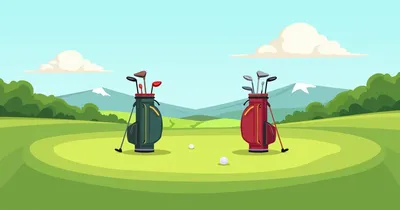
Eagle Trace Golf Club is a 7,000-yard par-72 layout in Coral Springs that has hosted local qualifying for the US Open for years. It's a demanding South Florida track — Bermuda grass, water hazards, punishing rough when the USGA sets it up for qualifying. For Charlie, it's become something of a proving ground.
His even-par 72 on May 2 was his best result in three attempts at this site, finishing tied for 10th in the field. The qualifying spots — and the critical playoff positions — went to players who finished one stroke better. In US Open local qualifying, the margin is unforgiving. There's no second chance on the day, no opportunity to birdie a par-5 you already played. One shot, final.
What makes the result notable isn't the miss itself but the trajectory it reveals. Each year at Eagle Trace, Charlie has performed better. That's not the profile of a famous kid riding on a famous name. That's a golfer developing in real time, with the qualifying stage of the US Open as his benchmark.
Charlie Woods: The Golfer Beyond the Last Name
It's nearly impossible to discuss Charlie Woods without the gravitational pull of Tiger Woods dominating the conversation, but doing so shortchanges what Charlie has actually built on his own terms.
In May 2025, at age 16, Charlie won his first AJGA championship at the Team TaylorMade Invitational in Florida. The AJGA — the American Junior Golf Association — is the premier competitive circuit for junior golfers in the United States. An AJGA title isn't a participation trophy. It's a serious competitive credential that has launched the careers of numerous Tour professionals. Winning one at 16 places Charlie in serious company.
His current ranking of 14th on the Rolex AJGA Rankings further contextualizes where he sits. That's a national ranking across thousands of junior competitors, many of whom are targeting college scholarships and professional careers. Being 14th in the country as a 17-year-old isn't background noise — it's signal.
In February 2026, Charlie verbally committed to Florida State University, one of the premier college golf programs in the country. FSU has a deep history of developing Tour professionals, and Charlie won't even begin his college career until September 2027. That timeline is deliberate. He's still building his game, stacking competitive experience, and letting his development dictate the pace — not public expectation.
The Tiger Parallel — And Why It Cuts Both Ways
The comparison was inevitable the moment Charlie started breaking 80 competitively. Tiger Woods qualified for his first PGA Tour major at age 16 in 1992 — the same age Charlie was when he won his first AJGA title. The parallel is real, but it requires careful handling.
Tiger at 16 was already a cultural phenomenon, a prodigy whose talent had been visible since he appeared on The Mike Douglas Show at age two hitting golf balls. His trajectory to the Tour was steep, fast, and largely unprecedented. Using that as a baseline for evaluating Charlie creates an almost unfair standard. Tiger's early timeline isn't a normal ceiling — it's an outlier in the history of the sport.
What's more instructive is the pattern of competitive exposure. Tiger used amateur and qualifying events not just to test his game but to develop the mental infrastructure required for major championship pressure. Charlie's repeated attempts at US Open qualifying serve the same function. He's learning how to process the weight of a single shot when it matters, how to manage a round on a course set up to punish mistakes, how to compete when a familiar name on the pairing sheet draws every camera in the area.
Missing by one shot at 17 is not a setback in any meaningful sense. It's training. The golfers who eventually thrive at major championship level are almost always the ones who accumulated high-pressure competitive failure before they accumulated wins.
What US Open Qualifying Actually Tests
To appreciate what Charlie attempted — and nearly pulled off — it helps to understand how brutal the US Open qualifying process is by design. The USGA structures it deliberately to be the hardest qualifying gauntlet in golf.
Local qualifying, where Charlie competed, involves large fields playing 18 holes at various sites across the country. The top finishers — typically just two to four players per site — advance to final qualifying, which is a 36-hole format at designated courses. From final qualifying, only a handful of spots remain. The whole funnel is designed to be narrow.
The course setup mirrors US Open conditions: rough grown thick, fairways tightened, pins tucked. Even par isn't a modest score in that environment. For most fields at local qualifying, even par is competitive. Charlie's 72 wasn't a poor round — it was one stroke short of exceptional given the conditions and stakes.
The one-shot miss also underscores something tactical about qualifying. At this level, the difference between qualifying and not qualifying often comes down to a single decision — a conservative layup taken instead of a birdie attempt, a putt left short, a club selection that came up a yard short of the green. At 17, building that decision-making instinct under pressure is exactly what these events are designed to provide.
The Road to Florida State — And Beyond
Charlie's commitment to Florida State isn't a consolation prize. It's a strategic decision that fits the arc of a serious professional prospect.
College golf at a program like FSU offers something the junior circuit can't: structured competitive volume at a high level, coaching infrastructure, and the opportunity to win team titles that build different mental muscles than individual competition. Many of the best players on Tour today — Jon Rahm, Justin Thomas, Rickie Fowler — used college golf as the platform that sharpened them for professional competition.
The fact that Charlie won't start until September 2027 means he has more than a full year of junior competition remaining. That window will include more AJGA events, more qualifying attempts, and potentially amateur majors. Each of those is another data point in his development, another reps at managing the gap between what he's capable of and what the pressure of competition demands.
His trajectory — AJGA title at 16, top-15 national ranking, near-miss at US Open qualifying, top-program college commitment — reads like a blueprint, not a lucky break. These aren't things that happen to golfers who aren't serious.
Analysis: What the One-Shot Miss Actually Means
Missing US Open qualifying by one shot is the kind of result that can be read two ways, and which reading you choose says more about your framework than it does about Charlie's ceiling.
The pessimistic read: he had his shot, he couldn't close it, and the pressure of his father's legacy continues to define how he's perceived. The optimistic read: a 17-year-old junior golfer came within a single stroke of qualifying for one of golf's four major championships and improved his result at the same venue for the third consecutive year.
The optimistic read is the correct one, and not just because it's more encouraging. It's more accurate. Charlie's competitive résumé at this age is legitimately strong by any measure that doesn't involve being Tiger Woods. The AJGA ranking, the championship win, the college commitment to a top program — these are markers of a serious golfer on a real developmental curve.
The more interesting question isn't whether Charlie will eventually qualify for the US Open. He probably will, and likely sooner than the casual observer expects. The interesting question is what kind of player he becomes in the years between now and that moment. Does the college environment unlock something in his game? Does the consistent competitive exposure at this age build the pressure tolerance that distinguishes good professionals from great ones?
Tiger's early timeline creates a distortion field around anyone named Woods picking up a club. The appropriate comparison isn't Tiger at 17 — it's any other elite junior golfer at 17 with a realistic path to professional success. By that standard, Charlie Woods is ahead of schedule, not behind it.
Frequently Asked Questions
How old is Charlie Woods and what is his current golf ranking?
Charlie Woods is 17 years old. He currently ranks 14th on the Rolex AJGA Rankings, which tracks the top junior golfers in the United States. He won his first AJGA championship in May 2025 at the Team TaylorMade Invitational in Florida.
What score did Charlie Woods shoot at the US Open qualifying and why did he miss?
Charlie shot an even-par 72 at Eagle Trace Golf Club in Coral Springs, Florida on May 2, 2026. He finished tied for 10th but missed the qualifying playoff by one stroke. In US Open local qualifying, only the top finishers — typically two to four players per site — advance to final qualifying, and the margin is unforgiving.
Where is Charlie Woods going to college?
Charlie verbally committed to Florida State University in February 2026. He is not expected to begin his college career until September 2027, meaning he has more than a year of junior competition remaining before he joins the FSU golf program.
Has Charlie Woods ever qualified for a professional golf tournament?
Charlie has attempted to qualify for the US Open multiple times through local qualifying, with his May 2, 2026 attempt being his best result — finishing tied for 10th, one shot out of the playoff. He has not yet qualified for a PGA Tour event, though his AJGA success and national ranking indicate he is on a competitive path toward professional golf.
How does Charlie Woods' junior career compare to Tiger Woods at the same age?
Tiger Woods qualified for his first PGA Tour major at age 16 in 1992 — the same age Charlie was when he won his first AJGA championship in 2025. However, Tiger's early timeline is widely considered an outlier in golf history. Charlie's development — an AJGA title, a top-15 national ranking, and a strong college commitment — tracks well above average for elite junior golfers his age, even if the comparison to his father creates an unrealistically high baseline expectation.
What Comes Next for Charlie Woods
The immediate answer is simple: more junior competition, more AJGA events, and more qualifying attempts when the opportunity arises. The US Open will return next year. Eagle Trace will likely host qualifying again. Charlie will be 18, with another year of development behind him, and one more shot at closing the one-stroke gap that separated him from history in May 2026.
The broader answer involves patience — something that's hard to practice when the person you're watching shares a surname with one of the most famous athletes of the 20th century. Charlie Woods is building something real, one round at a time, at one of the most scrutinized developmental paces in the history of junior golf. The fact that he finished tied for 10th at Eagle Trace — his best result in three attempts — isn't a consolation. It's a data point in a trajectory that, so far, keeps pointing in one direction.
One shot. That's all that separated Charlie Woods from a US Open berth at 17. If his career continues on its current arc, that one shot will eventually be remembered not as the miss that defined him, but as the near-miss that showed what was coming.