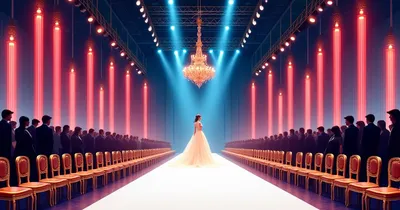
Hollywood spent years wondering whether audiences still craved the kind of grown-up, female-driven event cinema that studios quietly stopped betting on. On the first weekend of May 2026, The Devil Wears Prada 2 delivered the answer — loudly, globally, and in stilettos. The long-awaited sequel earned $77 million domestically and $233 million worldwide in its opening weekend, rewriting what a summer blockbuster can look like and who gets to star in one.
The Opening Weekend Numbers That Redefined a Season
The final confirmed figures, as of May 3, 2026, are staggering by any measure. The Devil Wears Prada 2 debuted with $77 million domestically, placing it among the strongest May opens in recent memory. Globally, the $233 million haul exceeded the projections of even the most bullish forecasters.
The trajectory leading into the weekend was already pointing toward history. Thursday preview screenings earned $10 million — one of the best preview performances ever recorded for a female-led film. Friday's full opening day gross hit $32.5 million, a number that, on its own, exceeded the entire opening weekend of the original 2006 The Devil Wears Prada, which opened to just $27.5 million two decades ago. That single data point captures the scale of the cultural reversal that occurred this weekend.
The Hollywood Reporter had been tracking the film's momentum since pre-sales began building in April, noting that the $20 million in advance ticket sales surpassed those of both Dune: Part Two and Project Hail Mary — two films that represented entirely different genres and audience bases. That pre-sale figure was the clearest early signal that Prada 2 wasn't just going to perform well; it was going to perform historically.
A Cast Reunion Nearly Two Decades in the Making
Part of what makes this opening so remarkable is that sequels to beloved films are notoriously difficult to execute. The original Devil Wears Prada, based on Lauren Weisberger's 2003 novel, became a cultural touchstone — a film people return to repeatedly, quote liberally, and defend with genuine passion. Expectations for a follow-up were therefore loaded with nostalgia and skepticism in equal measure.
The production team made the crucial decision to bring back the people who made the original work. Director David Frankel and writer Aline Brosh McKenna both returned, ensuring the sequel wasn't handed to newcomers tasked with reverse-engineering someone else's vision. More importantly, the core cast reassembled: Meryl Streep as Miranda Priestly, Anne Hathaway as Andy Sachs, Stanley Tucci as Nigel, and Emily Blunt as Emily. The reunion of all four principal cast members, not just the leads, signaled genuine commitment rather than a cynical cash grab.
Audiences responded with warmth and enthusiasm. The film received an A- CinemaScore and an 87% audience score on Rotten Tomatoes, indicating the sequel satisfied on an emotional level — it gave fans what they came for without betraying the source material. Critical reception was more measured at 77%, a score suggesting the film is good without being transcendent, but that gap between critics and audiences is telling: the people who showed up loved it.
The demographic breakdown reinforces the cast reunion's importance. 76% of the audience was women, with 58% over the age of 35. This is an audience that saw the original in theaters or discovered it on home video, grew up with it, and showed up in force to see what happened next. They were not disappointed.
Breaking Barriers: The First Female-Led Summer Opener
The Memorial Day weekend slot — traditionally the true launch of summer — has historically been the province of Marvel tentpoles, Fast & Furious installments, and franchise sequels built around male action heroes. The Devil Wears Prada 2 opened on May 1, claiming the unofficial first weekend of summer 2026, making it the first female-driven film in modern Hollywood history to kick off the summer box office season.
That distinction carries weight beyond symbolism. Studios greenlight summer openers based on risk assessment, and for decades the conventional wisdom was that only certain kinds of movies — those with established male-skewing fandoms, superhero IP, or franchise infrastructure — could anchor an entire season's opening. Prada 2 has directly challenged that assumption with $233 million in receipts.
For context on what this means for the broader fashion and culture conversation the film inhabits, it's worth noting that Anna Wintour's relationship with the film and her public re-emergence around its release added real-world texture to a story that has always been read as a roman à clef about Vogue's legendary editor-in-chief. The film doesn't exist in a vacuum — it arrives amid renewed cultural conversation about fashion, power, and women in the workplace that makes its themes feel current rather than nostalgic.
The final box office predictions before the weekend ranged widely, from $70 million to $105 million domestically, reflecting genuine industry uncertainty about how to model a film with no direct comparable. There is no template for "beloved female-skewing sequel opening summer with original cast intact 19 years later." The fact that it landed at $77 million — solidly in the middle-to-upper range of those forecasts — suggests the models were working with incomplete frameworks, not bad data.
Pre-Sales as a Predictor: What $20 Million in Advance Tickets Meant
Pre-sale data has become one of the most reliable leading indicators in box office forecasting, and The Devil Wears Prada 2 posted numbers that demanded attention. The film's $20 million in pre-sales exceeded those of both Dune: Part Two and Project Hail Mary, two highly anticipated science fiction titles representing entirely different audience segments.
That comparison is instructive because it reveals something about who was motivated enough to buy tickets in advance. Sci-fi fandom tends to be proactive about locking in opening-night seats. The fact that a fashion-world drama driven by a 35-plus female audience matched or exceeded those pre-sale benchmarks suggests a passionate, organized fanbase that treated this sequel like a genuine event — not a background-noise weekend option.
Pre-opening tracking reports cited the pre-sale momentum as the primary driver of upward forecast revisions throughout April 2026. As each week passed, the projections climbed. By April 30, BoxOffice Pro was citing the pre-sales as evidence the film could be one of the year's highest-grossing domestic titles — a claim the opening weekend has now substantiated.
International Markets: Italy Led, But the Whole World Showed Up
The $233 million global total reflects a film that resonated internationally in ways that exceeded domestic performance. Italy led all international markets with $16.6 million, a result that makes cultural sense given the country's deep connection to fashion and the centrality of European couture to the film's world. Brazil followed with $12.6 million, the United Kingdom with $12 million, and Mexico with $11.7 million.
The Brazilian and Mexican numbers are particularly noteworthy. Latin American markets have historically been strong for star-driven, emotionally resonant films, and the performance there suggests the film's themes — ambition, identity, reinvention — translated across cultures without losing their specificity. Italy posting the top international number reflects something else: the film's fashion world setting carries genuine prestige and aspiration in a country where fashion is industry, not just entertainment.
The film posted the top opening day of any film in 2026 in both Brazil and Italy, underscoring that this wasn't merely nostalgia-driven American performance. The sequel generated first-time audiences internationally as well as returning fans.
The Rest of the Weekend: A Rising Tide
The broader context of the May 1-3 weekend is worth examining. The overall summer box office opening totaled $174 million, a 19% increase over the same weekend in 2025. Prada 2 drove that increase, but the other films in release also performed, suggesting the weekend reflected genuine audience enthusiasm rather than a zero-sum cannibalization effect.
The Michael Jackson biopic Michael crossed $400 million globally in its second weekend, dropping only 44% domestically to $54 million — a remarkably strong hold that indicates excellent word-of-mouth and repeat viewing. Meanwhile, The Super Mario Galaxy Movie passed $400 million domestic in its fifth weekend, with a global total of $894 million, cementing its status as one of the biggest animated hits in recent years. Both films benefited from sharing a marketplace with a film that was drawing audiences back to theaters rather than competing for the same viewers.
What This Opening Means for Hollywood's Sequel Calculus
The $77 million domestic debut carries implications that will be discussed in Hollywood boardrooms for months. The film proves several things simultaneously, and studios would be unwise to treat any of them as isolated anomalies.
First: audiences over 35 will mobilize for the right project. The 58% over-35 demographic didn't wait to see how the film reviewed — they pre-bought tickets and showed up opening weekend. This is the behavior studios typically associate with teenage fandoms and superhero diehards. It turns out it's also the behavior of adults who loved a movie in 2006 and wanted to see what happened next.
Second: the "female audience won't open a blockbuster" assumption has been conclusively refuted. With 76% female attendance and a summer-opening slot, Prada 2 has earned the right to be cited in every future greenlight conversation about female-driven tentpoles. The data is now unambiguous.
Third: returning creative teams matter. The decision to bring back Frankel and Brosh McKenna, not just Streep and Hathaway, paid dividends in audience trust. The A- CinemaScore reflects satisfaction, not just curiosity, and satisfaction is what drives the week-two and week-three legs that turn a strong opener into a genuine hit.
To become a true theatrical phenomenon, the film needs to reach roughly $535 million globally to surpass the inflation-adjusted theatrical run of the original. That's a significant target, but the opening weekend suggests it's within reach if word-of-mouth holds. The cultural moment the film is landing in — with fashion, nostalgia, and female-driven storytelling all in conversation with each other — gives it legs that pure action spectacle rarely achieves.
Frequently Asked Questions
How much did The Devil Wears Prada 2 make opening weekend?
The film earned $77 million domestically and $233 million globally in its opening weekend of May 1-3, 2026. Thursday preview screenings accounted for $10 million of the Friday gross, which totaled $32.5 million on its own — more than the entire opening weekend of the original 2006 film.
Is The Devil Wears Prada 2 a success?
By every available metric, yes. The film outperformed most industry projections, earned an A- CinemaScore indicating strong audience satisfaction, and opened to the largest global debut of any female-led film in recent memory. Whether it constitutes a long-term financial success depends on its theatrical legs — it needs approximately $535 million globally to surpass the inflation-adjusted performance of the original — but the opening gives it a strong foundation.
Who is in the cast of The Devil Wears Prada 2?
The sequel reunites the original principal cast: Meryl Streep as Miranda Priestly, Anne Hathaway as Andy Sachs, Emily Blunt as Emily, and Stanley Tucci as Nigel. Director David Frankel and screenwriter Aline Brosh McKenna also returned from the original production.
Which countries performed best internationally for The Devil Wears Prada 2?
Italy led all international markets with $16.6 million, followed by Brazil ($12.6 million), the United Kingdom ($12 million), and Mexico ($11.7 million). The film posted the top opening day of any 2026 release in both Italy and Brazil.
How does The Devil Wears Prada 2 compare to recent blockbusters?
Its $20 million in pre-sales exceeded those of both Dune: Part Two and Project Hail Mary, placing it in elite company for advance audience interest. It opened the 2026 summer season — a slot historically held by Marvel films and action franchises — making it the first female-driven film in modern Hollywood history to do so. The overall weekend box office was up 19% year-over-year, a rise largely attributable to the film's performance.
The Bottom Line
The Devil Wears Prada 2's $233 million global debut is more than a box office number — it's a data point that permanently alters the conversation about what kinds of films earn summer opening slots, which audiences will mobilize for event cinema, and how studios should think about legacy IP with female-skewing fan bases. The original The Devil Wears Prada became a classic gradually, through years of home video discovery and cultural osmosis. Its sequel arrived as a genuine theatrical event and performed like one.
The fashion world, the entertainment industry, and the demographics that drive both have just demonstrated that they can anchor one of the most competitive weekends on the Hollywood calendar. Whether Prada 2 sustains the momentum to reach $535 million globally remains to be seen, but the opening weekend has already made its argument. Hollywood should be taking notes.