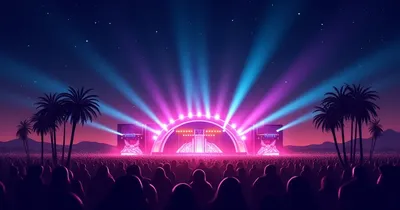
Nine years is a long time to wait. For BigBang fans — VIPs, as they're known — the stretch between 2017 and now has felt like an era in itself, marked by military service, solo careers, legal controversies, and the quiet grief of wondering whether one of K-pop's most consequential groups would ever truly return. On April 19, 2026, at Coachella Valley Music and Arts Festival, that question got its answer: BigBang is back, and they're not easing in slowly.
During their Weekend Two performance at Coachella, G-Dragon announced a 20th anniversary world tour set to begin in August 2026, alongside confirmation that the group has completed work on a new album — their first major musical output as a collective since 2017. The announcement sent shockwaves through the K-pop fanbase and beyond, generating immediate global buzz that extended well past their dedicated following into mainstream music conversation.
What BigBang Announced at Coachella
The announcements came at the close of BigBang's Weekend Two set — a bookend to performances they'd already delivered the previous weekend. G-Dragon delivered the world tour reveal directly from the stage, making it one of the more dramatic live concert announcements in recent K-pop memory. The fact that it happened at Coachella — arguably the most visible festival platform in the world — was not accidental.
According to The Hollywood Reporter, Daesung framed the moment in striking terms, describing Coachella as not just a comeback but a "reset" for the group. That word choice matters. A comeback implies returning to something that already existed. A reset implies a new beginning built on what came before — same foundation, different structure. For a group navigating the aftermath of member departures and nearly a decade of fragmented activity, "reset" is the more honest framing.
The new album news, confirmed separately by Yonhap News Agency, adds critical substance to what could otherwise be dismissed as a nostalgia play. BigBang isn't just touring on catalog — they're arriving with new material, which signals genuine artistic investment in the group's next chapter rather than a lucrative victory lap.
The Current Lineup: Three Members, Full Commitment
BigBang originally debuted as five members: G-Dragon, T.O.P, Taeyang, Daesung, and Seungri. The group that performed at Coachella and will embark on the 2026 world tour consists of three: Taeyang, G-Dragon, and Daesung.
T.O.P announced his departure from YG Entertainment in 2023 after years of reduced involvement, having served his military service and navigated a high-profile marijuana controversy in 2017. Seungri's exit was more consequential — he retired from the entertainment industry entirely in 2019 amid a sprawling scandal involving a Gangnam nightclub, ultimately receiving a criminal conviction in 2022. These aren't footnotes; they're context that makes the three-member configuration feel less like a diminished lineup and more like a deliberate reckoning with what BigBang can honestly be going forward.
What's notable is that the three remaining members have maintained serious solo careers throughout the hiatus. Taeyang released solo work and collaborated internationally. G-Dragon, arguably K-pop's most influential solo artist-producer, dropped his solo album Infinite Road in 2024 after completing his military service — his first in over a decade. Daesung has maintained an active profile in Japan. These aren't men who've been sitting idle; the BigBang reunion represents a conscious choice to prioritize the collective again, not a fallback option.
The Coachella Performance: What They Played
The set itself was a careful balance of honoring legacy and asserting presence. Each member delivered solo segments within the group performance:
- Taeyang performed "Ringa Linga", his 2013 solo breakout that remains one of his signature tracks
- G-Dragon performed "Power", showcasing the commanding stage presence that made him a genre-defining figure
- Daesung performed "Look at Me, Gwisun", a crowd-pleasing choice that demonstrated the group's range from hip-hop to playful pop
The group set included "Bae Bae" — notably, the first live performance of the song in nearly a decade. That choice alone was a signal to VIPs that this wasn't a sanitized greatest hits exercise. "Bae Bae" was released in 2015 as part of BigBang's MADE series, and pulling it out of the vault after so long demonstrated that the group understands which moments matter to their fans.
The set closed with "Still Life," BigBang's final group release from 2022 — a track that, in retrospect, may have been signaling something. "Still Life" was widely interpreted at release as a meditation on impermanence and the passage of time, fitting for a group that had been through so much. Closing Coachella with it now reads as a bridge between that moment of quiet reflection and this new chapter of active engagement.
BigBang's Coachella appearance also unfolded on a weekend that saw Karol G make history as the first Latina headliner to close out Weekend 2, making the festival one of the most culturally significant in recent years.
Why 2017 Was the Last Time — And Why That Matters
BigBang's last standalone concert tour in 2017 came at the tail end of a complicated era. Military service obligations — mandatory for South Korean men — meant that members would be cycling through enlistments between 2017 and 2021. Planning a coordinated group tour around staggered military service is essentially impossible, which made the hiatus structurally inevitable even before the scandals that further complicated the group's timeline.
What makes August 2026 significant isn't just that it ends the nine-year gap — it's that the timing represents the first moment since 2017 when all three remaining members have completed their military service, emerged from their various personal and legal situations, and rebuilt their individual profiles enough to approach a group project from a position of strength rather than obligation.
As Forbes notes, the tour marks BigBang's 20th anniversary as a group — a milestone that transforms what could be a simple comeback into something with historical weight. Twenty years in any music genre is remarkable. In K-pop, where group cycles are often compressed into intense five-to-seven-year windows before dissolution or restructuring, two decades represents near-unprecedented longevity.
What This Means for K-Pop's Global Moment
BigBang's emergence at Coachella 2026 is not happening in a vacuum. K-pop's global footprint has expanded enormously since BigBang was last on the road. BTS essentially rewrote what's possible for Korean acts in Western markets before their own military hiatus. BLACKPINK sold out stadium tours worldwide. The infrastructure for K-pop at scale — the streaming numbers, the international fandoms, the festival bookings — is categorically different than it was in 2017.
BigBang helped build that infrastructure. They were the group that proved Korean acts could fill arenas internationally before it was commonplace. Returning now means entering a market their successors helped mature — which is both an advantage (greater cultural receptivity to K-pop globally) and a challenge (more competition, higher baseline expectations from audiences who've since seen what K-pop concerts can be).
The Coachella platform was strategically perfect for this re-entry. Rather than opening in Seoul and slowly expanding outward, BigBang chose one of the world's most-watched cultural events to make their announcement, ensuring that the world tour news would be received as global news from the moment it broke — not Korean news that eventually went global.
What Fans Should Expect From the New Album
The new album confirmation is arguably the most consequential piece of news buried under the world tour headline. BigBang's last full studio album, MADE, arrived in 2016. "Still Life," released in 2022, was a single rather than a full project. What a new album represents for BigBang in 2026 is a statement of genuine artistic identity — who they are as a three-member unit, what they sound like after nearly a decade of individual evolution, and what they have to say at twenty years in.
G-Dragon's solo work during the hiatus showed a continued willingness to push sonic boundaries; Taeyang's collaborations demonstrated his R&B instincts maturing; Daesung's Japanese work showcased pop craftsmanship. A group album drawing on all three of those trajectories has real creative potential — assuming the album lives up to the announcement.
Timing details beyond "completed" haven't been confirmed, but the logical window would be a release preceding or coinciding with the August tour launch — using the tour as a promotional platform while giving audiences new material to connect with before they arrive at venues.
Analysis: What BigBang's Return Really Signals
The easy read on BigBang's Coachella appearance is nostalgia bait — a legacy act trading on goodwill from fans who grew up with them. The more accurate read is more interesting.
BigBang's return is a test case for whether first-generation K-pop acts can exist as ongoing cultural entities rather than legacy attractions. Groups like Shinhwa, who debuted in 1998 and have continued releasing music and touring for decades, exist primarily within Korean domestic markets. BigBang's ambitions are clearly global, which means they're attempting something with few direct precedents.
Daesung's framing of Coachella as a "reset" rather than a comeback is the key to understanding their positioning. A comeback invites comparison to peak-era BigBang — the 2012-2016 window when they were among the biggest acts in Asia. A reset establishes 2026 as its own starting point. It's a savvier framing, and it's the one that gives them the most creative runway.
The three-member configuration also matters more than it might initially appear. Rather than treating the reduced lineup as a liability to work around, the Coachella performance seemed to treat it as simply the reality of what BigBang is now. There's no pretending T.O.P and Seungri's absence isn't felt, but there's also no apologizing for it. The show went on, and it was clearly enough to generate the kind of global excitement that produces announced world tours and completed albums.
For VIPs who've been waiting since 2017, the message is clear: the version of BigBang you get in 2026 is different from the one you remember, and that's okay. What they're offering isn't a recreation of the past — it's a continuation, on their own terms, by the three members who chose to continue.
Frequently Asked Questions
When does BigBang's 2026 world tour start?
G-Dragon announced from the Coachella stage on April 19, 2026 that the world tour will begin in August 2026. Specific dates, cities, and venue announcements had not been released at the time of the Coachella announcement. Fans should monitor BigBang's official channels for ticketing details.
Who are the current members of BigBang?
BigBang's current active lineup consists of three members: Taeyang, G-Dragon, and Daesung. T.O.P departed from YG Entertainment in 2023. Seungri retired from the entertainment industry in 2019 following a legal controversy that resulted in a criminal conviction in 2022.
Is BigBang releasing a new album in 2026?
Yes. BigBang confirmed during their Coachella Weekend Two performance that they have completed work on a new album. This would be their first major group studio project since the MADE album in 2016. A release date has not been announced, but the timing relative to the August tour start is likely to be a factor.
How long has it been since BigBang's last concert tour?
BigBang's last standalone concert tour took place in 2017, making the 2026 world tour their first in approximately nine years. The gap was primarily driven by mandatory South Korean military service obligations for all members, compounded by the personal and legal situations that affected the group's timeline.
Why did BigBang choose Coachella to announce their comeback?
Coachella offered BigBang maximum global visibility for their return. By performing at one of the world's most-watched music festivals before announcing both the world tour and new album, they ensured the news broke as global entertainment news rather than K-pop industry news. Daesung characterized the Coachella appearance as a "reset" for the group — a deliberate reintroduction on the world stage rather than a quiet domestic announcement.
Conclusion
BigBang's Coachella announcement isn't simply a reunion story — it's a genuine inflection point in K-pop history. The group that helped prove Korean music could travel globally is now returning to a world that has fully absorbed that lesson, armed with a new album, a world tour, and apparently the intention to matter again rather than just be remembered.
Whether they can translate Coachella buzz into sustained cultural relevance through 2026 and beyond will depend on the album, the tour execution, and whether G-Dragon, Taeyang, and Daesung have genuinely found something new to say as a trio. But the Coachella performance — the "Bae Bae" revival, the "Still Life" closer, Daesung's "reset" framing — suggested a group that knows exactly what it's doing and why it's doing it now. After nine years, that clarity is more reassuring than any announcement could be on its own.
August 2026 cannot come soon enough for VIPs. And for anyone who slept on BigBang the first time around, the world tour might be the moment to understand what the fuss was always about.