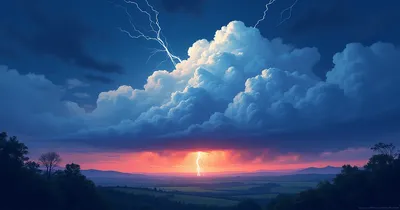
A geomagnetic storm is pushing the aurora borealis southward — and for millions of Americans who've never seen the northern lights from their own backyard, Thursday night could be the opportunity they've been waiting for. According to recent forecasts, at least eight U.S. states stand a real chance of witnessing one of nature's most spectacular light shows before the weekend arrives. Here's everything you need to know to catch it.
The Forecast: Which 8 States Could See Aurora Thursday Night
The National Oceanic and Atmospheric Administration's Space Weather Prediction Center has issued alerts tied to elevated geomagnetic activity, with the Kp index — the global measure of geomagnetic disturbance on a scale of 0 to 9 — expected to climb high enough to push the aurora oval well south of its usual polar boundary. When the Kp index reaches 5 or higher, aurora sightings become possible across much of the northern United States.
According to the latest northern lights forecast, the states with the strongest viewing potential include northern-tier states stretching from the Pacific Northwest through the Great Lakes region and into New England. States like Montana, North Dakota, Minnesota, Wisconsin, Michigan, Maine, Washington, and Idaho consistently appear in high-probability viewing zones when geomagnetic activity spikes at these levels.
The critical variables working in skywatchers' favor this particular evening are storm intensity and timing. Aurora displays that peak between 10 p.m. and 2 a.m. local time, when skies are fully dark and solar wind interaction is at its strongest, produce the most vivid curtains of green, red, and purple light. Cloud cover remains the wildcard — even a powerful aurora is invisible beneath an overcast sky.
Understanding the Science Behind This Aurora Event
The northern lights are not random. They're the direct result of charged particles — electrons and protons — ejected from the sun during solar flares or coronal mass ejections (CMEs). When these particles reach Earth, they interact with the magnetosphere, funneling down along magnetic field lines toward the poles. As they collide with atmospheric gases like oxygen and nitrogen at altitudes between 60 and 200 miles, they release energy as visible light.
Green aurora — the most common — comes from oxygen molecules at lower altitudes. Rare red aurora appears from oxygen at higher elevations. Nitrogen produces blue and purple hues. The specific colors visible on any given night depend on how high in the atmosphere the particle bombardment reaches and how energetic the solar event was.
We are currently deep into Solar Cycle 25, which began in December 2019 and is now approaching its solar maximum — the peak period of sunspot activity and solar storm frequency. Solar maximum was originally projected to occur around 2025, but NOAA has noted that Cycle 25 has outperformed predictions dramatically. This explains why aurora events have been more frequent and more intense over the past 18 months than they were during the previous decade. The historic May 2024 aurora, which was visible across most of the continental United States and parts of Mexico, was a product of this same supercharged solar cycle.
How to Watch the Northern Lights Tonight
Seeing the aurora requires more than being in the right geographic zone. Preparation significantly increases your chances of a memorable experience.
- Get away from city lights. Light pollution is the single biggest obstacle for most viewers in the lower 48. Even a 20-30 minute drive from an urban center into rural areas dramatically improves visibility. Dark sky parks and rural highways with open northern horizons are ideal.
- Face north and wait. Aurora appears on the northern horizon first before spreading overhead during active periods. Allow your eyes at least 20 minutes to fully adjust to darkness.
- Check real-time Kp data. NOAA's Space Weather Prediction Center and apps like SpaceWeatherLive provide live geomagnetic readings so you know exactly when activity peaks.
- Monitor cloud forecasts obsessively. Even thin cloud layers diffuse aurora beyond recognition. Clear Sky Chart (cleardarksky.com) is the gold standard for astronomical weather forecasting by location.
- Plan for cold. Optimal aurora viewing often means standing outside for extended periods at night. Layer appropriately — aurora chasing is a patience game.
If severe weather threatens your area before or after the aurora window, it's worth knowing your local conditions. Resources covering events like tornado warnings near you can help you stay safe while planning outdoor activities in rapidly changing spring weather conditions.
Aurora Photography: How to Actually Capture It
Human eyes perceive aurora as dim, ghostly shimmer — especially at lower latitudes where the display is weaker. Camera sensors are far more sensitive to the wavelengths involved, which means your phone or DSLR will often capture vivid green bands that appear nearly invisible to the naked eye. This cuts both ways: you may photograph a spectacular aurora you could barely see, or be surprised to find your photos show almost nothing despite a vivid visual display when the aurora is overhead at full intensity.
For serious aurora photography, the right gear makes all the difference:
- A heavy-duty camera tripod is non-negotiable — aurora shots require exposures of several seconds, and any movement ruins the image.
- A wide-angle lens with a large maximum aperture (f/2.8 or faster) captures more sky and gathers more light per second.
- A mirrorless camera with strong low-light performance handles high ISO settings — typically 1600 to 6400 for aurora work — without excessive digital noise.
- A remote shutter release prevents vibration when triggering long exposures.
- Hand warmers protect your fingers during long cold-weather shoots — and keep camera batteries from draining too fast in low temperatures.
For smartphone shooters, modern night mode algorithms on flagship phones have become genuinely capable aurora cameras. Mount your phone with a phone tripod mount adapter, switch to manual or pro mode if available, and set exposures between 5-15 seconds at the highest ISO your phone supports before noise becomes overwhelming.
The Context: Why Aurora Sightings in the Lower 48 Are Becoming More Common
Many Americans assume the northern lights are exclusively a Scandinavian or Alaskan phenomenon. That was roughly true for most of the past decade, when Solar Cycle 24 — the weakest solar cycle in a century — kept geomagnetic activity subdued. Kp indices rarely climbed high enough to push the aurora oval below the U.S.-Canada border with any regularity.
Solar Cycle 25 shattered that assumption. Starting in 2023 and accelerating through 2024 and into 2025-2026, the current cycle has produced multiple G3 (strong), G4 (severe), and even G5 (extreme) geomagnetic storms. The May 2024 event — the most powerful geomagnetic storm since the 2003 "Halloween Storms" — sent aurora sightings as far south as Florida, Texas, and Mexico. That event sparked a cultural moment: millions of people who had never considered aurora watching suddenly became deeply interested in space weather forecasting.
The result has been a sustained public hunger for aurora forecast information. NOAA's space weather pages routinely crash during major events. Aurora alert apps have seen downloads surge by orders of magnitude. And the community of dedicated aurora chasers — people who drive hours into rural darkness chasing Kp index thresholds — has grown substantially. Thursday's forecast represents exactly the kind of moderate-to-strong event that rewards this new generation of aurora enthusiasts without requiring a once-in-a-generation G5 storm.
Analysis: What This Aurora Activity Really Means
The practical implication of the current solar cycle is straightforward: if you live in the northern United States and you haven't seen the aurora yet, the next two years are your best window in over a decade — possibly your best in a lifetime. Solar maximum is either upon us or just behind us, and even as the cycle begins its eventual decline, elevated storm activity typically persists for 1-2 years after the peak.
There's a deeper story here worth taking seriously. Geomagnetic storms of the magnitude required to push aurora into the lower 48 are the same storms that pose real risks to infrastructure. The 1989 Quebec blackout — caused by a geomagnetic storm — left 6 million people without power for up to nine hours. A repeat of the 1859 Carrington Event, the most powerful geomagnetic storm ever recorded, would today cause catastrophic damage to satellites, GPS systems, power grids, and internet infrastructure. The beautiful aurora borealis is essentially the visible signature of a planetary-scale electromagnetic event.
This doesn't mean Thursday's forecast represents a threat — moderate geomagnetic storms happen regularly without causing significant infrastructure problems. But it does mean the increasing frequency of strong aurora events is something power grid operators, satellite operators, and emergency managers are watching closely alongside the stargazers. The beauty and the risk come from the same source.
Weather extremes of all kinds are demanding more attention in 2026. While aurora events represent a cosmic force, earth-bound weather is equally intense in other parts of the country — extreme heat watches with temperatures reaching 112°F in California and Arizona deserts underscore just how much atmospheric and space weather variability is currently in play.
Frequently Asked Questions About the Aurora Forecast
What Kp index do I need to see the aurora from my location?
It depends heavily on your latitude. From the Canadian border states — Montana, North Dakota, Minnesota, Michigan's Upper Peninsula, northern Maine — a Kp of 5 is often sufficient on a clear, dark night. From the mid-Atlantic states or the Midwest, you typically need Kp 6 or higher. From southern states, Kp 7-8+ is required for any realistic chance of a visual display. The aurora oval expands southward as the Kp index rises, so checking real-time readings from NOAA before heading out is always worth it.
Will I be able to see the aurora with the naked eye, or only in photos?
Both are possible, and the answer depends on storm intensity. During powerful events (Kp 7+), the aurora can be strikingly visible to the naked eye — dancing curtains, rapid color shifts, visible structure. During moderate events, it often appears as a pale greenish glow on the northern horizon, easily mistaken for distant city lights. Camera sensors reliably capture more detail and more vivid color than human eyes can perceive, so photographing first and then reviewing is a smart strategy to confirm you're actually seeing aurora rather than atmospheric haze.
What time should I go out to watch?
Aurora activity follows geomagnetic storm timing more than clock time, but peak viewing typically occurs between 10 p.m. and 2 a.m. local time, when you're deep into the dark side of Earth and solar wind interaction is most direct. Real-time alerts from NOAA or dedicated aurora apps can notify you when activity spikes, so you don't have to stand outside for hours — set an alert threshold and head out when conditions are actually favorable.
Does the moon affect aurora viewing?
Yes, significantly. A full or near-full moon illuminates the sky enough to wash out faint aurora displays, especially at lower latitudes where the aurora is already relatively dim. Thursday's viewing conditions should be checked against the lunar calendar — a waxing or waning crescent, or no moon at all, dramatically improves the chances of seeing a subtle display that a bright moon would otherwise hide.
Is this the same type of event as the famous May 2024 aurora?
Not in scale. The May 2024 event was driven by a cluster of X-class solar flares and multiple coronal mass ejections that combined to produce a G5 geomagnetic storm — the most powerful in 21 years. Thursday's forecast appears to be a more modest G2 to G3 level event, which is still significant but won't push aurora as far south or produce the same intensity of display. That said, G2-G3 storms are exactly what northern-tier state residents should be watching for regularly — these events produce genuinely spectacular displays from the right locations without being once-in-a-generation occurrences.
How to Stay Updated and Plan Your Aurora Watch
The single most reliable source for aurora forecasting is NOAA's Space Weather Prediction Center, which issues 3-day forecasts and real-time Kp readings. For aurora photography planning, combine that data with your local astronomical weather forecast to identify windows of both geomagnetic activity and clear skies simultaneously — that intersection is where the magic happens.
Download a dedicated aurora alert app before Thursday night so you're notified when activity spikes. Set your threshold at Kp 5 if you're in a northern-tier state, Kp 6 if you're further south. Keep your camera bag packed and your red headlamp ready — red light preserves night vision, unlike white flashlight beams that reset your dark adaptation instantly.
Thursday night's aurora forecast is a genuine opportunity for millions of Americans to witness one of the rarest and most beautiful natural phenomena visible from the ground. The science says the storm is real, the calendar says the timing is favorable, and the solar cycle says there will be more events like this in the coming months. Whether this particular night delivers depends on the variables only the sun — and your local cloud cover — get to decide.
Go outside. Face north. Give it an hour. The odds are better than they've been in years.