Honda's Performance Revival: The 2028 Prelude Type-R Confirmed — And an Acura RSX May Follow
Honda just lit up the enthusiast community with a scoop that's been a long time coming. A confirmed report from Japanese automotive publication BestCarWeb has revealed that a Honda Prelude Type-R is in active development, targeting a 2028 launch with 330 horsepower, a six-speed manual, and pricing that positions it squarely in the enthusiast sweet spot. But the story doesn't end there — Honda's luxury arm Acura quietly trademarked both "Acura RSX" and "RSX" in Japan back in October 2024, and the pattern Honda has followed in recent years makes a performance twin all but inevitable.
This is the kind of news that performance car fans have been waiting years to hear. Honda reintroduced the Honda Prelude Hybrid 2026 as a compact sports coupe after a 25-year hiatus, but the hybrid variant arrived with a lukewarm reception — early testing showed it was slower to 60 mph than many of its rivals, and enthusiasts felt the badge deserved more. A Type-R version changes everything about that calculus.
What BestCarWeb Actually Confirmed: The Prelude Type-R Specs
Japanese automotive publications have a strong track record with Honda scoops, and the BestCarWeb report on the Prelude Type-R comes loaded with credibility-lending specifics. This isn't a rumor — it's a spec sheet dressed up as a news story.
The 2028 Honda Prelude Type-R will be powered by the K20 2.0-liter turbocharged four-cylinder engine — the same unit found in the Honda Civic Type R and the Acura Integra Type S. Output is rated at 330 horsepower and 310 pound-feet of torque, which represents a notable bump over the Civic Type-R's 315 horsepower. That's not a minor tune — it suggests Honda is taking the Prelude Type-R seriously as a halo product, not just slapping a badge on an existing drivetrain.
The transmission will be an exclusive six-speed manual, with no automatic option on offer. Front-wheel drive will be the only configuration. That choice will frustrate some, but it's philosophically consistent with Honda's Type-R philosophy: pure, unassisted engagement, not all-weather compromise.
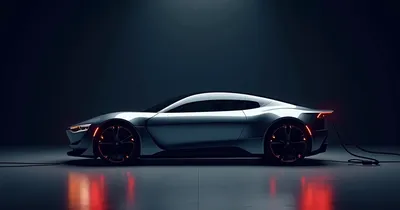
Visually, the Prelude Type-R will distinguish itself through a wider body, pronounced front and rear spoilers, and an active rear diffuser — functional aero that echoes what Honda has done with the current Civic Type-R's aggressive bodywork.
On pricing, the BestCarWeb report pegs Japanese pricing at approximately 7.0 million yen — roughly $44,375 at current 2026 exchange rates. However, US market pricing is expected to land closer to $50,000 or above once import costs, dealer markups, and market-specific equipment are factored in. For context, the current Honda Prelude Hybrid 2026 carries a sticker price of $43,195 — meaning the Type-R version would command a meaningful premium, consistent with how Honda prices other performance variants.
The Acura RSX Trademark: Why It Matters More Than It Looks
Honda filing trademarks is routine. But filing "Acura RSX" and "RSX" in Japan in October 2024 is anything but routine, and the timing — right as Honda was ramping up the Prelude revival — is too pointed to dismiss as bureaucratic housekeeping.
The original Acura RSX was sold from 2002 to 2006 as a sporty front-wheel-drive coupe, sharing a platform and philosophy with the Honda Integra sold in other markets. It was discontinued after just four model years, leaving Acura without a legitimate performance coupe entry for nearly two decades. The Integra eventually returned in 2023 as a sedan-adjacent liftback, and the Type-S variant addressed many complaints — but the RSX nameplate has always carried a special resonance with the enthusiast crowd.
Honda has a well-documented habit of developing luxury Acura variants that share platforms and powertrains with Honda performance models. The Acura Integra Type-S is literally a rebadged, premium-spec version of the same K20-powered architecture. If a Prelude Type-R is coming, the question isn't really whether an Acura performance twin is planned — it's what they'll call it. The RSX trademark filing answers that question.
What's particularly telling is the Japanese market filing. Acura doesn't officially sell vehicles in Japan — the brand is reserved for North American, Chinese, and select other markets. Filing a trademark in Japan is specifically a legal protection move, suggesting Acura wants the name locked down globally before any announcement leaks.
Acura's Reliability Foundation: Why a Performance Coupe Would Sell
Any conversation about an Acura RSX revival has to grapple with the brand's current standing. And the news is good. Acura's reliability record versus Lexus has become a talking point in luxury automotive circles, with Acura consistently punching above its weight class in long-term dependability studies. The Acura MDX in particular has built a reputation as a luxury SUV that holds up over time, and the brand's alignment with Honda's powertrain engineering gives it a structural advantage over European luxury competitors prone to expensive failures.
That reliability halo is actually a strong commercial argument for an Acura RSX. The performance coupe market has a reliability perception problem — German sports cars carry significant ownership cost risks, and even some Japanese alternatives have had build quality concerns. An Acura RSX built around the proven K20 turbo platform could offer genuine performance while inheriting Acura's dependability reputation. That's a compelling pitch to the $50,000-and-up buyer who wants weekend track thrills without worrying about repair bills.
The 2026 Acura ADX also signals that Acura is actively expanding its lineup and not content to coast on its SUV lineup alone. The brand appears to be in a genuine growth phase, making a performance coupe revival strategically coherent rather than nostalgic excess.
The EV Shadow: Honda's Larger Strategic Pivot
It would be incomplete to discuss Honda's performance plans without acknowledging the turbulence happening at the company level. Honda's $15.9 billion EV investment program has already caused delays to the next-generation Accord, Odyssey, and MDX — a sign that internal resource allocation is under serious pressure. When a company delays core volume models, it typically means engineering and capital budgets are being consumed by strategic bets that haven't paid off yet.
This context makes the Prelude Type-R news more interesting, not less. Honda is betting that pure ICE performance vehicles — the Type-R line, the NSX successor concept — can continue to serve a dedicated, high-margin enthusiast market even as electrification captures the mass market. The Prelude Type-R, priced near $50,000 with a manual gearbox and no hybrid system, is a deliberate counterweight to the EV pivot narrative. It says: we still know how to build driver's cars, and there are still buyers who want them.
For Acura, a performance coupe revival would similarly serve as a brand-building investment — a low-volume halo that generates disproportionate press coverage and showroom traffic while reinforcing the brand's performance credibility against Lexus's F Sport lineup and BMW's M-lite offerings.
What This Means: Analysis and Implications
The Prelude Type-R confirmation, read alongside the RSX trademark filing, suggests Honda is executing a deliberate two-tier performance strategy. At the Honda level, the Type-R badge carries accessible prestige — the Honda Civic Type R FL5 has been a critical and commercial success, and a Prelude variant lets Honda extend that formula to a different body style. At the Acura level, a rebadged performance twin would target buyers who want the same mechanical excellence but wrapped in a premium cabin with upscale brand positioning.
The 330-horsepower figure is significant. That number places the Prelude Type-R above the current Civic Type-R's 315 hp, creates separation from the Integra Type-S, and gets close enough to the outgoing Acura NSX Type S to make a coherent performance ladder. A hypothetical Acura RSX Type-S based on the same platform could potentially be tuned slightly higher, extending that hierarchy further.
Front-wheel drive will remain the sticking point for some enthusiasts, but Honda has consistently demonstrated — across generations of the Civic Type-R — that FWD is not a limitation when the chassis engineering is executed at the highest level. The current Civic Type-R holds Nürburgring lap records for FWD cars. The Prelude Type-R will have every incentive to challenge that benchmark.
What remains genuinely unknown is whether the Acura RSX will match the Prelude Type-R's powertrain exactly or receive a unique calibration. The Integra Type-S uses the same K20 as the Civic Type-R but with different tuning, and Acura could use differential tuning, suspension setup, or interior refinement to justify a price premium while sharing the same basic package.
Frequently Asked Questions
When will the 2028 Honda Prelude Type-R be released?
According to the BestCarWeb scoop published May 5, 2026, the Prelude Type-R is targeting a 2028 launch. That timeline aligns with the standard product development cycle — Honda would need approximately two years from confirmed development to production launch. No official Honda announcement has been made as of this writing.
How much will the Prelude Type-R cost in the US?
Japanese pricing is approximately 7.0 million yen, or around $44,375 at current exchange rates. However, the US price is widely expected to be $50,000 or higher once American market factors are applied. The current Honda Prelude Hybrid 2026 starts at $43,195, so the Type-R premium would likely push well past the $45,000–$50,000 range.
Is the Acura RSX revival confirmed?
Not officially. What is confirmed is that Honda filed trademarks for both "Acura RSX" and "RSX" in Japan in October 2024. Combined with the Prelude Type-R development, this strongly suggests an RSX revival is being planned — but Honda has not made any official announcement. The trademark filing is the clearest signal available, and companies typically don't register brand-name trademarks for vehicles they aren't planning to build.
Will the Prelude Type-R have an automatic transmission option?
According to the BestCarWeb report, the Prelude Type-R will be offered exclusively with a six-speed manual transmission. This is consistent with Honda's philosophy for Type-R models — the Civic Type-R and Integra Type-S are both manual-only. Honda appears committed to keeping the Type-R badge synonymous with full driver engagement.
How does the Prelude Type-R compare to rivals like the Toyota GR86 or Subaru BRZ?
At 330 horsepower, the Prelude Type-R would significantly outpower both the Toyota GR86 (228 hp) and the Subaru BRZ (228 hp). However, the GR86 and BRZ are rear-wheel drive, which many purists prefer. The Prelude Type-R's FWD setup will be a point of debate, though Honda's engineering history with front-drive performance cars gives it credibility in that space. At the $50,000 price point, it would also compete with the VW Golf R and Hyundai Elantra N, though it would be positioned above both.
Conclusion: Honda Is Playing a Long Game — And Enthusiasts Are Winning
The 2028 Honda Prelude Type-R confirmation is more than a spec sheet — it's a signal about what Honda believes performance cars can still be in the EV era. By reviving a beloved nameplate with genuine performance credentials, Honda is betting that the enthusiast market remains vibrant, willing to spend, and hungry for driver-focused machinery that the mainstream industry is increasingly ignoring.
The Acura RSX trademark filing adds a second dimension to this story that shouldn't be underestimated. If Honda follows its established playbook, an Acura RSX based on the Prelude Type-R platform could arrive shortly after, offering the same mechanical excellence in a more premium package. That would give Acura its first genuine performance coupe since 2006 — and give enthusiasts a real choice in a market segment that badly needs more competition.
Between Honda's reliability advantage over European competitors, Acura's growing lineup, and the K20 engine's proven track record, the foundation for something genuinely exciting is in place. 2028 is close enough to get excited about — and far enough away to wonder what Honda has up its sleeve that we don't know yet.